
Women of the Waters by Ajeet: A Listening Guide
Opening
Women of the Waters arrives as a single offering in Ajeet's evolving body of devotional work, a standalone meditation that distills decades of practice into one immersive piece. For an artist whose journey has been shaped by Kundalini yoga tradition and the transformative power of sacred sound, this release represents both continuity and distillation—a willingness to let a single thread of devotion unspool without the architecture of a full album to contain it. It's the work of a mature practitioner who knows that sometimes one prayer, deeply held, says more than many.
In Ajeet's arc, this piece suggests a deepening confidence in restraint. Rather than assembling a collection of chants and folk melodies, he offers one extended invitation into a specific current of energy and reverence. The choice to honor the feminine divine—the waters, the flow, the receptive power—marks a thematic pivot toward the sacred feminine that runs through many mystical traditions but is often secondary in kirtan spaces. Here, it takes center stage.
Sonic Character
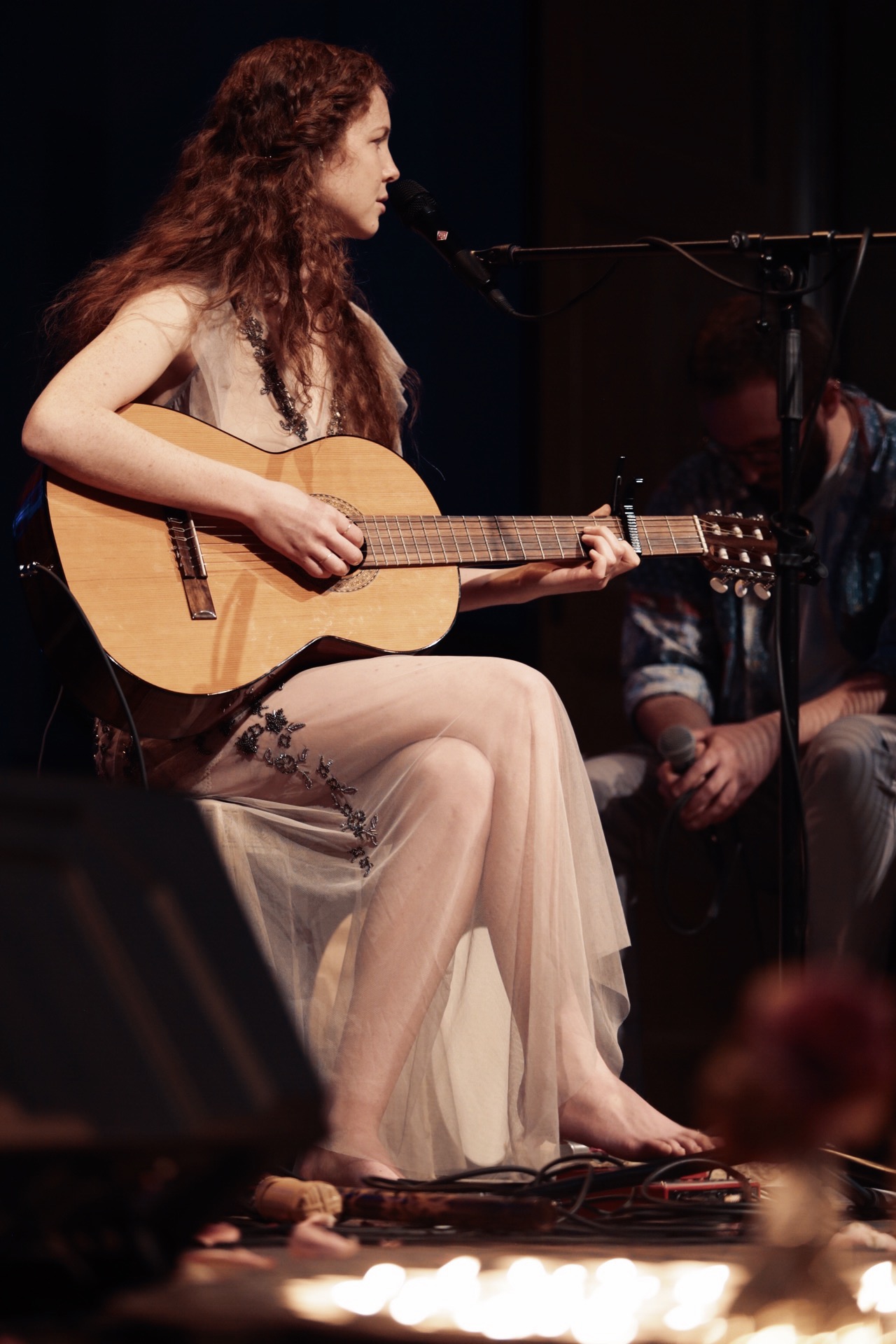
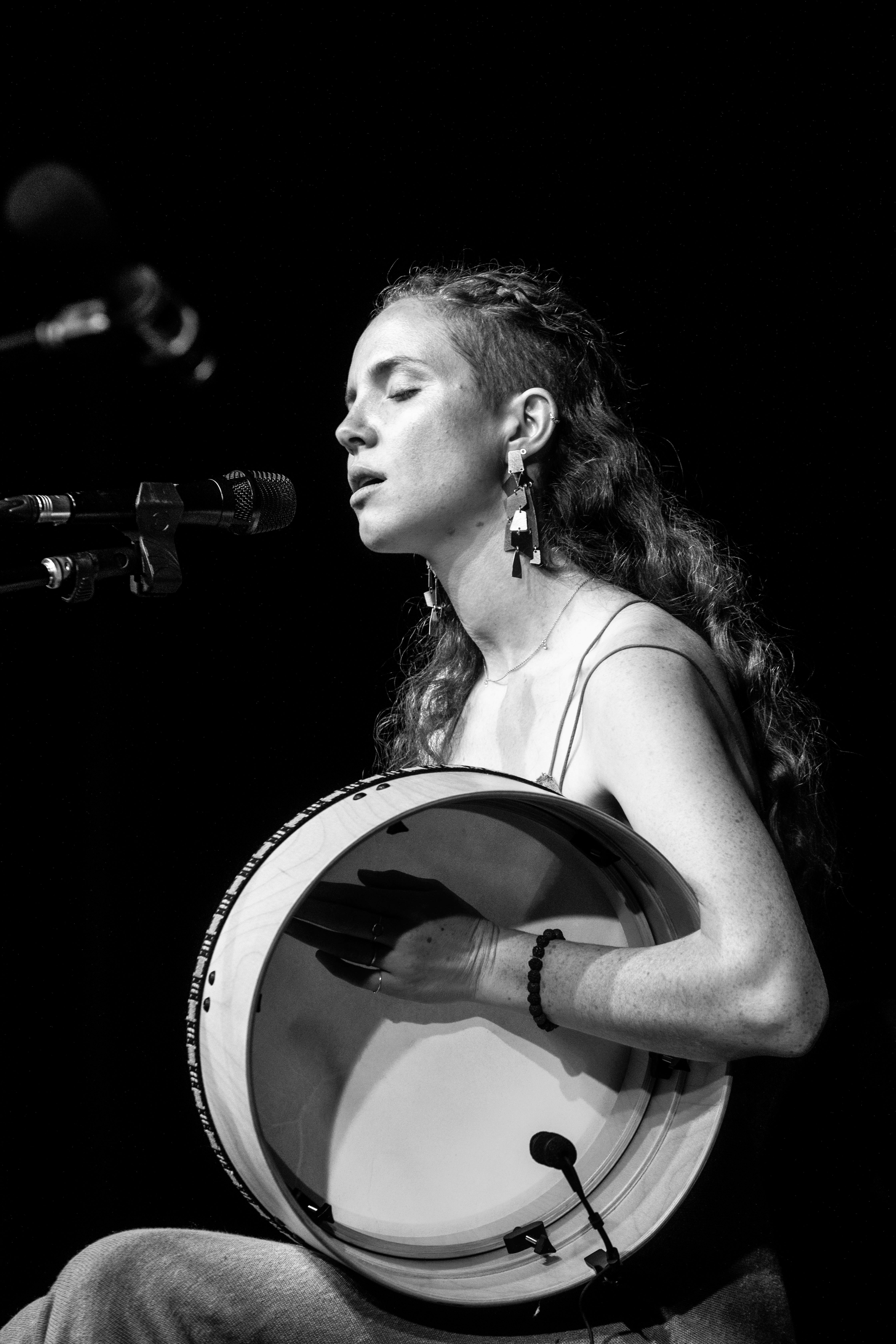
The instrumentation on Women of the Waters breathes with spaciousness. Ajeet's voice, warm and unhurried, floats over a foundation of acoustic guitar, tanpura drone, and subtle percussion that feels less like rhythm and more like the natural pulse of breath or tide. There's an ambient quality to the production—reverb that suggests temple acoustics or canyon echoes, synthesizer pads that wash in and recede like foam on a shore.
The pacing is deliberately slow, almost hypnotic. This isn't music to move through quickly. It's designed to expand time, to make five minutes feel like fifteen in the best possible way. The mood is contemplative without being somber, devotional without demanding belief. There's an openness to the sound, a lack of density that allows the listener to enter the music rather than simply receive it. Ajeet's vocal delivery carries the nuance of someone who understands mantra not as performance but as technology—each syllable placed with intention, each pause weighted with meaning.
The voices layer occasionally, Ajeet harmonizing with himself or allowing his primary vocal to be shadowed by wordless tones. It's a solitary sound, but not lonely. It evokes the image of one person sitting by water at dusk, singing to something larger than themselves.
The Track Itself
As a single-track release, Women of the Waters carries the full weight of Ajeet's vision without dilution. What makes it land is its commitment to a singular emotional trajectory. The piece begins gently, establishing the drone and the first whispered invocations. As it progresses, the intensity builds not through volume but through accumulation—the way a tributary gathers other streams. Ajeet's voice gains fervor without losing softness, a paradox that defines the most effective devotional music.
The lyrical content, rooted in reverence for feminine divine energy, feels both ancient and urgent. In a cultural moment hungry for rebalancing, for honoring what has been dismissed as soft or secondary, this chant offers a sonic altar. The repetition inherent in kirtan tradition becomes a kind of polishing here—each cycle of the melody smooths away another layer of distraction until something essential is revealed.
Place in Tradition
Women of the Waters sits at the intersection of several streams: traditional Kundalini kirtan, contemporary devotional music, and the ambient/meditative genre that has emerged from yoga studios into broader listening contexts. It honors the bhakti tradition's emphasis on love and surrender while making room for listeners who may not identify with specific religious frameworks. This is sacred music for an eclectic spirituality—rooted enough to carry authentic power, open enough to welcome seekers from any tradition or none.
The ambient quality aligns it with artists who use devotional forms as vehicles for sonic healing, but Ajeet's grounding in Kundalini yoga gives the work a specific energetic signature. This isn't just pretty sound; it's meant to move something in the subtle body, to activate what yogic tradition calls the water element—flow, feeling, cleansing, intuition.
Who This Lands For
This music will resonate most deeply with listeners who already have a contemplative practice, or who are seeking one. It's for the person drawn to the sacred feminine, to the Goddess in her many names, or simply to the recognition that receptivity and flow are forms of power. It's for moments of transition—literal water crossings, emotional thresholds, grief that needs to move through rather than be solved.
The album will speak to those who find traditional religious music too dogmatic but secular mindfulness too sterile. It offers a third way: devotion without doctrine, reverence without rigidity.
Close Listening Recommendation
This is headphone music, best experienced alone or in intentional group practice. Evening is ideal—the time when the day's demands recede and inner listening becomes possible. Light a candle, sit near water if you can (even a bowl will do), and let the track play on repeat. Don't try to understand or analyze. Let it be wallpaper for the soul, background for whatever wants to surface. Women of the Waters rewards surrendered attention—the kind where you're listening but not controlling, present but not grasping. Let it wash over you. That's what it's for.