Eating at Kagyu Samye Ling Monastery: The Food Experience
Eating at Kagyu Samye Ling Monastery: The Food Experience
The dining experience at Kagyu Samye Ling reflects both its Tibetan Buddhist roots and its pragmatic Scottish setting. This isn't haute cuisine, nor is it meant to be—the food here serves a purpose beyond mere sustenance, functioning as part of the contemplative practice that permeates every aspect of monastery life.
The Philosophy Behind the Plate
Meals at Samye Ling are entirely vegetarian, a commitment that stems from the Buddhist principle of ahimsa, or non-harm. The kitchen staff also incorporate Ayurvedic principles where possible, balancing the six tastes and considering the warming or cooling properties of foods—particularly important given the often-chilly Scottish climate. Don't expect elaborate explanations or labeled ingredients, though. The approach is understated, woven quietly into the meal planning rather than announced with fanfare.
The food is honest, occasionally inspiring, and sometimes quite plain. Those accustomed to the polished vegetarian cuisine of urban restaurants may find the offerings here refreshingly unpretentious—or, depending on your perspective and the day's menu, a bit monastic in the truest sense of the word.
A Day of Meals
Breakfast typically runs from 7:30 to 8:30 AM in the main dining hall and tends toward hearty porridge, toast, cereals, and fruit. Tea is plentiful; coffee is available but not emphasized. There's usually yogurt and spreads like jam or marmalade—functional fuel for morning meditation or work practice.
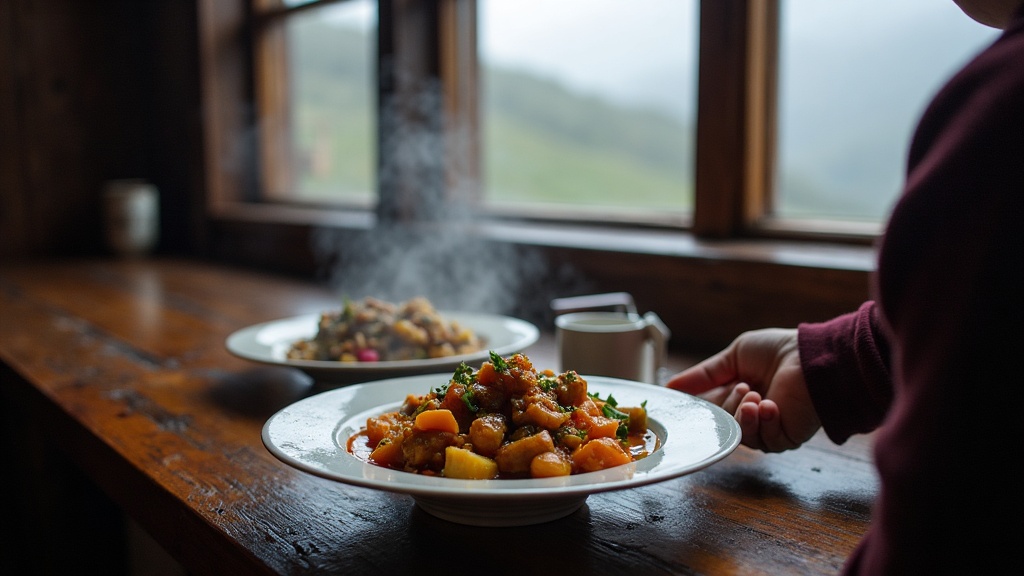
Lunch, served around 12:30 PM, is the main meal of the day. Expect substantial soups, dahl, vegetable curries, rice or potatoes, and salads. The kitchen often leans into warming stews and root vegetable dishes that make sense given the monastery's location in the Scottish Borders. There's usually bread—often homemade—and the quality can be excellent when fresh from the oven.
Dinner is lighter, served around 6:00 PM: soup, bread, perhaps quiche or a simple pasta dish, more salad. The monastery follows a traditional pattern where the evening meal is deliberately modest, supporting rather than hindering evening practice sessions.
The Dining Room Atmosphere
Meals take place in the main dining hall, a spacious room that manages to feel both communal and contemplative. The atmosphere is quiet but not silent—soft conversation is permitted, though many guests choose to eat mindfully without much chat. Tables seat six to eight people, and there's an unspoken understanding that meals are meant to be simple, present experiences rather than social events.
The room itself is functional rather than ornate, with large windows overlooking the gardens when weather permits seeing them. It's neither uncomfortable nor luxurious—much like everything else at Samye Ling, it strikes a middle path.
Dietary Accommodations
The kitchen staff do their best to accommodate dietary requirements, including vegan, gluten-free, and allergy-related needs. It's essential to notify them in advance, ideally when booking your stay. Vegan options are typically straightforward given the vegetarian baseline. Gluten-free accommodations are possible but may be simpler than in urban settings—think rice instead of bread rather than artisanal gluten-free baked goods.
Staff members are generally helpful and willing to work with guests, though this is a monastery kitchen, not a restaurant with extensive customization capabilities.
Between-Meal Options
Tea and coffee are available throughout the day in designated areas. There's usually a jar for donations. Simple snacks—biscuits, fruit, perhaps cake on special occasions—appear in the tea room, though visitors shouldn't expect constant access to elaborate snack options.
The coffee situation deserves mention: while available, Samye Ling isn't exactly catering to specialty coffee culture. It's instant or filter coffee, serviceable rather than celebrated. Tea—particularly herbal varieties—is more abundant and feels more aligned with the monastery's ethos.
Special Occasions
During major Buddhist festivals or special teachings, meals take on a more celebratory character. The kitchen might prepare Tibetan specialties like momos (dumplings) or sweet rice, and these occasions offer glimpses into the monastery's cultural heritage. Occasionally, cooking classes or workshops on Tibetan cuisine are offered as part of the broader educational programming.
The food at Kagyu Samye Ling won't be the highlight of your visit—but it will support your practice, nourish you adequately, and occasionally surprise you with its simple goodness.