Eating at Plum Village: The Food Experience
Eating at Plum Village: The Food Experience
The dining hall at Plum Village operates on a philosophy as deliberate as the monastery's famous walking meditation: food here is practice, not performance. The kitchen serves simple vegetarian meals rooted in Vietnamese Buddhist traditions, designed to nourish without distracting from the retreat's core work of mindfulness. Don't come expecting culinary revelation or Instagram-worthy presentations. The food is honest, modest, and occasionally—depending on your palate and expectations—challenging in its austerity.
The Philosophy Behind the Plate
Plum Village's kitchen follows strict Buddhist vegetarian principles, eliminating all meat, fish, and eggs. The approach blends traditional Vietnamese monastery cooking with what the community describes as mindful nutrition—whole grains, legumes, seasonal vegetables, and minimal processed ingredients. There's an Ayurvedic influence in the attention to digestion and balance, though this isn't explicitly advertised. The philosophy centers on "eating as practice": meals are consumed in silence or near-silence, encouraging full attention to taste, texture, and gratitude. The food is meant to support meditation and contemplation, not to be the highlight of your day.
What You'll Actually Eat
Breakfast typically offers porridge—often rice or oat-based—served with dried fruits, nuts, and seeds. There's bread (usually substantial whole-grain varieties), jam, nut butters, and fresh fruit when available. Tea flows freely; coffee is notably absent from the morning table, a policy I'll address shortly.
Lunch, the main meal, centers on rice or noodles with vegetable curries, stir-fries, or stews. The Vietnamese influence appears in dishes like pho chay (vegetarian pho), rice paper rolls, and lemongrass-scented soups. There's usually a salad, steamed vegetables, and tofu or tempeh as protein. Portions are generous but unfussy. Bread accompanies most meals.
Dinner mirrors breakfast's simplicity—soup, bread, salad, fruit. The monastery operates on the Buddhist monastic tradition where ordained members don't eat solid food after noon, though retreat participants receive this lighter evening meal.
The food is wholesome and filling, if predictable. Those accustomed to bold flavors or variety may find the repertoire limited after several days. Others appreciate the simplicity as part of the retreat's invitation to reduce stimulation and desire.
The Dining Experience
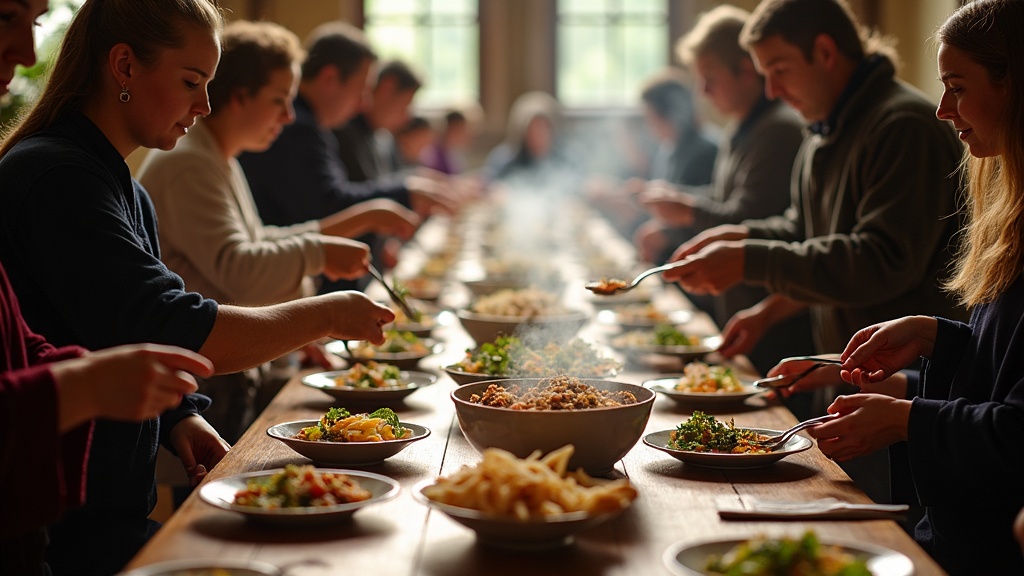
Meals happen in large communal dining halls with long tables that seat ten to twelve people. The atmosphere is quiet—not silent, but hushed. Practitioners serve themselves buffet-style and eat slowly, often following the practice of "eating meditation" for at least the first twenty minutes in complete silence. Afterward, soft conversation may emerge, though it remains mindful and low-volume.
The setting is functional rather than beautiful: wooden tables, simple chairs, practical dishware. Windows often overlook the monastery grounds, bringing the outdoors in. You clear your own place, scraping plates into compost bins and sorting dishes for washing.
Dietary Accommodations
Because the baseline diet is already vegetarian, vegan practitioners find Plum Village straightforward—simply skip the occasional dairy in desserts or yogurt at breakfast. The kitchen accommodates gluten-free needs with gluten-free bread and rice-based options, though cross-contamination sensitive celiacs should inquire beforehand. Serious allergies can be communicated during registration, and the kitchen staff makes reasonable efforts to accommodate them, though options may be limited given the communal cooking model.
Between-Meal Options
The tea house stocks herbal teas throughout the day, along with fruit when available. There's no snack bar or cache of treats. The monastery gently discourages between-meal eating as part of mindful consumption practice, though you won't be policed. Some retreatants bring their own snacks and keep them in their rooms.
The Caffeine Question
Plum Village notably doesn't serve coffee or caffeinated tea during meals. The policy stems from Buddhist precepts around intoxicants and stimulants, viewing caffeine as counter to the calm, grounded awareness the practice cultivates. Herbal teas—chrysanthemum, lotus, ginger—are abundant. Caffeine-dependent visitors should come prepared for withdrawal or bring their own supplies, though consuming them in common areas may draw gentle questions about attachment and mindfulness.
Special Food Occasions
Certain retreats include tea ceremonies or mindful eating workshops where particular attention focuses on food as dharma practice. Occasionally, feast days or celebrations bring slightly more elaborate meals, though "elaborate" remains relative—perhaps spring rolls or special desserts. The focus always returns to simplicity and mindfulness rather than indulgence.
The food at Plum Village won't be the reason you return. But its unpretentious nourishment, eaten slowly among practitioners from fifty countries, becomes its own teaching about sufficiency, gratitude, and the quiet pleasure of enough.