Inside the Parmarth Niketan Daily Schedule
Inside the Parmarth Niketan Daily Schedule
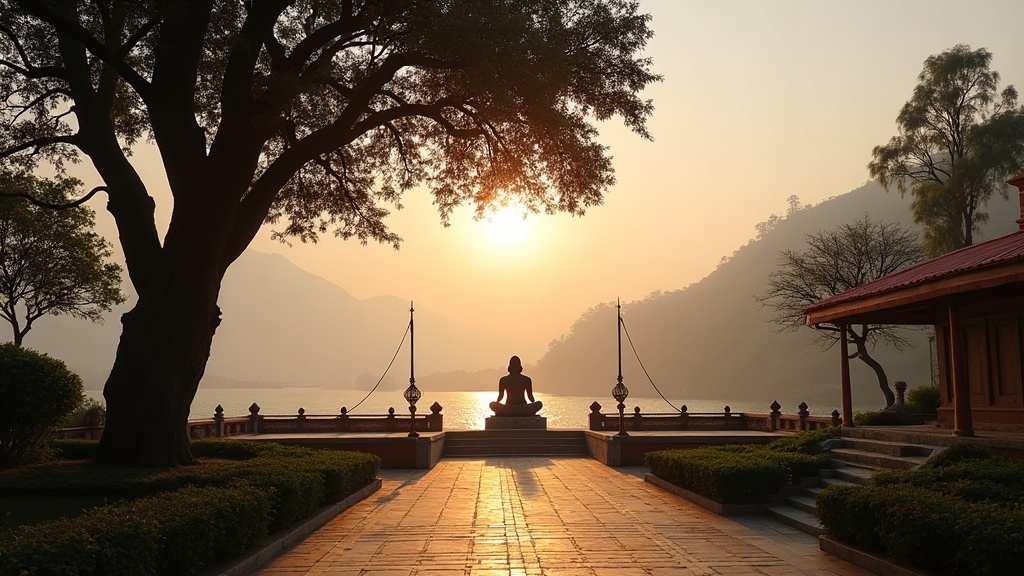
The 5:30 AM bell rings across Parmarth Niketan's sprawling grounds, echoing off the Ganges and through the garden pathways lined with deity statues. On your first morning, this hour feels impossibly early—you fumble in the dark, disoriented, wondering what you've committed to. By day four, your body anticipates it. You're already half-awake, hearing the river's murmur through your window, watching pre-dawn light soften the Himalayas.
Morning Rhythm: The Foundation Hours
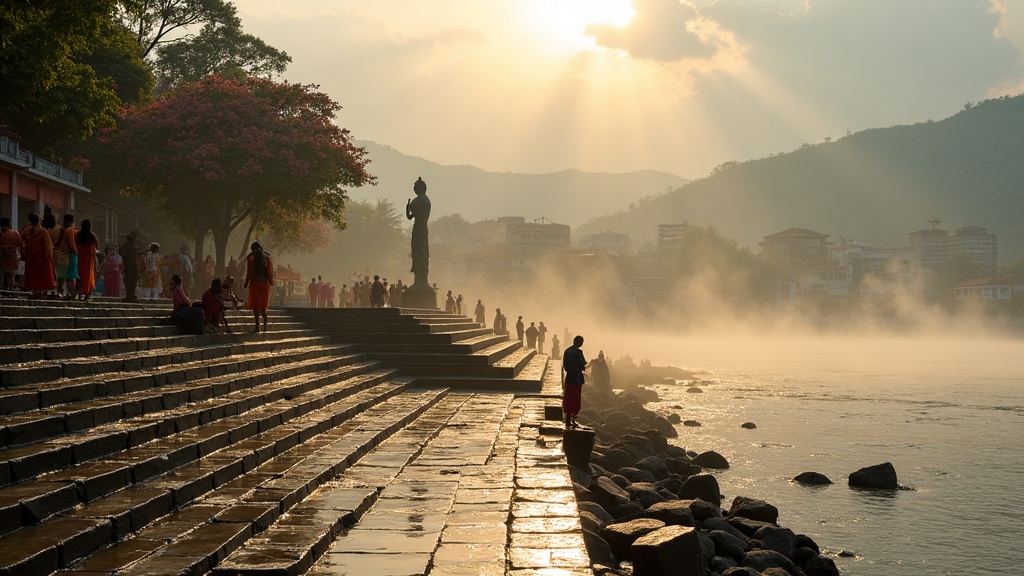
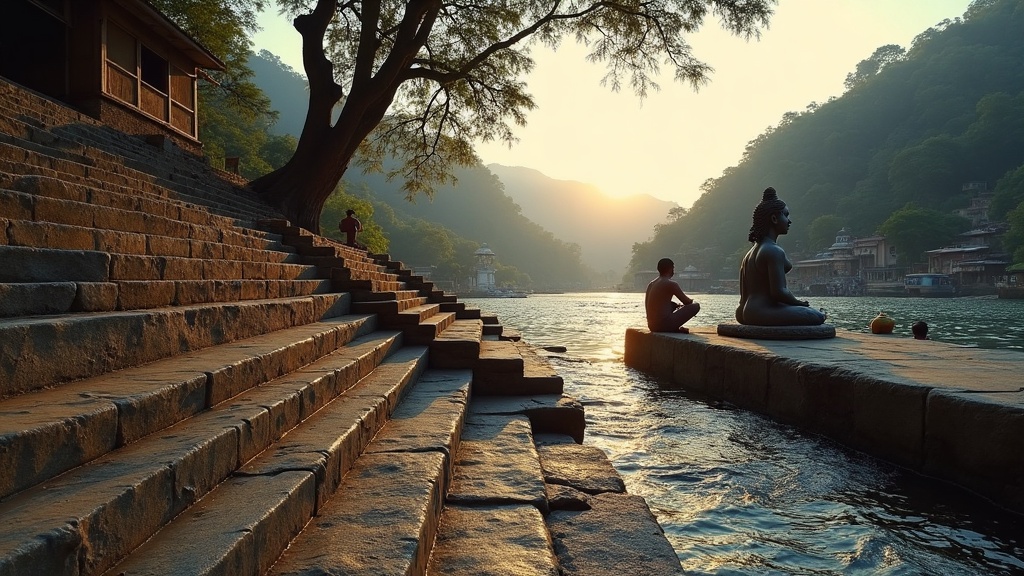
By 6:00 AM, practitioners gather at the ghat for morning prayers and meditation facing the river. The air carries a chill, even in summer months, and you'll want your shawl. Swami-ji leads Vedic chanting as sunrise illuminates the 14-foot Shiva statue overlooking the water. For newcomers, the Sanskrit flows past like the current itself—beautiful but incomprehensible. By mid-week, certain phrases lodge in your throat, wanting to be spoken.
Asana practice begins at 7:00 AM in one of several halls, depending on your program. The Hatha sessions move deliberately, holding poses long enough that you discover muscles you'd forgotten. Vinyasa classes flow faster, synchronized to breath, working up genuine heat despite the morning cool. Teachers circulate with adjustments—a hand repositioning your hip, fingers lifting your sternum. The practice lasts ninety minutes.
Breakfast service runs from 8:45 to 9:30 AM in the main dining hall, a simple affair of sattvic vegetarian food: fresh fruit, porridge, steamed vegetables, chapati, occasionally dosa with coconut chutney and sambar. First-day stomachs often resist the unfamiliar timing and spices. By later in the week, you're hungry for it, loading your steel thali without hesitation. Tea stations offer masala chai and herbal infusions. Meal times are quiet—not silent, but softly conversational. The morning fatigue creates natural introspection.
Late Morning: Study and Practice
The 10:30 AM to 12:30 PM block varies significantly by program type. Yoga Teacher Training participants attend philosophy lectures on the Yoga Sutras or Bhagavad Gita, taking notes in composition books while ceiling fans turn overhead. Wellness retreat guests might have Ayurvedic consultations, receiving personalized recommendations about diet and daily routine. Some programs schedule pranayama workshops here—breath retention practices that leave you simultaneously energized and utterly calm.
Karma yoga sessions often fall in these hours: sweeping pathways, folding laundry, preparing vegetables in the kitchen. The work meditation that sounds abstract in description becomes visceral when your hands repetitively sort lentils for dal.
Midday: Rest and Restoration
Lunch is served from 1:00 to 2:00 PM—the substantial meal of the day. Expect rice, dal, vegetable curry, roti, salad, and curd. The food is simple but nourishing, occasionally punctuated by special dishes on festival days. The spicing is moderate, accessible to international palates while maintaining authentic preparation.
Afternoon free time stretches from 2:00 to 4:30 PM, and the ashram empties as people retreat to rooms. The heat peaks. Ceiling fans labor. This is when day one feels longest—you're exhausted, overstimulated, possibly questioning everything. By day four, you've learned to surrender to it: napping, journaling on your balcony, or walking slowly through gardens where peacocks occasionally scream.
Optional add-ons cluster here. The on-site Ayurvedic center offers massage treatments—abhyanga oil massage, shirodhara with warm oil poured across the forehead. These require advance booking and additional fees. Some teachers offer private sessions for students wanting focused instruction. Others walk to the nearby market across Ram Jhula suspension bridge, though increasingly, mid-week retreat participants skip this, preferring to stay inside the ashram's contained world.
Evening: Closing the Circle
Late afternoon optional sessions—gentle restorative yoga, meditation workshops, kirtan practice—run from 4:30 to 6:00 PM for those with energy remaining. Dinner follows at 6:00 PM, lighter than lunch: soup, sabzi, roti, perhaps khichdi.
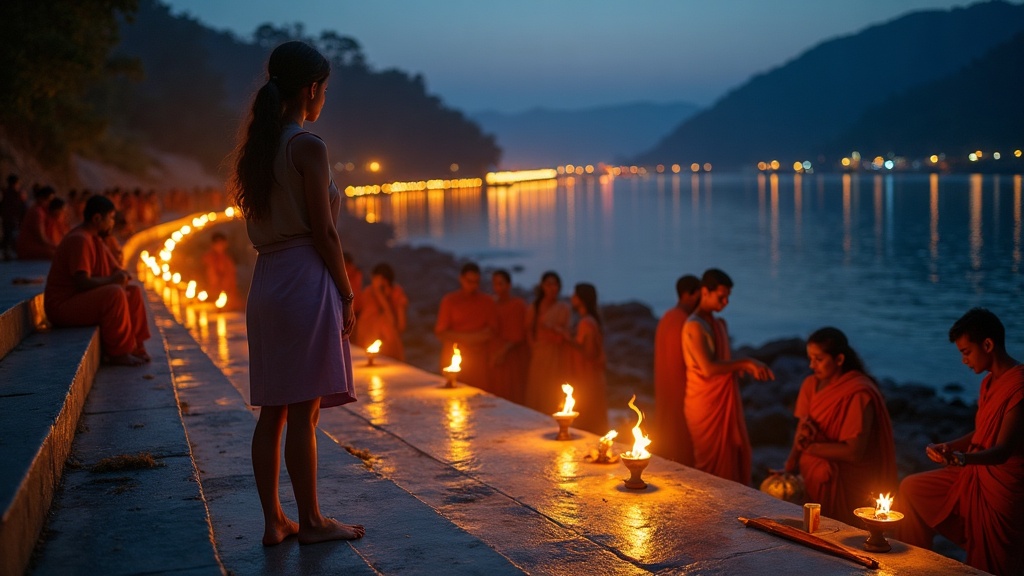
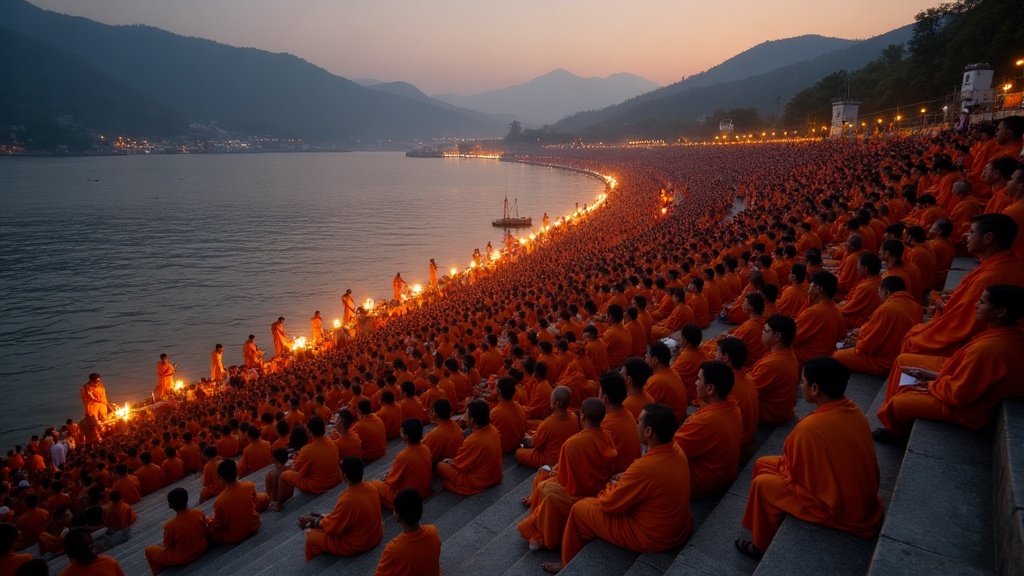
The day culminates with the Ganga Aarti at 6:00 PM during winter months or 7:00 PM in summer—the fire ceremony that draws hundreds to the ghat. Even after a week, this ceremony retains its power: flames circled before the river, bells ringing, voices rising in devotion. Participants hold small leaf boats with candles, releasing them into the current where they float downstream like prayers made visible.
By 9:00 PM, the ashram quiets. Lights out policies aren't strictly enforced, but exhaustion enforces itself. The day that felt impossibly foreign on arrival has become, by week's end, the rhythm your body knows.