Eating at Findhorn Foundation: The Food Experience
Eating at Findhorn Foundation: The Food Experience
The food at Findhorn Foundation reflects sixty years of spiritual practice translated into daily meals. This is vegetarian cooking shaped by Scottish seasons, grown in soil that began as sand dunes, served in a dining room where silence sometimes falls not from rule but from collective habit. The Foundation's approach to food combines ecological necessity with spiritual intention, though visitors sometimes find the gap between these ideals and institutional reality wider than expected.
The Philosophy Behind the Plate
Findhorn's kitchen operates on vegetarian principles, with vegan options always available. The Foundation abandoned meat decades ago, initially from economic necessity, later from environmental conviction. The community's famous gardens supply produce during Scotland's brief growing season—kale and chard, potatoes and beets, the hardy crops that survive northern weather. In winter, organic suppliers fill the gaps.
The kitchen draws loosely from Ayurvedic principles, particularly the concept of food as energy rather than merely nutrition. Meals incorporate whole grains, legumes, and vegetables prepared to balance rather than excite. This isn't cuisine meant to dazzle—it's fuel for spiritual work, hearty rather than refined, with turmeric and miso appearing more frequently than butter or cream.
Daily Meals: What to Expect
Breakfast runs buffet-style from seven-thirty to nine. Porridge made with oats and water forms the backbone, accompanied by stewed fruit, nuts, seeds, and plant milk. Toast with various spreads, occasionally homemade jam from community fruit. Herbal teas outnumber conventional options. Those seeking protein find nut butters and occasionally hummus. It's a breakfast that fuels manual labor in the gardens but may leave others hunting for snacks by mid-morning.
Lunch, the main meal, typically features substantial fare: lentil shepherd's pie, vegetable curries over brown rice, pasta with seasonal vegetables, bean stews with dark bread. Salads appear year-round, though winter offerings lean heavily on root vegetables and cabbage. The cooking is competent rather than inspired—dishes that feed fifty people efficiently, seasoned cautiously for diverse palates.
Dinner arrives lighter: soup and bread, often with leftovers from lunch reimagined. The evening meal assumes people need less, a perspective some visitors embrace and others find challenging after long days of community work or workshop intensity.
The Dining Room Experience
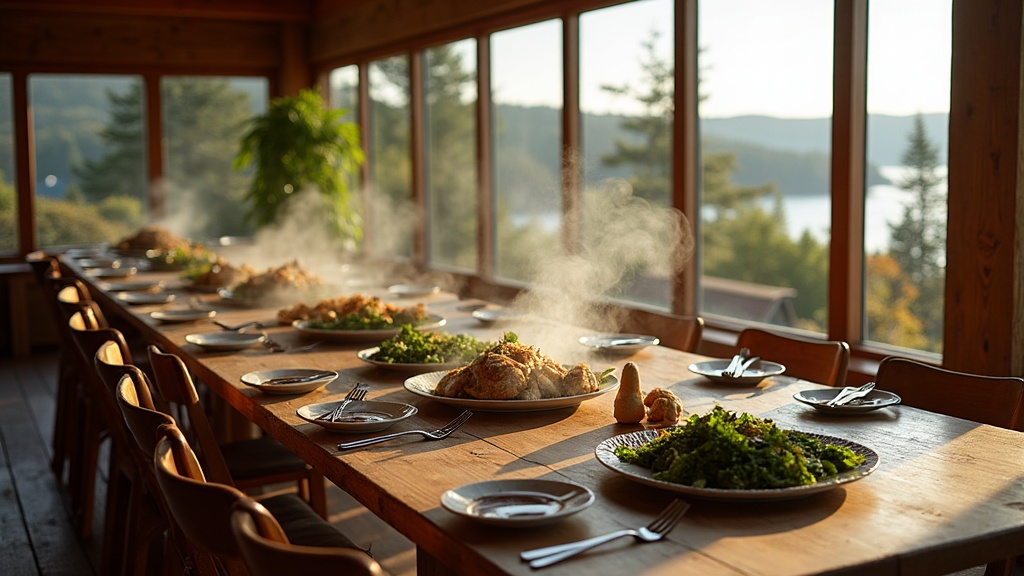
Meals happen in the Community Centre, a functional space that accommodates waves of residents and guests. Tables seat six to eight, encouraging conversation across the community. The atmosphere blends institutional dining with intentional community—volunteers clearing plates, announcements pinned to bulletin boards, someone inevitably playing guitar in the corner during lunch.
Many meals begin with a moment of collective acknowledgment, holding hands or breathing together. This practice feels natural to some, performative to others. The room carries the comfortable wear of heavy use: mismatched chairs, tea-stained mugs, the particular acoustics of a space where thousands have eaten and talked and occasionally sang.
Accommodations and Accessibility
The kitchen handles dietary restrictions with practiced efficiency. Gluten-free options appear at every meal—bread, separate pasta, clearly marked dishes. Vegans navigate easily; the default cooking uses minimal dairy. Serious allergies require advance notice, and the kitchen staff responds professionally, though those with multiple restrictions may find options narrow.
Between-Meal Survival
The Phoenix Shop, the community store, stocks fruit, crackers, chocolate, and other sustenance. A tea station runs continuously near the dining room—herbal varieties dominate, black tea appears grudgingly. Those requiring regular caffeine access should plan accordingly.
The Caffeine Question
Coffee exists at Findhorn, but barely. One pot appears at breakfast, often weak, always finite. The Foundation's relationship with caffeine embodies its broader philosophy: not forbidden, but not encouraged, available without being celebrated. Serious coffee drinkers bring French presses or resign themselves to the fifteen-minute walk to Findhorn village.
Special Food Programs
The community occasionally offers workshops on bread-making, fermentation, or seasonal cooking, drawing on decades of institutional knowledge. The gardens themselves function as food-focused programming, teaching visitors about soil building and seed saving alongside harvest work. Some programs incorporate mindful eating practices, though these aren't standard.
The food at Findhorn won't be anyone's transformative culinary experience. But it fulfills its purpose: nourishment that reflects values, meals that gather community, cooking that honors what grows in difficult ground.