BrightStar

Ver todos os Events

Discover conscious gatherings

events

Yoga
Meditation
Breathwork
Qigong
Tai Chi
Sacred Music
World Music
Medicine Music
Sound Healing
Ecstatic Dance
Destinos populares
BaliSedonaLos AngelesCosta RicaNew YorkSan FranciscoAustinMiamiJoshua TreeTulum
Ver todas as categoriasVer todos os destinos

Explorar todos os recursos

Ferramentas poderosas para expandir seus eventos

Recursos da plataforma

Precificação dinâmica inteligente
Categorias de ingressos
Lugares marcados
Recuperação de carrinho abandonado
Recuperação de visitantes
Doações e preço variável
Sistema de afiliados
Scanner de ingressos
Códigos de desconto
Perguntas personalizadas
Compartilhamento de ingressos
Upsells e complementos
Análises e relatórios
Sequências de e-mail
Lista de espera / Notificar / Lembrar
Pessoas e Lugares
Artists & TeachersEvent OrganizersVenues & StudiosKnowledge BaseGlossaryInspiration
Ver todos os recursosSobre nós
PreçosBlog
Ver todos os eventos

events

YogaMeditationBreathworkQigongTai ChiSacred MusicWorld MusicMedicine Music

Destinos populares

BaliSedonaLos AngelesCosta RicaNew YorkSan Francisco

Pessoas e Lugares

Artists & TeachersEvent OrganizersVenues & StudiosKnowledge BaseGlossaryInspiration

Recursos da plataforma

Precificação dinâmica inteligenteCategorias de ingressosLugares marcadosRecuperação de carrinho abandonadoRecuperação de visitantesDoações e preço variávelSistema de afiliadosScanner de ingressosCódigos de descontoPerguntas personalizadasCompartilhamento de ingressosUpsells e complementosAnálises e relatóriosSequências de e-mailLista de espera / Notificar / Lembrar
Ver todos os recursosSobre nós
PreçosBlog
EntrarBuscadoresCriadores
Tibetan BuddhistOm Mani Padme Hum · Om Mani Padme Hum · Om Mani Padme Hum · Om Mani Padme Hum · Om Mani Padme Hum ·
  • Ver todos os Events
  • Para buscadores
  • Yoga
  • Meditation
  • Breathwork
  • Qigong
  • Tai Chi
  • Sacred Music
  • Retiros
  • Workshops
  • Todas as categorias →
  • Bali
  • Sedona
  • Los Angeles
  • Costa Rica
  • Tulum
  • Byron Bay
  • San Francisco
  • Austin
  • Todas as cidades →
  • Para criadores
  • For Teams
  • Para escritores
  • Para professores
  • Para artistas de kirtan
  • Para estúdios
  • Para festivais
  • Para centros de retiro
  • Para organizações sem fins lucrativos
  • Embaixador da marca
  • Estudos de caso
  • Seva
  • Elevate
  • Amplify
  • Rede de 350K+ compradores
  • Recuperação de carrinho abandonado
  • Precificação dinâmica inteligente
  • Categorias de ingressos
  • Eventos recorrentes
  • Lugares marcados
  • Sistema de afiliados
  • Lista de espera / Notificar
  • Scanner de ingressos
  • Widget incorporável
  • Event Syndication
  • Message Center
  • Integrations
  • Reports
  • Todos os recursos →
  • Sobre
  • The Ecosystem
  • Blog
  • Glossário
  • Inspiration
  • Central de ajuda
  • Contato
  • Documentação da API
  • Recursos da marca
  • Carreiras
  • Imprensa
  • Termos de Serviço
  • Política de Privacidade

Events

  • Ver todos os Events
  • Para buscadores
  • Yoga
  • Meditation
  • Breathwork
  • Qigong
  • Tai Chi
  • Sacred Music
  • Retiros
  • Workshops
  • Todas as categorias →

Destinos

  • Bali
  • Sedona
  • Los Angeles
  • Costa Rica
  • Tulum
  • Byron Bay
  • San Francisco
  • Austin
  • Todas as cidades →

Para criadores

  • Para criadores
  • For Teams
  • Para escritores
  • Para professores
  • Para artistas de kirtan
  • Para estúdios
  • Para festivais
  • Para centros de retiro
  • Para organizações sem fins lucrativos
  • Embaixador da marca
  • Estudos de caso
  • Seva
  • Elevate
  • Amplify

Recursos

  • Rede de 350K+ compradores
  • Recuperação de carrinho abandonado
  • Precificação dinâmica inteligente
  • Categorias de ingressos
  • Eventos recorrentes
  • Lugares marcados
  • Sistema de afiliados
  • Lista de espera / Notificar
  • Scanner de ingressos
  • Widget incorporável
  • Event Syndication
  • Message Center
  • Integrations
  • Reports
  • Todos os recursos →

Empresa

  • Sobre
  • The Ecosystem
  • Blog
  • Glossário
  • Inspiration
  • Central de ajuda
  • Contato
  • Documentação da API
  • Recursos da marca
  • Carreiras
  • Imprensa
  • Termos de Serviço
  • Política de Privacidade
BrightStar
© 2026 BrightStar. Todos os direitos reservados.
Inspire

Soul of Indian Music: Slides,Chromatic Glides & Tradition

PC
Purbayan Chatterjee
Jan 20, 2025
7 min read
Watch · 5

TLDR: Purbayan Chatterjee identifies chromatic glides and slides as the core essence of Indian classical music—elements that distinguish Indian raag performance from Western guitar technique. He demonstrates how the natural sliding between notes (meend) creates the microtonal, ornamented quality that defines "Indianness" in music, and explains how modern harmonic approaches (using chord structures) can be layered on top of this foundational tradition without losing its integrity.

Read · 6 sections

What Makes Indian Music Sound Indian?

At the heart of Purbayan Chatterjee's teaching lies a deceptively simple observation: the soul of Indian music lives in how notes move between each other, not just which notes are played. In his demonstration, Chatterjee contrasts guitar technique with Indian classical practice. A standard Western guitar, he notes, does not execute slides with the same fluidity or frequency that Indian music demands. This is not a limitation of the instrument—it is a fundamental difference in musical philosophy.

The chromatic glide, or meend as it is known in Hindustani classical tradition, is not merely a decorative flourish. It is the architectural principle that shapes every phrase. When Chatterjee slides between notes on his instrument, he is not moving from one fixed pitch to another; he is exploring the infinite continuum of pitches that exist between those two points. This microtonal quality is what listeners recognize as authentically Indian.

How Slides Create Chromatic Texture?

Chatterjee explains that what Western music theory might call a "slide" carries different weight and intention in Indian music. In Indian classical practice, the slide—the continuous gliding motion through intermediate pitches—is called a meend or bend. It is not an optional ornament applied after learning the basic melody. Rather, it is how the melody is fundamentally conceived.

When Chatterjee demonstrates his technique, he shows that the slide itself conveys emotional content and raga identity. Different raags demand different types of slides. A meend might be slow and deliberate, emphasizing certain microtones along the way, or it might be rapid and expressive, emphasizing the journey rather than the intermediate stopping points. The choice of which notes to slide through, and how to traverse them, is where the musician's interpretive voice emerges.

This chromatic quality—the richness of the in-between pitches—is what distinguishes Indian music from systems based on discrete, fixed notes. Western equal temperament divides the octave into twelve equal semitones. Indian classical music, by contrast, recognizes that the ear perceives far more subtle divisions. The slide, in this context, is the tool that bridges those microtonalities into an audible, emotionally resonant phrase.

Is There a Bridge Between Indian Tradition and Modern Harmony?

One of Chatterjee's key insights is that the foundational "Indianness" of music—the chromatic slide—is not threatened by adding modern harmonic elements. In fact, he suggests the opposite is possible. He has thought about how to add chord structures to his instrument while maintaining the raag-based, slide-centered approach that defines Indian music.

The practical challenge is this: in traditional raag performance, the musician is often the sole harmonic voice. A sitar or vocal soloist does not rely on accompanying chords to define the harmonic context; the raag framework itself provides that context. By contrast, Western harmonic music uses chords—simultaneous combinations of pitches—to establish key, progression, and emotional color.

Chatterjee's solution involves thinking about the root note of a phrase and then considering what minor and major chord colors could be applied without losing the raag's integrity. As he explains, if he identifies the root note of a particular section, he can then "hit the minor and major chords" in a way that complements rather than contradicts the raag structure. This is not fusion in the sense of abandoning tradition; it is an expansion that respects the foundational principle of the chromatic slide while adding textural depth.

How Does a Musician Decide Which Slides Matter Most?

Not every note transition requires a slide. The art lies in choosing which moments demand the continuous, microtonal glide and which moments call for a cleaner attack. A musician skilled in raag performance has internalized a vast vocabulary of slides specific to each raag. Some slides are ornamental—adding flavor and expressiveness. Others are structural—they define the very identity of the raag.

For instance, in the raag Yaman, a particular meend from the sixth note to the seventh is so characteristic that omitting it or executing it differently would make the raag unrecognizable. By contrast, in a rapid passage where multiple notes are articulated in quick succession, the musician might opt for cleaner attacks and fewer intervening slides to maintain clarity and momentum.

This selectivity is what separates a formulaic reproduction of Indian music from a living, nuanced interpretation. Chatterjee's demonstration shows a musician who has moved beyond copying a technique and is instead making moment-to-moment artistic decisions about when and how to deploy the fundamental tool of the slide.

Can Modern Instruments Honor Traditional Indian Sound?

Implicit in Chatterjee's work is a challenge to the idea that Indian music is bound to a specific set of instruments. While the sitar, sarod, and voice have been the primary vehicles for Hindustani classical music for centuries, Chatterjee's work on guitar shows that the principles can migrate to other instruments, provided the musician understands and commits to them.

The guitar, as a Western instrument, arrives with its own technical vocabulary and playing traditions. The slide technique Chatterjee uses does exist in Western guitar playing—it is used in blues, in slide guitar, in country music. But the frequency, intention, and integration of the slide into the core musical language differs fundamentally. What Chatterjee does is repurpose an existing technical capability and place it at the absolute center of the musical conception, following the logic of raag music rather than Western tradition.

This recontextualization is significant. It means that any musician on any instrument, if they commit to understanding and practicing the chromatic slide as the soul of Indian music, can begin to sound authentically Indian. The instrument becomes transparent; the principle is what matters.

Where to Go From Here

For musicians interested in Indian classical music, Chatterjee's insight offers a concrete entry point: study the meend. Do not treat it as an ornament to be applied after learning the basic melody. Instead, make it the first principle of how you conceive a melodic line. Listen to recordings of traditional raag singers and sitar players with specific attention to how they use slides. Notice which slides are subtle and which are broad; which are fast and which are slow. Begin to recognize that the slide itself carries emotional and structural information.

For those curious about fusion or cross-cultural musical dialogue, Chatterjee shows one approach: root your foundation in the deepest principle of the tradition (in this case, the chromatic slide), and then thoughtfully add elements from other vocabularies (such as chord harmony) without abandoning that foundation. This is more sustainable and respectful than the reverse approach—adding a few Indian ornaments to a fundamentally Western harmonic structure.

For listeners, the takeaway is to tune your ear toward the space between the notes. What makes Indian music sound Indian is not the notes themselves—many raags share common note sets—but how those notes are connected, the tiny pitch variations explored in the glides, and the emotional intent carried by the way one note flows into the next.

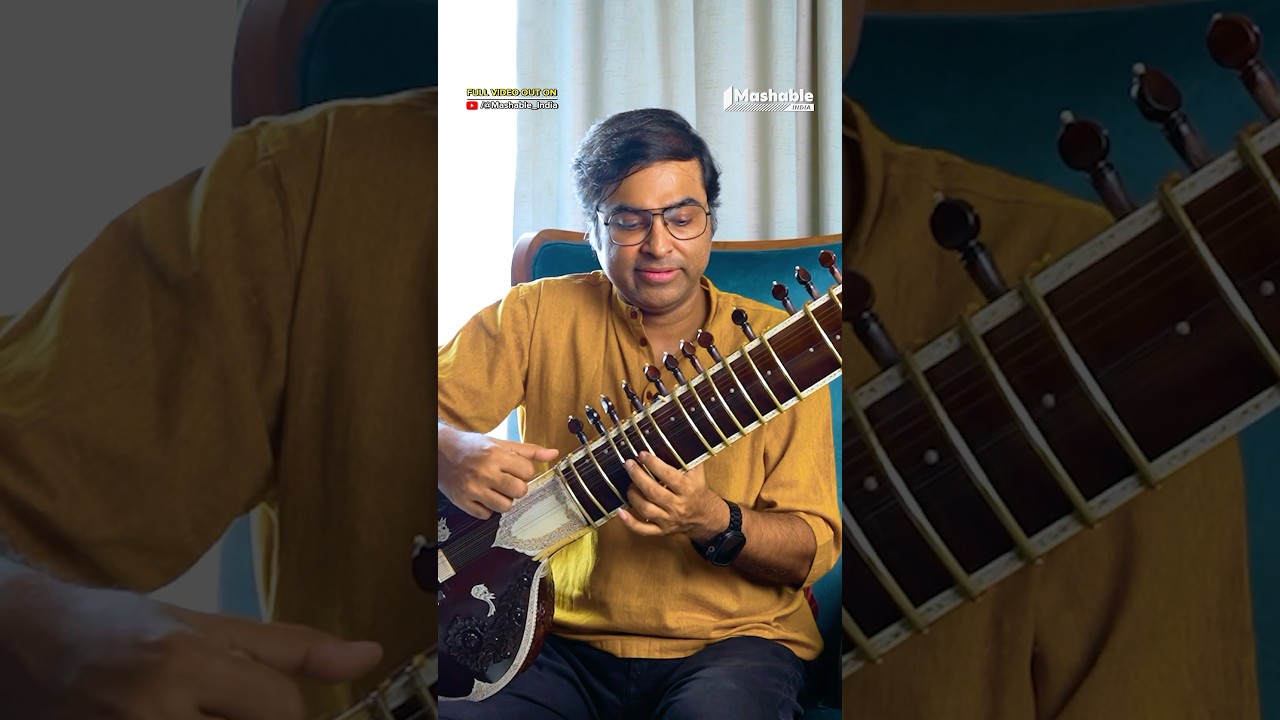
Transcript

[0:00] ग्लाइड्स आर कॉल्ड

[0:02] [संगीत]

[0:04] मींस ये गिटार पे इतना ग्लाइड नहीं होता

[0:06] है दिस इज द सोल ऑफ इंडियन म्यूजिक व्हिच

[0:10] इज मींस व्हिच इज क्रोमेटिक गरज गरज आज

[0:13] में घ ये जो आज में घ ये जो स्लाइड है ना

[0:17] सो इसको जब हम बजा रहे

[0:21] हैं ये इंडियन नेस है लेकिन इसके साथ

[0:25] मैंने ये साज में सोचा है

[0:28] ऐसा कॉर्ड्स

[0:34] सो इन द फ्यूचर व्हेन आई कबोट लाइक दिस इज

[0:37] द रूट

[0:41] नोट आई कैन हिट हिट द माइनर एंड मेजर

[0:45] कॉर्ड्स एसेट

[0:47] [संगीत]

PC
AuthorPurbayan Chatterjee

Watch more from Purbayan Chatterjee on YouTube.

View profileWebsite
Explore Topics
Indian-classical-musicMeend-slidesRaag-traditionChromatic-microtonesGuitar-technique

Got Questions?

Frequently Asked Questions

A meend (also called a slide or glide) is a continuous microtonal glide between two notes that is fundamental to Indian raag music. Rather than jumping from one fixed pitch to another like Western music, the meend explores all the pitches in between, creating the ornamented, microtonal quality characteristic of Indian music.
Western guitar technique and repertoire do not integrate slides into the core musical language the way raag-based traditions do. While slides exist in some Western styles like blues, they are used less frequently and with different intent; in Indian music, the slide is the foundational principle of how melodies are conceived.
Yes, according to Chatterjee, if you maintain the chromatic slide as the foundational principle and thoughtfully layer chord colors (minor and major) on top of the raag structure. The key is respecting the raag's integrity while expanding its textural possibilities rather than replacing its foundation.
In blues and Western guitar, slides are used selectively as expressive ornaments. In Indian classical music, the meend is the central organizing principle of how melodies are constructed; it carries structural and emotional information essential to raag identity.
By making the chromatic slide the first principle of melodic conception and studying how traditional raag musicians use meends. Understanding that the slide is not an ornament but the core language of Indian music allows any musician to apply these principles on any instrument.
By identifying the root note of a phrase or section, a musician can determine which minor and major chord colors would complement the raag structure without contradicting it. This provides harmonic context while preserving the raag's foundational principles.

Continue Reading

More on Inspire

View All
Garaj Garaj Cover: Sitar, Vocal & Tabla Fusion
Inspire

Garaj Garaj Cover: Sitar, Vocal & Tabla Fusion

Three Indian classical virtuosos recreate Garaj Garaj through vocal, sitar, and tabla fusion, blending tradition with contemporary ensemble …

1 min read
Garaj Garaj: Purbayan Chatterjee's Sitar Performance
Inspire

Garaj Garaj: Purbayan Chatterjee's Sitar Performance

Purbayan Chatterjee performs the raga Garaj Garaj live, showcasing contemporary Indian classical sitar technique. A 31-second showcase of vi…

1 min read
Gabriel Drives the Waves: Modern Metal and Natural Mysticism
Inspire

Gabriel Drives the Waves: Modern Metal and Natural Mysticism

A 24-second metal track blending alternative and modern metal aesthetics with nature imagery and voodoo mysticism. Experience raw sonic ener…

1 min read
Fortnite Sprite Customization: Glitch Method & Back Bling Combos
Inspire

Fortnite Sprite Customization: Glitch Method & Back Bling Combos

Learn how to customize Fortnite sprites using a discovered glitch that lets you pair sprites with back blings for unique cosmetic combinatio…

1 min read

Keep exploring

Continue your journey

More wisdom and gatherings from across the BrightStar directory.

More Articles

Browse the full library of teachings, interviews, and guides.

Back to all articles →

Teachers & Artists

Explore the lineages, musicians, and guides of the conscious world.

Explore artists →

Find an Event

Kirtan, retreats, sound baths, breathwork, festivals — happening soon.

Browse events →
Read more from BrightStarCreate Free Account
Host your own gatherings?Try the Demo