BrightStar

Ver todos os Events

Discover conscious gatherings

events

Yoga
Meditation
Breathwork
Qigong
Tai Chi
Sacred Music
World Music
Medicine Music
Sound Healing
Ecstatic Dance
Destinos populares
BaliSedonaLos AngelesCosta RicaNew YorkSan FranciscoAustinMiamiJoshua TreeTulum
Ver todas as categoriasVer todos os destinos

Explorar todos os recursos

Ferramentas poderosas para expandir seus eventos

Recursos da plataforma

Precificação dinâmica inteligente
Categorias de ingressos
Lugares marcados
Recuperação de carrinho abandonado
Recuperação de visitantes
Doações e preço variável
Sistema de afiliados
Scanner de ingressos
Códigos de desconto
Perguntas personalizadas
Compartilhamento de ingressos
Upsells e complementos
Análises e relatórios
Sequências de e-mail
Lista de espera / Notificar / Lembrar
Pessoas e Lugares
Artists & TeachersEvent OrganizersVenues & StudiosKnowledge BaseGlossaryInspiration
Ver todos os recursosSobre nós
PreçosBlog
Ver todos os eventos

events

YogaMeditationBreathworkQigongTai ChiSacred MusicWorld MusicMedicine Music

Destinos populares

BaliSedonaLos AngelesCosta RicaNew YorkSan Francisco

Pessoas e Lugares

Artists & TeachersEvent OrganizersVenues & StudiosKnowledge BaseGlossaryInspiration

Recursos da plataforma

Precificação dinâmica inteligenteCategorias de ingressosLugares marcadosRecuperação de carrinho abandonadoRecuperação de visitantesDoações e preço variávelSistema de afiliadosScanner de ingressosCódigos de descontoPerguntas personalizadasCompartilhamento de ingressosUpsells e complementosAnálises e relatóriosSequências de e-mailLista de espera / Notificar / Lembrar
Ver todos os recursosSobre nós
PreçosBlog
EntrarBuscadoresCriadores
Tibetan BuddhistOm Mani Padme Hum · Om Mani Padme Hum · Om Mani Padme Hum · Om Mani Padme Hum · Om Mani Padme Hum ·
  • Ver todos os Events
  • Para buscadores
  • Yoga
  • Meditation
  • Breathwork
  • Qigong
  • Tai Chi
  • Sacred Music
  • Retiros
  • Workshops
  • Todas as categorias →
  • Bali
  • Sedona
  • Los Angeles
  • Costa Rica
  • Tulum
  • Byron Bay
  • San Francisco
  • Austin
  • Todas as cidades →
  • Para criadores
  • Para escritores
  • Para professores
  • Para artistas de kirtan
  • Para estúdios
  • Para festivais
  • Para centros de retiro
  • Para organizações sem fins lucrativos
  • Embaixador da marca
  • Estudos de caso
  • Rede de 350K+ compradores
  • Recuperação de carrinho abandonado
  • Precificação dinâmica inteligente
  • Categorias de ingressos
  • Eventos recorrentes
  • Lugares marcados
  • Sistema de afiliados
  • Lista de espera / Notificar
  • Scanner de ingressos
  • Widget incorporável
  • Todos os recursos →
  • Sobre
  • The Ecosystem
  • Blog
  • Glossário
  • Inspiration
  • Central de ajuda
  • Contato
  • Documentação da API
  • Recursos da marca
  • Carreiras
  • Imprensa
  • Termos de Serviço
  • Política de Privacidade

Events

  • Ver todos os Events
  • Para buscadores
  • Yoga
  • Meditation
  • Breathwork
  • Qigong
  • Tai Chi
  • Sacred Music
  • Retiros
  • Workshops
  • Todas as categorias →

Destinos

  • Bali
  • Sedona
  • Los Angeles
  • Costa Rica
  • Tulum
  • Byron Bay
  • San Francisco
  • Austin
  • Todas as cidades →

Para criadores

  • Para criadores
  • Para escritores
  • Para professores
  • Para artistas de kirtan
  • Para estúdios
  • Para festivais
  • Para centros de retiro
  • Para organizações sem fins lucrativos
  • Embaixador da marca
  • Estudos de caso

Recursos

  • Rede de 350K+ compradores
  • Recuperação de carrinho abandonado
  • Precificação dinâmica inteligente
  • Categorias de ingressos
  • Eventos recorrentes
  • Lugares marcados
  • Sistema de afiliados
  • Lista de espera / Notificar
  • Scanner de ingressos
  • Widget incorporável
  • Todos os recursos →

Empresa

  • Sobre
  • The Ecosystem
  • Blog
  • Glossário
  • Inspiration
  • Central de ajuda
  • Contato
  • Documentação da API
  • Recursos da marca
  • Carreiras
  • Imprensa
  • Termos de Serviço
  • Política de Privacidade
BrightStar
© 2026 BrightStar. Todos os direitos reservados.
Inspire

Shivo'ham Chanting: Non-Dual AwakeningThrough Sacred Sound

Dave Stringer
Dave Stringer
Nov 6, 2015
6 min read

TLDR: Dave Stringer's "Shivo'ham" is a kirtan rendition of the Sanskrit mantra Shivo'ham, Shivo'ham ("I am Shiva"), a non-dual affirmation found in Advaita Vedanta philosophy. The chant affirms the speaker's essential identity with Shiva consciousness—not as worship of an external deity, but as recognition of one's own true nature as infinite, unchanging awareness. Through musical composition and repetition, the kirtan invites practitioners into experiential realization of this unity consciousness.

Read · 7 sections

What Does Shivo'ham Actually Mean?

The Sanskrit phrase Shivo'ham breaks down into two components: Shiva (the transcendent principle of pure consciousness, also personified as the cosmic yogi in Hindu tradition) and aham (I, or the sense of self). Literally translated, it means "I am Shiva." However, this is not a claim of identity with a god external to oneself—rather, it is a declaration of non-duality in the Advaita Vedanta tradition.

In non-dual philosophy, Shiva represents the fundamental nature of reality: eternal, unchanging, witnessing consciousness that pervades all existence. The mantra serves as both a reminder and a direct assertion that this very consciousness is not separate from the speaker's own nature. It is not aspirational ("I want to become Shiva") but declarative ("I am already Shiva"). The repetition of the phrase in kirtan—devotional chanting—allows practitioners to internalize this recognition through the body, breath, and sound.

How Does Kirtan Support Non-Dual Realization?

Kirtan is a participatory form of chanting that uses melody, rhythm, and often call-and-response patterns to create a shared contemplative experience. Unlike purely intellectual study of philosophy, kirtan works through the nervous system, the voice, and the listening ear. The repetition of a mantra like Shivo'ham throughout a musical composition creates a kind of sonic anchoring—the mind, rather than wandering, settles into the vibration and meaning of the phrase.

In Dave Stringer's composition "Brink," the musical setting gives the mantra a contemporary form without diluting its traditional significance. The kirtan genre allows for both individual practice (singing alone) and collective practice (joining others in call-and-response), making non-dual philosophy accessible not just as intellectual understanding but as lived, embodied experience. When practitioners chant Shivo'ham together, they are not merely reciting words; they are aligning their consciousness with the principle the words represent.

What Is the Relationship Between Shiva and Personal Identity?

In Advaita Vedanta, the highest teaching is that individual consciousness (jiva) and universal consciousness (Brahman or Shiva) are non-different. The apparent distinction between "me" and "the absolute" is viewed as a misperception created by identification with the body-mind complex and limited conditioned patterns. Shiva, in this context, represents the unchanging witness that observes all experience without being affected by it.

The mantra Shivo'ham cuts through this misperception by asserting the truth directly: there is no separation. The "I" that speaks the mantra is not the individual ego-self (which is always in flux), but the eternal consciousness that has always been present as the substratum of all experience. This is why the mantra is considered powerful—it is not asking the mind to believe something new, but inviting recognition of what is already true.

How Does Sound Frequency Amplify Spiritual Realization?

Beyond the conceptual meaning of the mantra, the sound itself carries significance in Hindu and yogic traditions. Sanskrit syllables are believed to carry specific frequencies and energetic properties. The word "Shiva" itself is said to produce a calming, elevating effect on the nervous system, while the "aham" (I-am) affirmation anchors this awareness in personal consciousness.

When a mantra is set to music—as it is in Stringer's composition—the melodic contour, harmonic support, and rhythmic structure make the mantra easier to repeat, remember, and integrate into the body. Music engages different neural pathways than spoken mantra alone, activating both the rational mind and the emotional, intuitive brain. This multi-sensory engagement can accelerate the movement from intellectual understanding to felt realization.

What Is the Advaita Vedanta Context for This Practice?

Advaita Vedanta is a non-dual school of Hindu philosophy that teaches that ultimate reality (Brahman) is non-dual, infinite consciousness, and that the appearance of multiplicity and separation is due to ignorance (avidya). The goal of practice is moksha (liberation)—the direct realization of one's true nature as this infinite consciousness, beyond the limits of the individual ego and body.

Shivo'ham is one of the "great statements" (mahaväkyä) that encodes this teaching directly. Similar statements include "Tat Tvam Asi" (That Thou Art), "Aham Brahmasmi" (I am Brahman), and "Prajñänam Brahma" (Consciousness is Brahman). These are not beliefs to adopt, but truths to recognize through direct investigation and sustained meditation. The kirtan form of Shivo'ham offers a musical gateway to this recognition—making the philosophy embodied and resonant rather than abstract.

What Role Does Repetition Play in Spiritual Practice?

Repetition is fundamental to both mantra practice and kirtan. The repetition of Shivo'ham serves multiple purposes: it interrupts habitual thought patterns, it anchors attention on a non-dual principle rather than on the fluctuating content of mind, and it gradually dissolves the psychological identification with the limited ego-self. Over time, the mantra is not merely something you say—it becomes something you are, as the recognition it carries begins to permeate consciousness.

In the context of a musical composition like "Brink," the compositional repetition with melodic and harmonic variation keeps the practice from becoming mechanical or dull. The listener or chanter moves into a receptive state where the mantra can work at subtle levels—below the threshold of deliberate effort, allowing the truth of the statement to penetrate more deeply.

Where to Go From Here

To explore Shivo'ham more deeply, one might begin by learning the mantra itself and practicing it with a melodic support, such as through Dave Stringer's musical composition or other kirtan recordings. Consistent practice—whether daily chanting or regular attendance at kirtan gatherings—can accelerate the integration of the teaching into lived experience.

For those interested in the philosophical foundation, studying texts like the Upanishads, the Brahma Sutras, or modern commentaries on Advaita Vedanta by teachers like Ramakrishna Paramahamsa, Nisargadatta Maharaj, or Mooji can provide the conceptual framework. The combination of philosophical study and devotional practice—jnana and bhakti—is considered in many traditions to be the most direct path to realization.

Ultimately, Shivo'ham is an invitation to cease searching for consciousness and instead recognize what you already are. The kirtan form makes this recognition available not as distant teaching, but as direct, resonant, and alive experience.
Dave Stringer
AuthorDave Stringer

Watch more from Dave Stringer on YouTube.

View profileWebsite
Explore Topics
MantraAdvaita-vedantaKirtanNon-dualityShiva-consciousness

Got Questions?

Frequently Asked Questions

Shivo'ham means 'I am Shiva' in Sanskrit. It is a non-dual statement asserting that the speaker's true nature is identical with Shiva—the eternal, unchanging principle of pure consciousness that is the foundation of all existence, not a separate deity to worship.
Shivo'ham is a mantra, not a prayer. Rather than petitioning an external deity, it is a declaration of identity with the absolute. In Advaita Vedanta, it functions as a 'great statement' (mahavakya) that directly asserts the non-dual truth that individual consciousness and universal consciousness are one.
Consistent practice is more important than frequency. Even daily repetition of 5-10 minutes can gradually integrate the recognition the mantra carries. Some traditions recommend 108 repetitions as a standard practice; others suggest aligning practice with natural rhythm and energy. Regular kirtan attendance or listening to musical renditions can supplement individual practice.
Yes. While Shivo'ham emerges from Hindu and yogic traditions, its core principle is non-dual consciousness—a teaching present in many mystical traditions. The mantra can be approached as a tool for investigating your own nature and fundamental awareness, independent of religious affiliation.
Both Shivo'ham and Aham Brahmasmi are non-dual statements from Advaita Vedanta, but they emphasize different aspects. Shivo'ham emphasizes identity with Shiva (consciousness as the eternal witness), while Aham Brahmasmi emphasizes identity with Brahman (consciousness as the ultimate reality). Functionally, they point to the same non-dual realization.
The effects of chanting vary by individual and stage of practice. Some experience calm, clarity, or energy; others notice subtle shifts in perception or a dissolving of the sense of separation. The mantra works regardless of sensation—the recognition it carries operates at the level of consciousness itself, beyond the realm of feeling or experience.
Kirtan is devotional call-and-response chanting, often set to melody and rhythm, typically practiced in a group setting. It engages the emotional and relational dimensions of practice in addition to the contemplative. Regular mantra chanting is often silent or solitary. Kirtan's musical and communal aspects can accelerate integration of the teaching.
Mind-wandering is completely normal and not a failure. Simply notice the wandering without judgment and gently return attention to the mantra and its meaning. Each return to the mantra strengthens the practice. Over time, sustained repetition naturally anchors the mind with less effort required.

Continue Reading

More on Inspire

View All
Dave Stringer Kirtan Tour Germany & Ireland Nov–Dec 2025
Inspire

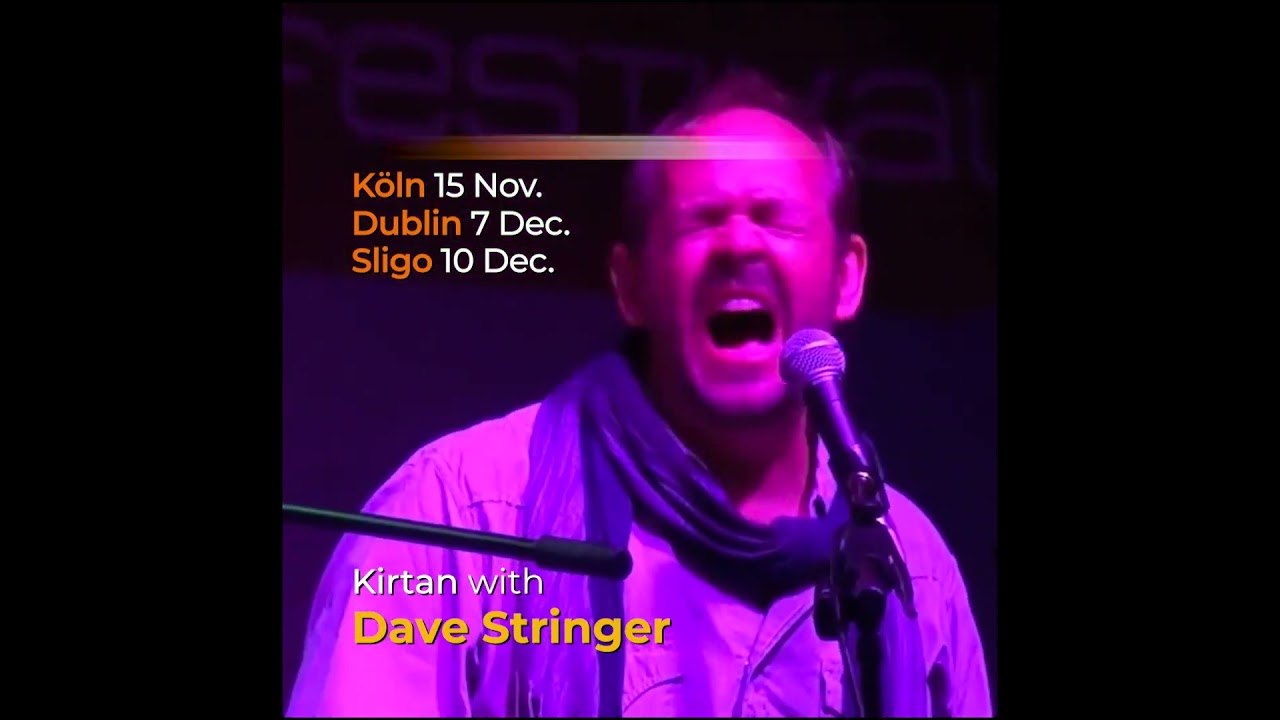
Dave Stringer Kirtan Tour Germany & Ireland Nov–Dec 2025

Dave Stringer announces kirtan performances across Germany and Ireland in November and December 2025. Join devotional singing events in Berl…

1 min read
Solo Acoustic Kirtan: Sacred Chanting and Devotional Music
Inspire

Solo Acoustic Kirtan: Sacred Chanting and Devotional Music

Dave Stringer performs solo acoustic kirtan, a devotional chanting practice combining Sanskrit mantras with classical Indian ragas to invoke…

1 min read
River: A Musical Meditation on Flow and Movement
Inspire

River: A Musical Meditation on Flow and Movement

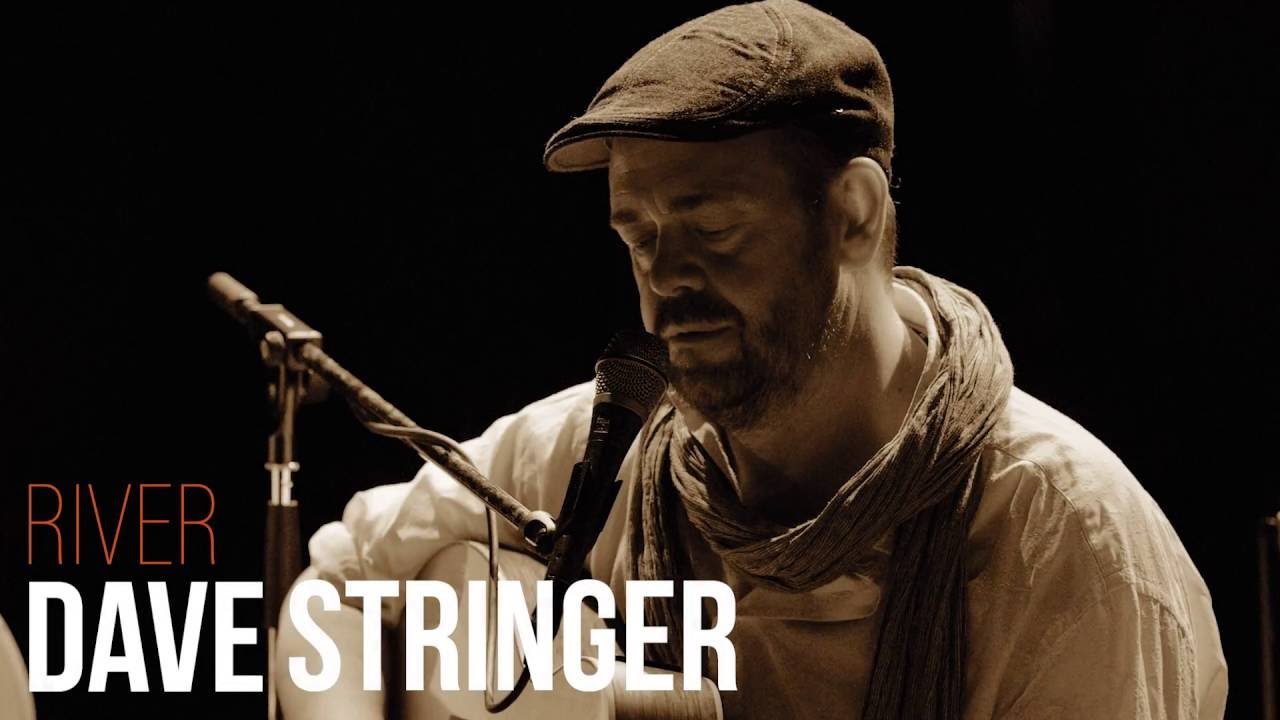
Dave Stringer's "River" is an original composition blending guitar, violin, tabla, and trumpet into a spiritual musical piece exploring them…

1 min read
Ganapati Om Kirtan: Devotional Call to the Remover of Obstacles
Inspire

Ganapati Om Kirtan: Devotional Call to the Remover of Obstacles

A live kirtan performance of the Ganapati Om mantra, featuring Dave Stringer's vocal call and response led with tabla, harmonium, and bass a…

1 min read

Keep exploring

Continue your journey

More wisdom and gatherings from across the BrightStar directory.

More Articles

Browse the full library of teachings, interviews, and guides.

Back to all articles →

Teachers & Artists

Explore the lineages, musicians, and guides of the conscious world.

Explore artists →

Find an Event

Kirtan, retreats, sound baths, breathwork, festivals — happening soon.

Browse events →
Read more from BrightStarCreate Free Account
Host your own gatherings?Try the Demo