Nanak Naam's Teaching: Approach, Method, and Voice
The Architecture of Practice
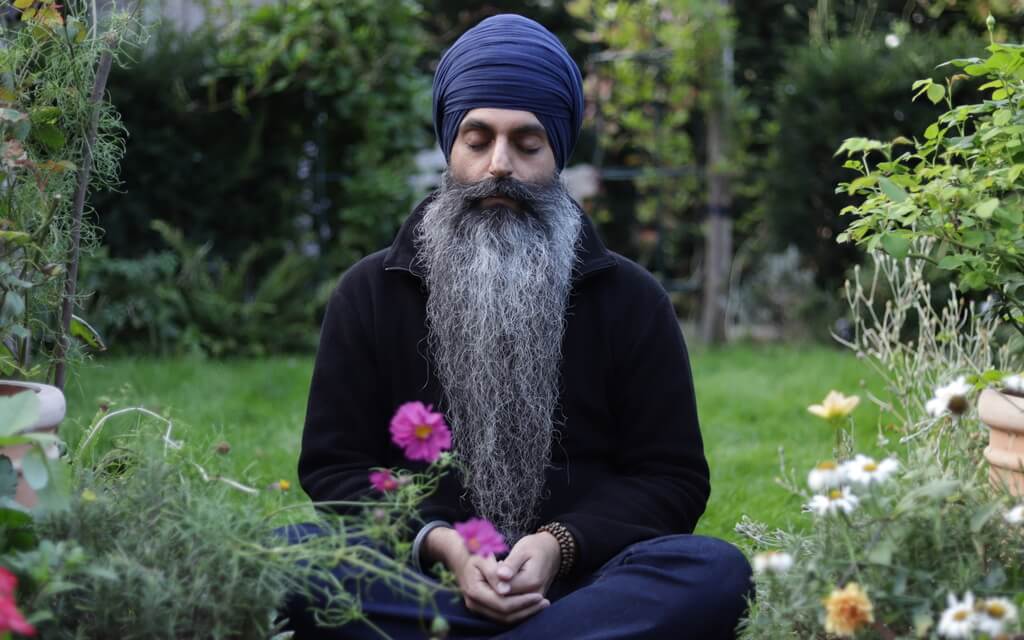
A session with Nanak Naam rarely follows the predictable arc of contemporary mindfulness instruction. Whether experienced through their podcast, a live satsang, or an online retreat, the teaching moves fluidly between guided meditation, scriptural exegesis, and direct confrontation with contemporary psychological patterns. A typical session might open with silence, move into a discussion of a particular passage from the Guru Granth Sahib, translate that concept into modern psychological language, then drop into a twenty-minute guided practice designed to embody the principle just discussed.
The physical environment matters less than the pedagogical rhythm. Nanak Naam builds their teaching around repetition without redundancy—returning again and again to core concepts but approaching them from different angles. A retreat might spend three days circling the concept of haumai (ego-attachment), examining it through meditation, personal inquiry, devotional practice, and intellectual study. This multi-modal approach assumes students learn through different doorways and that spiritual understanding requires more than conceptual grasp.
The Recurring Territory
Three themes form the gravitational center of Nanak Naam's work: the practical dissolution of separation, the integration of devotion with insight, and the application of Sikh wisdom to contemporary psychological suffering.
The first theme—Oneness beyond concept—appears in nearly every teaching. But this isn't the Oneness of inspirational posters. Nanak Naam pushes students toward the uncomfortable recognition that non-separation includes the parts of life we'd prefer to quarantine: difficult emotions, people we dislike, aspects of ourselves we've disowned. The teaching asks: what becomes possible when you stop performing unity and actually investigate the mechanisms of separation?
The second theme weaves devotion into what might otherwise become dry psychological work. Mantra, prayer, and kirtan aren't ornamental here but essential technologies. Where secular mindfulness might encourage neutral observation of thoughts, Nanak Naam teaches practices that actively cultivate relationship with the divine. This isn't theism in the conventional sense but a kind of participatory non-dualism where devotional intensity accelerates insight.
The third theme addresses the gap between traditional language and modern experience. How do 16th-century teachings about maya apply to social media addiction? What does Guru Nanak's critique of ritualism mean for contemporary spiritual bypassing? The teaching consistently translates without diluting, finding the living nerve in historical texts.
The Questions That Haunt
Nanak Naam doesn't primarily teach answers. The pedagogy centers on questions designed to destabilize comfortable positions:
What are you protecting when you defend your separateness? Where does devotion live in a mind that's always assessing? What if your suffering isn't a problem to solve but a teacher you keep dismissing?
These aren't koans in the Zen sense—they don't aim to break rational thought but to redirect it toward honest self-investigation. Students are encouraged to sit with these questions in meditation, to journal with them, to bring them into daily life. The expectation is that real answers emerge from sustained inquiry, not from the teacher's explanations.
The Aesthetic of Delivery
Humor appears, but sparingly and without performance. There's little of the self-deprecating comedy common in Western dharma talks. When humor emerges, it's usually in service of deflating pretension or highlighting contradiction. More characteristic is a quality of directness—teachings delivered with warmth but without cushioning difficult material.
Silence plays a structural role. Guided meditations often include long stretches without verbal instruction, trusting students to work independently. Even in talks, pauses aren't rushed. The pacing assumes contemplation requires space.
Scripture appears constantly but not devotionally quoted as proof-text. Passages from the Guru Granth Sahib are examined, contextualized, and interrogated for their practical implications. The relationship to text is both reverent and critical—honoring the tradition while insisting that wisdom must be verified through direct experience.
Who It's For, Who It's Not
This teaching lands for people dissatisfied with purely secular mindfulness but allergic to dogma. It works for those willing to engage devotional practices without requiring belief in a personal deity. Students who thrive here tend to value intellectual rigor alongside emotional openness, and they're willing to work with traditional forms while questioning their own cultural assumptions.
It likely bounces off those seeking quick techniques, anyone uncomfortable with explicitly religious language, and practitioners deeply embedded in other specific lineages. The teaching doesn't simplify or secularize enough for those wanting spirituality without religion, nor does it maintain traditional forms rigidly enough for orthodox Sikhs seeking conventional religious instruction.
The Lineage Question
Nanak Naam occupies an interesting position: rooted in Sikh philosophy but not functioning as a gurdwara, teaching practices from the tradition while opening them to non-Sikhs, honoring Guru Nanak while incorporating language from Vedanta and contemporary psychology. This makes it part of a broader movement of diaspora teachers translating specific traditions for pluralistic contexts—similar in structure to insight meditation teachers bringing Theravada practices West, though the content and methods differ significantly. The teaching respects its source while refusing to remain contained by it.