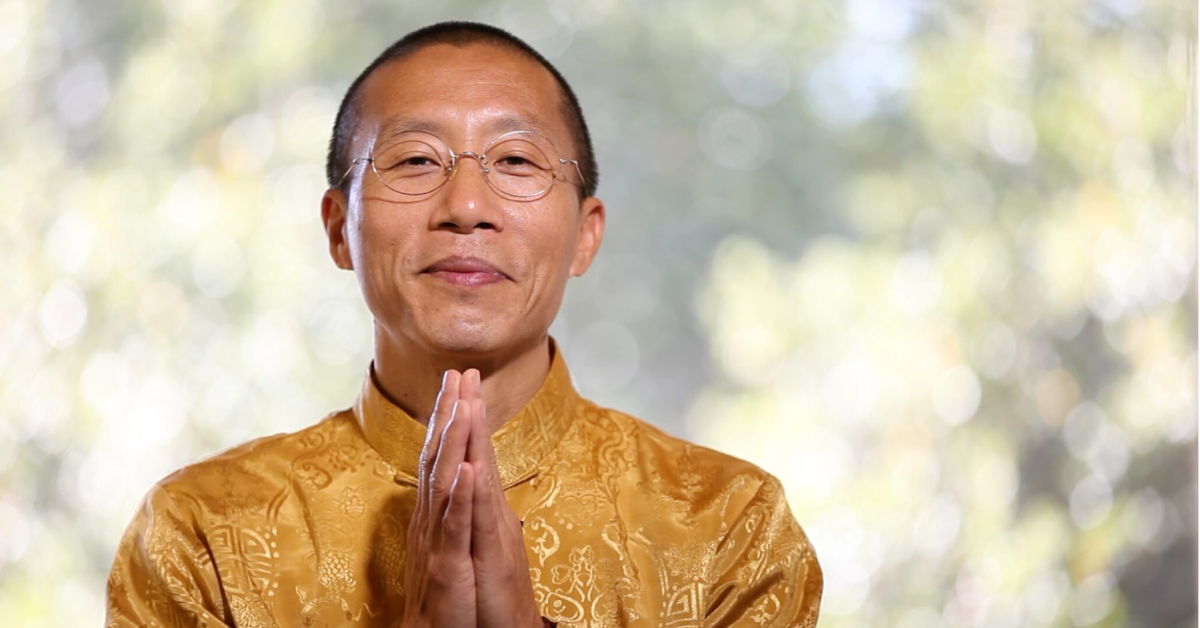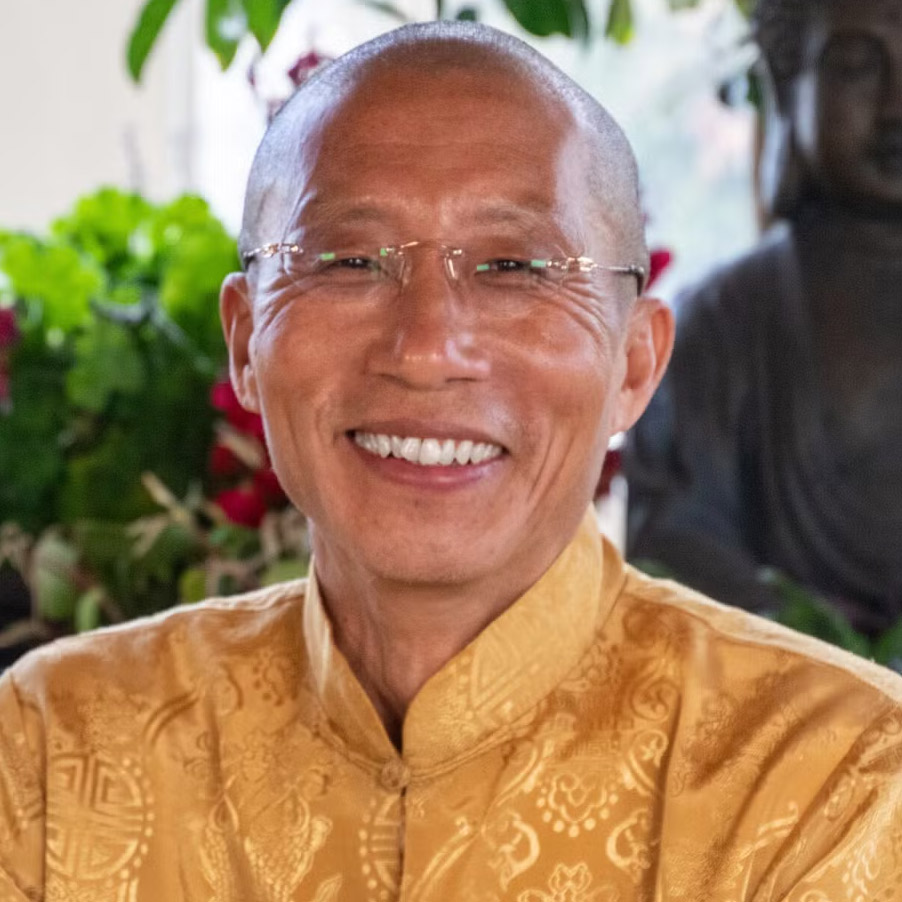

Mingtong Gu's Teaching: Approach, Method, and Voice
The Feel of the Room
A session with Mingtong Gu begins not with philosophy but with breath. Students—whether gathered in a retreat hall or joining via screen—are invited immediately into movement. Arms float upward, palms rotate, weight shifts from foot to foot. The instruction comes quickly, simply: "Open the heart. Smile to your liver. Let the energy flow." There's no extended warm-up of concept or context. You're in the practice before you've had time to overthink it.
This immediacy defines Gu's teaching architecture. A typical class might run ninety minutes, with perhaps ten minutes of framing talk and the remainder devoted to guided movement sequences, toning (extended vocal sounds on syllables like "haola"), and standing meditation. Retreats stretch this template across days, layering more complex Qigong forms and longer silent practices, but the ratio holds: less talking about chi, more cultivating it. The pacing feels deliberate but unhurried, with Gu often repeating instructions in slightly varied language, creating a hypnotic reinforcement that helps practitioners drop from head to body.
Recurring Terrain
Three themes surface constantly in Gu's teaching, forming a kind of trinity that structures his worldview. The first is unconditional love as healing force—not metaphor but mechanism. He returns repeatedly to the idea that the heart generates coherent energy patterns that can reorganize physical and emotional disorder. Students are guided to smile internally at organs, to direct love-infused awareness toward pain or disease. This isn't positive thinking; it's presented as energetic technology inherited from lineage masters.
Second is the concept of the energy body as primary. Physical symptoms, in Gu's framework, are downstream manifestations of energetic blockage or depletion. This inverts conventional Western cause-and-effect: you don't move to become healthy; you cultivate chi, and health follows. The body itself is understood as condensed energy, malleable through consciousness and practice.
Third, Gu emphasizes teacher transmission and lineage field. He speaks often of his own teacher, Grandmaster Pang Ming, and the "chi field" created when practitioners gather. This isn't individualistic wellness work but participation in a collective energetic matrix. The group amplifies what any single practitioner could generate alone—a teaching that makes his packed retreats feel less like classes and more like charging stations.
The Questions He Leaves You With
Gu doesn't pose koans or assign contemplative homework in the Zen sense, but his teaching implicitly asks: What if your resistance to healing is the only real obstacle? He frames illness and suffering as fundamentally solvable through correct practice and openness, which places profound agency—and burden—on the practitioner. The question becomes uncomfortably personal: if chi cultivation can heal, and you're not healing, what are you unwilling to release?
Another persistent inquiry: Can you feel it? Gu frequently pauses mid-instruction to ask students if they sense warmth, tingling, expansion. This isn't rhetorical. He's training a specific kind of interoceptive attention, asking practitioners to trust subtle somatic signals over conceptual understanding. Those who can't feel anything yet are gently encouraged to practice more, trust more, open more.
Aesthetic and Delivery
Gu's teaching voice is soft-edged, accented, often cheerful. He uses humor lightly—small jokes about the mind's resistance, self-deprecating comments—but never as performance. There's little storytelling in the narrative sense; when he references his own healing journey or traditional texts, it's functional rather than atmospheric, offered as evidence for practice rather than entertainment.
Silence plays a significant role, though not as dramatically as in Vipassana or Zen contexts. After guiding a movement or sound practice, Gu often lets students continue for extended periods without verbal instruction, the room filled only with synchronized breathing or collective toning. Scripture appears sparingly; he's more likely to reference principles from Traditional Chinese Medicine or his teacher's "Hunyuan Whole-Body Theory" than Buddhist sutras or Daoist classics.
Who It Lands For
Gu's teaching attracts those already sympathetic to energy-based healing models—people conversant with acupuncture, reiki, or somatic therapies. It resonates especially with students managing chronic illness or pain, drawn by the promise that what Western medicine couldn't solve might yield to dedicated energetic practice. His approach offers both community and practical method, appealing to those who want less philosophy and more bodily technique.
It may bounce off skeptics, strict materialists, or those uncomfortable with hierarchical teacher-student dynamics. The emphasis on transmission and lineage can feel uncomfortably devotional to practitioners from non-hierarchical meditation backgrounds. And the optimistic framing of healing—while empowering for some—can feel invalidating to those whose conditions haven't responded to these methods.
Location in the Wider Field
Gu works within the Zhineng Qigong lineage, a modernized system developed by Pang Ming that emphasizes consciousness-directed energy cultivation. This places him in the broader stream of Chinese internal arts but with a specifically therapeutic, accessible focus rather than martial or mystical orientations. His teaching bridges traditional Eastern energy work and contemporary wellness culture, making thousand-year-old practices legible to modern seekers without entirely secularizing them. He's part teacher, part healer, part lineage-holder—a recognizable figure in the expanding territory where ancient practice meets global healing hunger.