
La Luz by Ajeet: A Listening Guide
An Opening Into Radiance
La Luz arrives as Ajeet's latest transmission, a seven-track album released in April 2026 that finds the kirtan leader and spiritual guide deepening his exploration of devotional sound. The title itself—Spanish for "the light"—signals an expansion beyond the Sanskrit mantras that anchor much of his work, suggesting a boundary-dissolving approach to the sacred. For an artist whose entire practice rests on the belief that sound can elevate consciousness, La Luz feels like both continuation and gentle evolution: still rooted in the Kundalini yoga tradition that shapes his artistry, but reaching across linguistic and cultural thresholds to touch something universal. This is music made by someone who understands devotion not as doctrine but as direct experience, and the album sits comfortably in Ajeet's arc as a mature statement from an artist who has long trusted the transformative power of sustained, intentional sound.
The Sonic Architecture
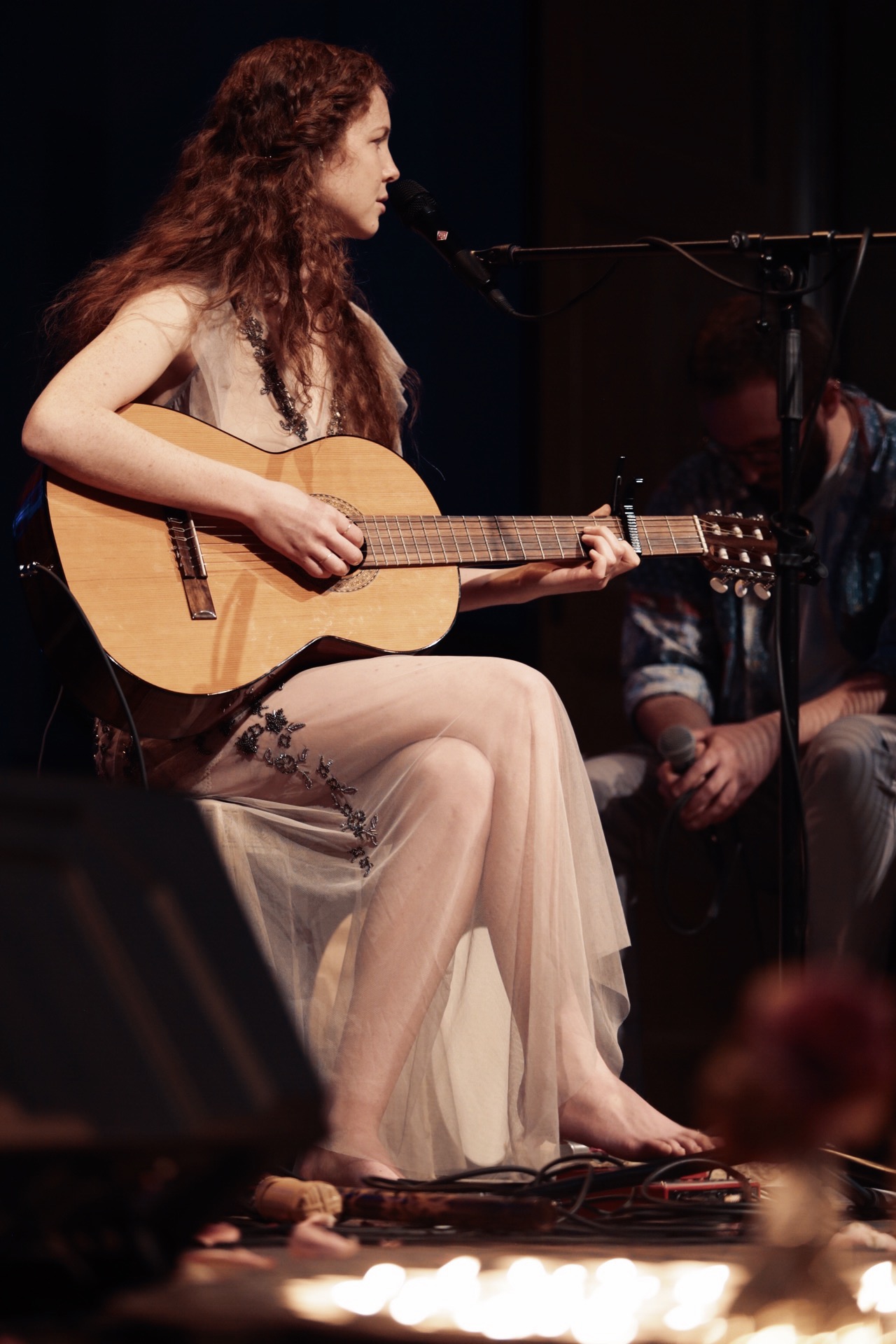
La Luz moves with the unhurried patience of twilight. The instrumentation is characteristically sparse—acoustic guitars, harmonium, subtle percussion—allowing each element room to breathe and resonate. Ajeet's voice remains the central thread: warm, unadorned, intimate enough to feel like it's being sung directly into the listener's ear rather than projected outward. There's none of the performance anxiety that can creep into devotional music when it reaches for grandeur. Instead, everything here serves the mantra, the breath, the space between sounds.
The pacing is deliberate, almost ceremonial. With only seven tracks, the album avoids overstaying its welcome while still creating a sustained meditative container. The mood hovers in that liminal space between melancholy and peace—not quite joyful, but deeply consoling. It's the sonic equivalent of candlelight: soft focus, gentle warmth, an invitation inward. The production favors presence over polish, capturing the slight variations in breath and tone that remind you a human being is making this offering in real time.
Where La Luz Sits in Tradition
This album belongs to the contemporary devotional movement that has emerged from Kundalini yoga communities, but it also draws from older wells: the bhakti tradition of ecstatic devotion, the kirtan practice of call-and-response chanting, and the ambient soundscape tradition pioneered by artists seeking to create contemplative sonic environments. Ajeet's work bridges the gap between these worlds effortlessly—it carries the lineage-grounded authenticity of traditional kirtan while embracing the production sensibilities of modern spiritual music.
La Luz would sit comfortably on a shelf beside early Krishna Das, Snatam Kaur's quieter moments, or the more devotional work of artists like East Forest. It shares with these contemporaries a commitment to music as medicine, sound as portal. But there's something distinctly Ajeet in the restraint here, the refusal to ornament what needs no decoration. This is devotional music for people who might be suspicious of devotional music—stripped of the aesthetic trappings that can sometimes feel like spiritual bypassing, leaving only the essential mechanism: voice, intention, repetition, presence.
Who This Album Is For
La Luz lands hardest for the listener in transition. It speaks to anyone sitting in the uncomfortable space between who they've been and who they're becoming—in grief, in recovery, in the aftermath of upheaval or on the threshold of transformation. This is music for the person who needs something to hold onto that won't demand they be anywhere other than where they are. It doesn't ask for ecstasy or even belief; it simply offers companionship in the practice of returning to the moment, again and again.
It's also for the seasoned practitioner looking for a soundtrack to established ritual—the yoga teacher queuing morning sadhana, the meditator seeking something to dissolve the resistance that arises in silence, the person who has learned that healing happens not in dramatic breakthroughs but in patient, repeated gestures of showing up.
How to Listen
La Luz deserves headphones and solitude, ideally in that golden hour when day softens into evening. This is not background music, though it's gentle enough not to demand aggressive attention. Rather, it asks for receptivity—the willingness to let sound move through you rather than simply past you.
Consider listening as ritual: light a candle, settle into a comfortable seat, and give yourself permission to simply be present for the duration. Notice where the music meets resistance in your body, where it creates space, where you find yourself breathing more deeply without trying. The album's seven tracks create a natural arc; trust it to hold you.
For those with an established practice, La Luz integrates beautifully into meditation or yin yoga. For those newer to contemplative listening, think of it as an invitation to experience music not as entertainment but as doorway—one you walk through not to escape yourself, but to finally come home.