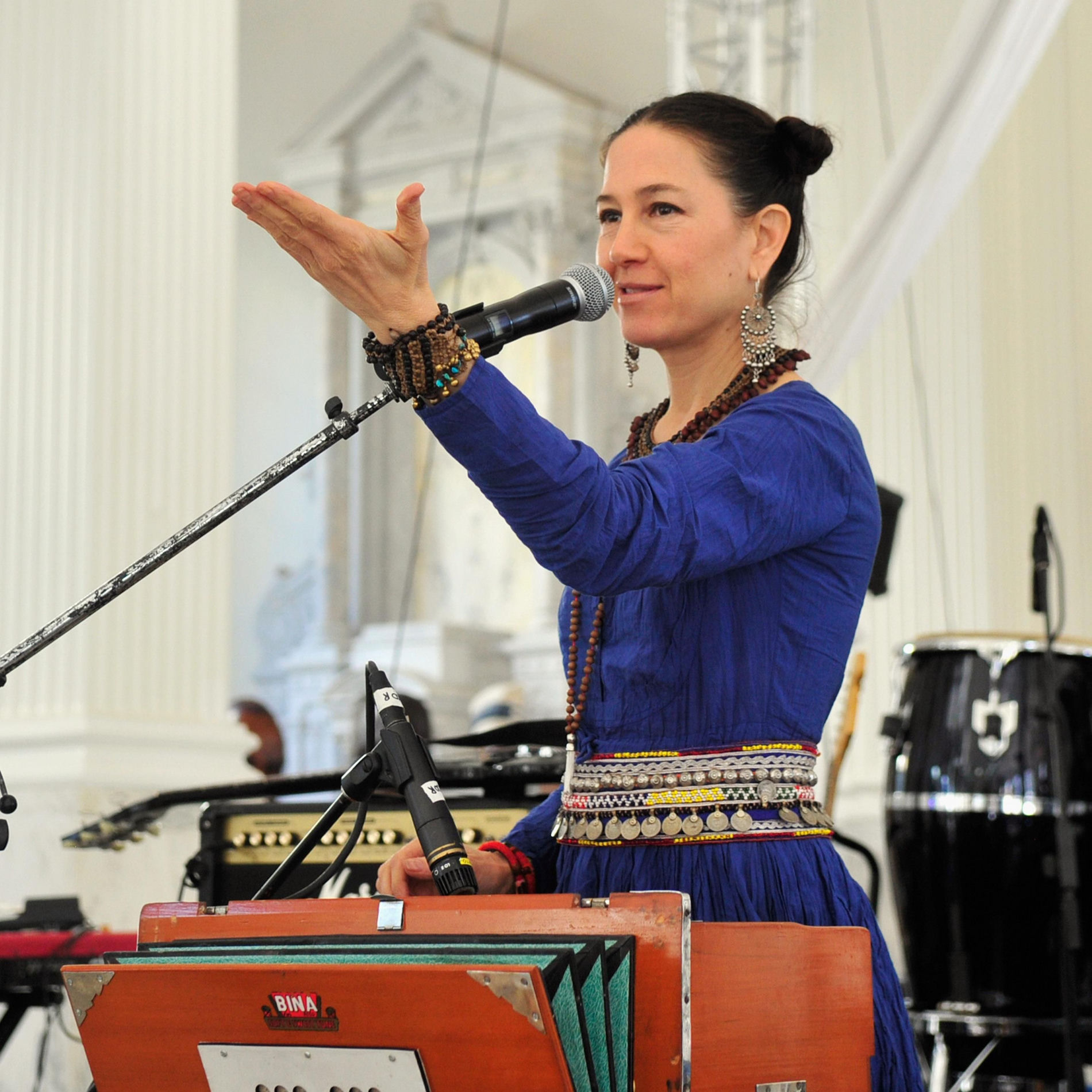

A Voice Shaped by Los Angeles
Donna De Lory's story begins in Los Angeles, a city whose musical diversity would become embedded in her artistic DNA. Born into a musical family, she grew up surrounded by sound—her early years marked by church singing and the kind of informal musical education that comes from being immersed in a creative household. This wasn't the calculated path of a child star; it was something more organic, a gradual awakening to the possibilities of the human voice. Los Angeles in those years offered a sprawling landscape of musical traditions, from the studio polish of pop production to the spiritual currents flowing through the city's alternative communities. De Lory absorbed it all.
Those formative experiences—singing in sacred spaces, experimenting with different musical projects—gave her a vocal style that defied easy categorization. She wasn't just learning technique; she was developing an approach to music that would later allow her to move fluidly between worlds that rarely intersect: the spectacle of pop performance and the intimacy of devotional practice.
The Madonna Years and Beyond
De Lory's breakthrough came as one of the most recognizable backup vocalists in pop music, most notably through her extensive collaboration with Madonna. This wasn't a brief stint or a one-album appearance—it was a sustained creative partnership that placed her at the center of global pop culture during some of its most transformative years. Night after night on massive stages, she learned what it meant to hold a note in front of thousands, to be part of a machine that demanded both technical precision and emotional presence.
Yet this period, which might have defined another artist's entire career, became something else for De Lory: a foundation rather than a ceiling. The pop music world taught her about production values, about the craft of arrangement, about what makes a song connect with a vast audience. But it also clarified what she wanted to say on her own terms. The turning point wasn't a dramatic break but a gradual realization that her voice could carry different messages, serve different purposes, reach toward different kinds of transcendence than those offered by stadium pop.
Devotional Music with Pop Sensibilities
Over the course of fifteen solo albums, De Lory has carved out territory that exists between established categories. She makes devotional music, yes, but not the kind that conforms to genre expectations or subcultural conventions. She draws from world music traditions without performing ethnic tourism. Her most recent album, Gone Beyond, exemplifies this approach—recordings that maintain high production standards while engaging spiritual themes with genuine searching rather than easy answers.
What distinguishes De Lory's solo work is her comprehensive involvement in every aspect of creation. She doesn't just sing; she writes, plays multiple instruments, arranges, and produces. This isn't about control for its own sake but about maintaining a distinct artistic vision. In the devotional music space, where many artists work within established traditions or rely on producers to shape their sound, De Lory's hands-on approach ensures her recordings carry a personal signature.
She's not a kirtan leader in the traditional sense, not a dharma teacher claiming authority from lineage or training. Instead, she's something perhaps more contemporary: an artist who brings pop music's accessibility and craft to spiritual exploration. Her work suggests that the contemplative and the catchy need not be opposites, that devotional music can have verses, hooks, and bridges without losing its capacity to create interior space.
The Current Chapter
Today, De Lory continues to release music that reflects her ongoing evolution as an artist. Her catalog spans world music, devotional compositions, and pop—a range that speaks to her refusal to be contained by genre boundaries. The spiritual themes that run through her recent work aren't presented as doctrine but as questions worth asking, paths worth walking.
Her audience, with over 33,000 followers on Spotify, represents a particular demographic: listeners seeking something more contemplative than mainstream pop but less dogmatic than traditional religious music. They're yoga practitioners, meditation students, spiritual seekers who've moved beyond the traditions they were raised in but still hunger for the sacred. De Lory reaches them precisely because she shares their position—informed by multiple traditions, committed to none exclusively, finding divinity in the act of creation itself.
Why She Matters
In an era of algorithmic categorization, Donna De Lory's career offers a model of artistic integrity that refuses simple classification. She matters not despite her boundary-crossing but because of it. Her journey from backup vocalist to spiritual pop auteur demonstrates that the skills learned in commercial music—precision, craft, production savvy—can serve contemplative ends without compromising either the professionalism or the profundity.
She represents a generation of artists who came of age in pop's imperial phase but sought meaning beyond its manufactured ecstasies. Her music offers proof that devotional practice and pop sensibility can coexist, that high production values and spiritual authenticity aren't contradictions. For listeners navigating their own paths between secular and sacred, between tradition and innovation, Donna De Lory's work provides not answers but companionship—the sound of someone a few steps ahead on a similar journey.