Programs at
Drala Mountain Center
Retreat Center · Red Feather Lakes, CO
A Shambhala Buddhist retreat center in the Rockies.
Drala Mountain Center occupies 600 acres of high-altitude wilderness at 8,000 feet in the northern Colorado Rockies, two hours northwest of Denver near Red Feather Lakes. The land was originally secured in 1971 by Chögyam Trungpa Rinpoche, the Tibetan meditation master who fled Tibet in 1959 and became one of the most influential teachers bringing Buddhism to the West. He founded the property as Rocky Mountain Dharma Center, establishing it as a mountain sanctuary for meditation practice and dharma study under his organization, Vajradhatu.
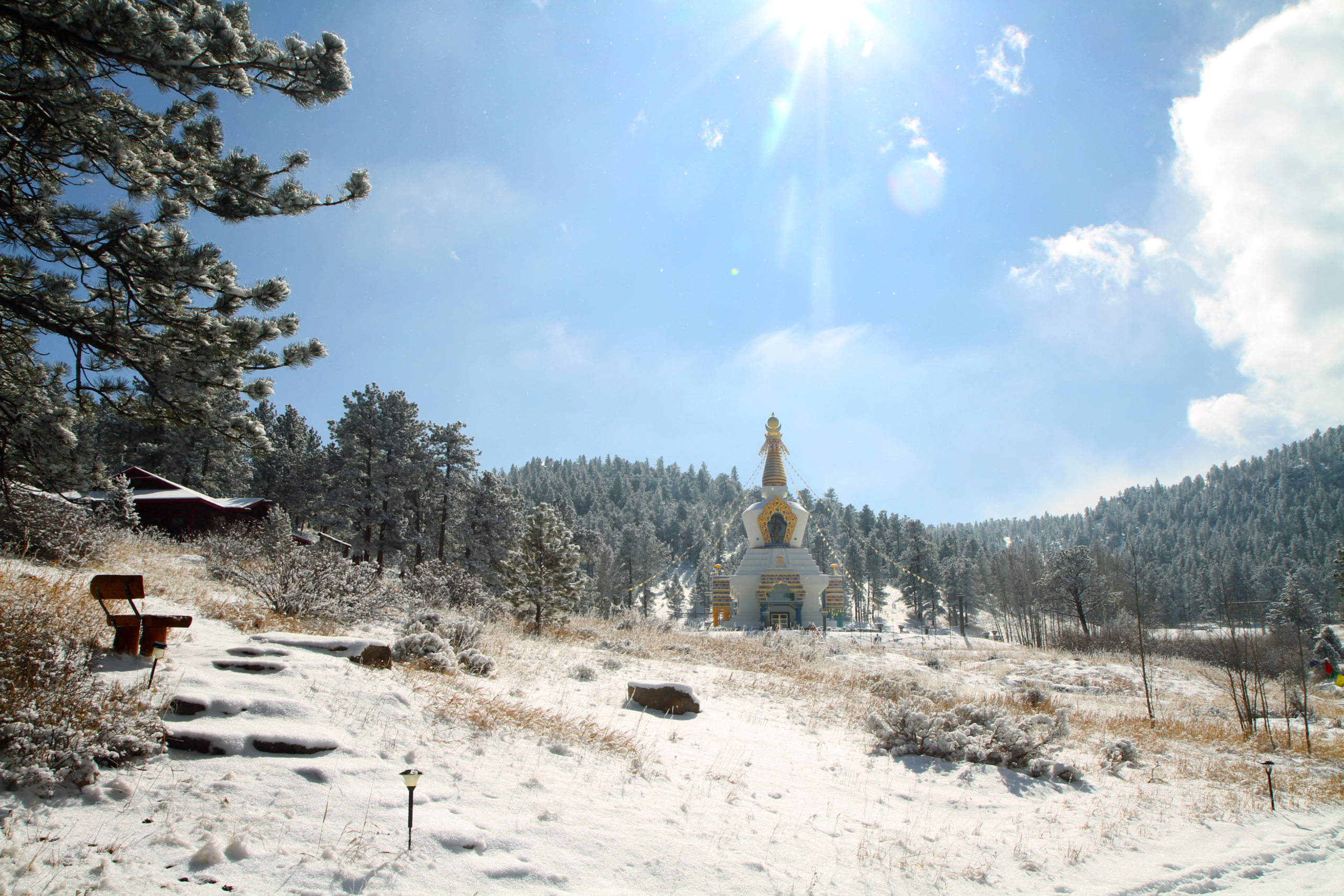
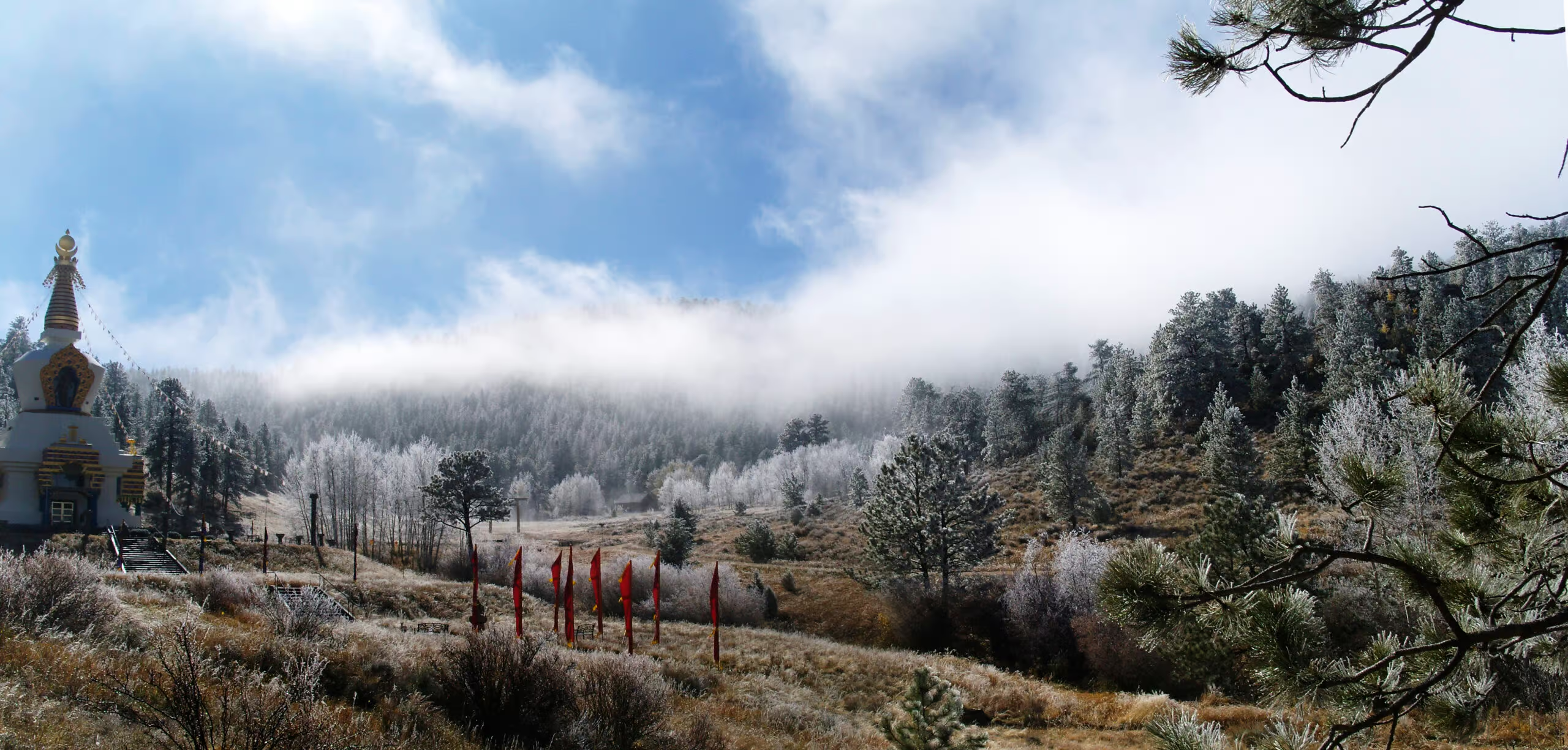
After Trungpa's death in 1987, construction began on what would become the center's architectural heart: the Great Stupa of Dharmakaya. Consecrated in 2001 after thirteen years of work, the 108-foot structure houses Trungpa's bodily remains and stands as one of the most significant examples of sacred Buddhist architecture in North America. More than 600 volunteers contributed to its construction, combining traditional Tibetan design elements with modern engineering, built with concrete formulated to last 1,000 years. Inside, a 24-foot golden Buddha sculpted in the Gandharan style sits in a four-story chamber adorned with hand-carved pillars and thousands of written prayers embedded within the walls.
In 2000, the center was formally incorporated as Shambhala Mountain Center, an independent 501(c)(3) nonprofit, though it maintained connections to Shambhala International and oversight from the Sakyong Potrang. The intervening decades brought growth, the center added more than 35,000 square feet of facilities including Sacred Studies Hall, multiple lodges, and dining spaces, hosting upwards of 100 programs annually.
Recent years have tested the land's resilience. The 2020 Cameron Peak Fire destroyed 17 buildings, damaged critical infrastructure, and burned more than 400 acres of forest. The COVID-19 pandemic forced sixteen months of program cancellations. And beginning in 2018, allegations of sexual misconduct against Sakyong Mipham Rinpoche, Trungpa's son who had led the broader Shambhala organization, created an organizational crisis that reverberated through the community worldwide.
In October 2021, the center achieved full legal and financial independence from the Sakyong Potrang, establishing its own self-governing board. Three months later, it changed its name to Drala Mountain Center, drawing from Trungpa's teaching about "drala", the Tibetan concept of energy beyond aggression, the uplifted quality of connecting directly with the world through sense perception. In February 2022, the center filed for Chapter 11 bankruptcy to restructure debt, emerging from reorganization later that year with stabilized operations and renewed focus on its mission: bringing people together to experience wisdom.
Today, the center offers more than 100 annual programs spanning meditation retreats, yoga intensives, silent practice sessions, Buddhist teachings across Tibetan traditions, contemplative arts, eco-dharma, and programs for educators, families, and young adults. Teachers range from senior Shambhala practitioners to visiting instructors from diverse wisdom traditions. The Pema Chödrön Foundation partners with the center to offer subsidized retreats for young adults. Notable programs include the Heart of Warriorship weekends (Shambhala Training's foundational meditation series), multi-week Vajrayana intensives, and silent meditation retreats that have attracted recent media attention for their role in a cultural shift toward contemplative practice.
The land itself remains the center's most profound teacher. Ponderosa pines, meadows, and native forests shelter moose, mule deer, elk, black bears, and mountain lions. Prayer flags flutter along trails that wind toward the stupa through aspen groves and across creeks. At this altitude, the air is crystalline, the night sky extravagant, and the quality of stillness palpable. Executive Director Robbie Rettmer and the staff continue stewarding this sanctuary through forest restoration projects, stream rehabilitation, and wildfire resilience initiatives, work that extends care not just to retreat participants but to the watershed, wildlife, and surrounding communities.
10 Upcoming Programs
What's Happening
All Upcoming Programs
10 programs · 11 total sessions scheduled at Drala Mountain Center
When
Length
Showing 10 of 10 programs