BrightStar

Parcourir tous les Events

Discover conscious gatherings

events

Yoga
Meditation
Breathwork
Qigong
Tai Chi
Sacred Music
World Music
Medicine Music
Sound Healing
Ecstatic Dance
Destinations populaires
BaliSedonaLos AngelesCosta RicaNew YorkSan FranciscoAustinMiamiJoshua TreeTulum
Voir toutes les catégoriesVoir toutes les destinations

Explorer toutes les fonctionnalités

Des outils puissants pour développer vos événements

Fonctionnalités de la plateforme

Tarification dynamique intelligente
Catégories de billets
Places assignées
Récupération des paniers abandonnés
Récupération des visiteurs
Dons & Prix variables
Système d'affiliation
Scanner de billets
Codes promo
Questions personnalisées
Partage de billets
Ventes additionnelles & Options
Analyses & Rapports
Séquences d'emails
Liste d'attente / Notifier / Rappeler
Personnes & Lieux
Artists & TeachersEvent OrganizersVenues & StudiosKnowledge BaseGlossaryInspiration
Voir toutes les fonctionnalitésÀ propos
TarifsBlog
Parcourir tous les événements

events

YogaMeditationBreathworkQigongTai ChiSacred MusicWorld MusicMedicine Music

Destinations populaires

BaliSedonaLos AngelesCosta RicaNew YorkSan Francisco

Personnes & Lieux

Artists & TeachersEvent OrganizersVenues & StudiosKnowledge BaseGlossaryInspiration

Fonctionnalités de la plateforme

Tarification dynamique intelligenteCatégories de billetsPlaces assignéesRécupération des paniers abandonnésRécupération des visiteursDons & Prix variablesSystème d'affiliationScanner de billetsCodes promoQuestions personnaliséesPartage de billetsVentes additionnelles & OptionsAnalyses & RapportsSéquences d'emailsListe d'attente / Notifier / Rappeler
Voir toutes les fonctionnalitésÀ propos
TarifsBlog
ConnexionChercheursCréateurs
Tibetan BuddhistOm Mani Padme Hum · Om Mani Padme Hum · Om Mani Padme Hum · Om Mani Padme Hum · Om Mani Padme Hum ·
  • Parcourir tous les Events
  • Pour les chercheurs
  • Yoga
  • Meditation
  • Breathwork
  • Qigong
  • Tai Chi
  • Sacred Music
  • Retraites
  • Ateliers
  • Toutes les catégories →
  • Bali
  • Sedona
  • Los Angeles
  • Costa Rica
  • Tulum
  • Byron Bay
  • San Francisco
  • Austin
  • Toutes les villes →
  • Pour les créateurs
  • For Teams
  • Pour les écrivains
  • Pour les enseignants
  • Pour les artistes de kirtan
  • Pour les studios
  • Pour les festivals
  • Pour les centres de retraite
  • Pour les associations
  • Ambassadeur de marque
  • Études de cas
  • Seva
  • Elevate
  • Amplify
  • Réseau de 350K+ acheteurs
  • Récupération des paniers abandonnés
  • Tarification dynamique intelligente
  • Catégories de billets
  • Événements récurrents
  • Places assignées
  • Système d'affiliation
  • Liste d'attente / Notifier
  • Scanner de billets
  • Widget intégrable
  • Event Syndication
  • Message Center
  • Integrations
  • Reports
  • Toutes les fonctionnalités →
  • À propos
  • The Ecosystem
  • Blog
  • Glossaire
  • Inspiration
  • Centre d'aide
  • Contact
  • Documentation API
  • Ressources de marque
  • Carrières
  • Presse
  • Conditions d'utilisation
  • Politique de confidentialité

Events

  • Parcourir tous les Events
  • Pour les chercheurs
  • Yoga
  • Meditation
  • Breathwork
  • Qigong
  • Tai Chi
  • Sacred Music
  • Retraites
  • Ateliers
  • Toutes les catégories →

Destinations

  • Bali
  • Sedona
  • Los Angeles
  • Costa Rica
  • Tulum
  • Byron Bay
  • San Francisco
  • Austin
  • Toutes les villes →

Pour les créateurs

  • Pour les créateurs
  • For Teams
  • Pour les écrivains
  • Pour les enseignants
  • Pour les artistes de kirtan
  • Pour les studios
  • Pour les festivals
  • Pour les centres de retraite
  • Pour les associations
  • Ambassadeur de marque
  • Études de cas
  • Seva
  • Elevate
  • Amplify

Fonctionnalités

  • Réseau de 350K+ acheteurs
  • Récupération des paniers abandonnés
  • Tarification dynamique intelligente
  • Catégories de billets
  • Événements récurrents
  • Places assignées
  • Système d'affiliation
  • Liste d'attente / Notifier
  • Scanner de billets
  • Widget intégrable
  • Event Syndication
  • Message Center
  • Integrations
  • Reports
  • Toutes les fonctionnalités →

Entreprise

  • À propos
  • The Ecosystem
  • Blog
  • Glossaire
  • Inspiration
  • Centre d'aide
  • Contact
  • Documentation API
  • Ressources de marque
  • Carrières
  • Presse
  • Conditions d'utilisation
  • Politique de confidentialité
BrightStar
© 2026 BrightStar. Tous droits réservés.
Inspire

Pyramid Archaeology: How ModernTechnology Reveals Ancient Secrets

YK
Yuki Kawae
Aug 30, 2019
7 min read
Watch · 7

TLDR: Yuki Kawae, an Egyptologist and researcher at Nagoya University, describes how the practice of pyramid archaeology has fundamentally shifted. Rather than simply finding and cataloging artifacts, modern pyramid research focuses on precise measurement, 3D mapping, and understanding the broader social and organizational context in which the pyramids were constructed. His work—including pioneering drone-based 3D surveys of the Giza pyramids and collaboration with international teams—demonstrates how technological innovation and interdisciplinary teamwork are reshaping what we know about ancient Egypt.

Read · 9 sections

From Fantasy to Field Reality: The Initial Culture Shock

Kawae's journey into Egyptology began at age 19, after failing his university entrance exam. Rather than accept that rejection, he decided to pursue his genuine interest directly: he moved to Egypt. His initial image of the pyramids—"like ancient swords that cut through the desert, a mysterious symbol"—collided sharply with reality. When he arrived, he discovered that the pyramids exist not in an isolated, timeless desert, but immediately adjacent to Cairo, a sprawling metropolis with a population exceeding Tokyo's. This juxtaposition between the romanticized idea of ancient Egypt and its modern geographic context proved formative.

The shock of that collision prompted a critical reexamination of what archaeology actually is. Kawae realized that the work of professional archaeologists and filmmakers had taught him something university education alone had not: how to communicate complex ideas to people unfamiliar with specialized knowledge. This communication skill—bridging the gap between academic expertise and public understanding—became central to his approach to both research and outreach.

What Do Archaeologists Actually Do?

A turning point in Kawae's career came after university, when he joined a research team and began working under Mark Lehner, a leading American Egyptologist and pyramid scholar. Lehner's influence reframed Kawae's understanding of archaeological practice. As Kawae explains: "People may imagine that the job of archaeologists is to find things, but our job is actually to record what is inside. It is the story of illusions that can be said through records, and from there we can learn about a certain era of true humanity."

Lehner himself had been the first to rigorously measure the pyramids—a fact that shocked Kawae. Despite four and a half thousand years of human attention on these structures, no one had systematically and precisely documented them. Lehner had discovered evidence of human activity dating back 4,500 years, not merely footprints but material traces embedded in the structures themselves. This shift from collection to documentation, from discovery to measurement, represents a fundamental reorientation of archaeological methodology.

The Technical Challenge: Climbing, Cameras, and Why Drones Cannot Enter Egypt

To properly measure and map the Great Pyramids, Kawae's team needed high-resolution data of the structures' exteriors and internal details. Early attempts relied on traditional methods: team members physically climbed the Giza pyramids carrying cameras and recording equipment. Kawae notes that one climb took approximately half a day. The most hazardous moment came when a camera operator descended during the ascent, having already descended partway down the pyramid face, which created both logistical and safety complications.

The team's initial approach—filming from the summit and using those images to reconstruct 3D models—produced insufficient data. The angles and distances captured from ground and summit views did not contain enough information to generate accurate structural models. The logical next step was to use drones for aerial filming around the pyramid complex, which would provide the geometric data needed for proper 3D reconstruction.

However, Egypt's customs authorities prohibit drones at airports. Kawae explains: "They're used for spy flights, and they're also used for military purposes, so they get caught at the airport and then they get taken out." Commercial drone imports are effectively blocked. This forced the team to pivot to a local Egyptian drone company, which was able to operate within Egypt's regulatory environment and capture the aerial footage needed for their analysis.

International Collaboration and the Emerging Explorers Program

Kawae's work gained recognition beyond academic circles. His team—composed of mathematicians, action specialists, and CG experts—was selected as one of approximately ten teams worldwide by the National Geographic Society as an "Emerging Explorer," an honor that elevated the profile and resources available for pyramid research. This recognition facilitated access to filming technology and media partnerships, including collaboration with Japanese television programs like "World's Mysteries Revealed."

The involvement of media partners proved essential. Because commercial drones could not be brought into Egypt through official channels, the television production team arranged for local drone operators to capture the necessary footage. This pragmatic solution—using local infrastructure and media networks to circumvent regulatory barriers—allowed the project to proceed.

The First 3D Measurement Data: What the Drones Revealed

The drone-captured imagery was then processed into detailed 3D models. Kawae emphasizes: "This is the world's first measurement data of a 30-yen stone"—referring to the blocks of the pyramid. From the aerial data, the team could determine precise dimensions, angles, and structural relationships that had never been systematically documented. The measurements revealed something unexpected: the internal structure of the pyramids did not match earlier assumptions. As Kawae states, "It was not at all the three shapes we had imagined."

This finding illustrates why precise measurement matters. Without systematic recording, archaeological understanding remains bound to speculation or inherited narrative. With quantified data, the actual geometry emerges, potentially overturning long-held beliefs about how these structures were designed and assembled.

Why Precision Measurement Transforms Archaeological Understanding

The shift from artifact discovery to systematic measurement represents a philosophical and methodological change in archaeology. Kawae's work with drone-based 3D mapping exemplifies this: rather than finding individual objects or even understanding individual chambers, the goal is to document the complete, measurable reality of the structure itself. This data then becomes the foundation for asking deeper questions.

The collected measurement data is now being analyzed by teams of researchers to understand not just the pyramid's physical geometry, but the organizational, mathematical, and logistical systems that enabled its construction. This is why Kawae emphasizes the broader aim: understanding "what kind of world the pyramids were built in, where humans lived, what kind of organizations they belonged to, and what kind of nations they were, and how they created the pyramids."

Bridging Academic Rigor and Public Communication

Kawae repeatedly returns to a central tension in his work: the need to maintain academic integrity while engaging with media and public audiences. He acknowledges that media narratives about pyramids often diverge from what research actually supports. Yet rather than dismiss media engagement, he argues for patient, ongoing dialogue: "If we continue to communicate, we can eventually reach a mutually agreeable solution."

This reflects his belief that the role of the researcher is not simply to gatekeep specialized knowledge, but to participate in genuine conversations about what the evidence shows. This requires learning to explain complex technical work—3D modeling, structural analysis, chronological dating—in language that reaches people without formal training in archaeology or engineering.

The Next Phase: Reconstructing the Ancient World, Not Just the Structures

Kawae concludes his talk by outlining the next frontier. Pyramid research is undergoing a transformation: diverse teams of specialists are converging on shared data sets, and the accumulated measurement data is creating an increasingly clear picture of pyramid geometry and construction. The work ahead extends far beyond the pyramids themselves. Understanding how such monumental structures were conceived, organized, and built requires understanding the society that produced them: the labor systems, the mathematical knowledge, the political organization, the resource distribution networks.

The pyramids are not isolated monuments but artifacts of a specific historical moment. By treating them as measurable, analyzable objects embedded in social context, rather than as timeless mysteries, archaeology can begin to reconstruct genuine knowledge of ancient human civilization.

Where to Go From Here

If you are interested in how modern technology is reshaping archaeological research, explore how 3D laser scanning and drone mapping are being applied to other ancient sites. Kawae's emphasis on measurement as the foundation of understanding applies across archaeology—from underwater shipwrecks to cave paintings to monumental architecture. His work also illustrates the growing role of international collaboration and interdisciplinary teams in solving questions that no single specialist can address alone. Finally, consider how the tension between media representation and academic precision plays out in other fields where complex knowledge must reach public audiences; Kawae's approach to that challenge—patient dialogue rather than dismissal—offers a model worth studying.

Transcript

[1:43] little about what I thought about the impact of the 10 minutes.

[1:48] I first entered Egypt when I was around 19, after graduating from high school. I was originally

[1:53] interested in Egypt, so I took the university entrance exam, but I

[2:00] failed. After that, when I was thinking about what to do next, I thought I'd go to Egypt because I was originally

[2:05] interested in it. I

[2:10] went to Egypt and then ended up living there for a long time. The

[2:19] image I had before going to Egypt was probably the same image I had when I was in high school, if you've never been there. I

[2:26] think people who have never been there have the same image as I did when I was in high school.

[2:31] Pyramids are like

[2:37] ancient swords that cut through the desert, a mysterious symbol. But when you actually

[2:44] go there, it's a

[2:46] big city with a population exceeding that of Tokyo, and the pyramids are right next to the city. When I

[2:53] saw that, I felt like I had a rush of fantasy,

[3:01] but then I thought, is this a new beginning? While working at the

[3:22] ruins, I was doing medical work,

[3:26] and if it actually applied to my field, I would do it. A lot of

[3:30] questions arose from the field, and I felt a strong desire to actually study filmmaking.

[3:41] As I was traveling, I thought that what was good about my small country was that, as with

[3:46] games, I was able to appear in the game "Catcher" which is about the soul of welfare, and I

[3:58] learned a lot about how to communicate with ordinary people. I tend to talk about difficult things, but

[4:03] here till, I think that when you

[4:06] share ideas, how to communicate, how to

[4:16] talk to people who don't know your field of expertise, I think that was something I hadn't really learned in the past. As I was

[4:22] traveling, I thought that I wanted to actually study, and at that time I was offered a scholarship,

[4:34] and my wife Emi and I were in the middle of a period of time, and I was really

[4:36] grateful to

[4:42] receive the scholarship, and I was able to

[4:44] study at university. When I look back on my

[4:48] life, I think that

[4:52] These investigations into the two-peaked Great Pyramids are one example, but I feel that I have been kept

[4:56] alive by the powerful flames of email level 1.

[5:03] Another important connection I made was after I graduated from university. After graduating from university, I

[5:09] joined the Gauge White Porcelain Society, and the person who played a

[5:12] major role in the excavation was

[5:17] Mark Reynor, an American high school scholar who is also my professor. He is a

[5:20] world minister in pyramid research, and he

[5:52] found not footprints but 22 real traces dating back 4,500 years, and has since become an empirical

[5:59] archaeologist and is now a leading figure in real research.

[6:04] He himself was the very first to do research, and he spoke out about the spirit of the

[6:11] 503

[6:12] Suga, saying that no one had properly measured and measured it before. People may imagine that the

[6:17] job of archaeologists is to find things, but our

[6:23] job is actually to record what is inside. It is the

[6:27] story of illusions that can be said through records, and from there we can learn about a

[6:32] certain era of true humanity. 1050 oz. In a few

[7:59] places where it sways, you can see the structure of the clothes that are not flat.

[8:03] For example, the top part is where the original platelets were in the

[8:09] first place, and there was a

[8:12] large pyramidal stone that was flying off the cap, but it's gone.

[8:16] So if you climb to the top, you can see the internal structure from above in a planar view, or rather, there is a

[8:23] depression in the northeast corner of the pyramid, about 80 meters away, and if you climb up there, you can see the place that was there,

[8:33] but as I've said many times, you have to climb up there, but in reality, it's just this, isn't it?

[8:43] The world is different, and I first came here in 2013, but at that time, by chance,

[8:49] various connections came together and I myself came to appear here. Reflecting on

[8:54] these connections, I

[8:56] myself became a minister, and what I think I have been doing is communication, and

[9:01] this is good,

[9:06] especially the media, the media has a way of thinking,

[9:12] but what I want to create is academic, there are things I want to testify about, and there are quite a few things that do not coincide,

[9:18] and in fact there are also stories that are not safe, but what

[9:23] I think is that within that 。 English: If we

[9:26] continue to communicate, we can eventually reach a mutually agreeable solution, and that's how

[9:34] I've always believed in this approach. And they really helped us out with the

[9:40] Shiga Prefecture perspective, and um, they lent us the

[9:45] footage,

[9:48] and we can actually use

[9:51] this footage to create something academic, like a body and face made by the three of us.

[9:55] This is a scene of us actually climbing. I

[10:01] often get tired asking how long it took to get to the top, but I

[10:07] think it took about half a day. Well, that was all a week ago,

[10:10] and then at this point, it's gone, and

[10:12] now even at 3, it feels like we're going to go off playing around,

[10:18] but what was the scariest thing was the camera that was passing through this footage. The

[10:23] world was climbing the sky routes of cities and prefectures, but the camera was already gone before we got on. Yes,

[10:29] 36 minutes. I

[10:31] wanted to go spring punk, but there isn't one, so I'm not going to say it now. Well, if I had

[10:35] held the camera, it would have been fine. Well, it didn't

[10:38] fall, and I was able to take this footage and bring it up to the front.

[10:44] Ultimately, we managed to capture the symptoms and filmed it, and from that footage we created a 30-yen

[10:50] maker,

[10:52] but the data didn't actually work very well. In the

[10:55] video, I'm standing there and you can see the structure behind me,

[11:01] but we used

[11:02] a

[11:03] camera to go through the beam section and then tried to

[11:07] collect the data from there, but the distance and angle weren't right. The

[11:14] best way to get the data would have been to use a drone to film around the Bronker Pyramid and then use the

[11:24] image to create a guard, which would have been successful, and then we could have

[11:28] generated the data from there,

[11:31] but you can't actually bring drones into Egypt. What do you mean by that? Well, they're used for

[11:37] spy flights, and they're also

[11:42] used for military purposes, so they get caught at the airport and

[11:48] then they get taken out. We were talking about that at a

[11:53] meeting, and this is the Bridge 7 team, but I'm not a

[11:58] member.

[11:59] I'm actually the only one who's come from high school. There are

[12:03] mathematicians, action and CG experts, and all sorts of people, like Patty

[12:14] Jobou.

[12:23] Years ago, in the United States, the Ravic Society selects about 10 people worldwide each year to be called

[12:30] Mars Explorers, and my team was selected for that.

[12:35] Among them, the

[12:38] TV show "World's Mysteries Revealed" found this large specimen. It was a

[12:46] train, so there was no actual drone available, so they

[12:53] used a local drone company. As a result, we were able to find out what kind of data we had.

[13:03] One of the stones is this one. We

[13:13] know the size and everything. This is the

[13:17] world's first measurement data of a 30-yen stone. As I

[13:20] mentioned, from the indentation we actually found it, we were able to

[13:26] find out if it was part of the pyramid's internal structure. It was not at all the

[13:31] three shapes we had imagined. We are still continuing this kind of

[13:37] analysis.

[13:41] Now, if you ask me, a group of dissenting researchers are

[13:43] gathering.

[13:47] In fact, pyramid research has undergone a major transformation in the last few years. All this

[13:52] data is now coming together, and the shape of the pyramid is becoming clear.

[13:57] But what are the people who are trying to do now? To

[14:02] put it simply, I'm not

[14:03] just researching the construction methods of the pyramids, but the larger worldview behind them. I'm

[14:17] studying what kind of world the pyramids were built in, where humans lived, what kind of organizations they belonged to, and what kind of nations they were, and how they created the pyramids. I

[14:33] think that with the analysis of this Beta, which I've been working on for the past 30 years, we'll be able to present our findings on the world of the pyramids to a few people. I'd like to present this on another occasion.

[14:43] Thank you for listening.

YK
AuthorYuki Kawae

Watch more from Yuki Kawae on YouTube.

View profileWebsite
Explore Topics
Pyramid-archaeologyAncient-egypt3d-mappingDrone-technologyMeasurement-data

Got Questions?

Frequently Asked Questions

Traditional archaeology focused on finding and collecting artifacts, while modern pyramid research emphasizes precise measurement, 3D documentation, and understanding the broader social context of construction. Kawae's mentor Mark Lehner was the first to systematically measure the pyramids, despite thousands of years of human attention on these structures.
Aerial drone footage provides geometric data from multiple angles and elevations, allowing researchers to create accurate 3D models of pyramid structures. This is far more effective than ground-level photography because it captures the complete spatial relationships needed for precise structural analysis.
Egypt's customs authorities prohibit drones at airports because they are classified as dual-use technology—usable for military and surveillance purposes. Kawae's team worked around this by partnering with local Egyptian drone companies that operate within the country's regulations.
The drone-based 3D data showed that the internal structure of the pyramids did not match earlier assumptions or expectations. This demonstrates why precise measurement matters: it can overturn long-held beliefs based on speculation rather than documented evidence.
Researchers aim to understand the ancient Egyptian world in which the pyramids were built—the organizations, labor systems, mathematical knowledge, and political structures that made such monumental construction possible. The pyramids are treated as artifacts of a specific historical society, not timeless mysteries.
Rather than dismissing media narratives that diverge from academic findings, Kawae advocates for patient, ongoing dialogue between researchers and public audiences. He believes that learning to explain technical work in accessible language is part of a researcher's responsibility.

Continue Reading

More on Inspire

View All
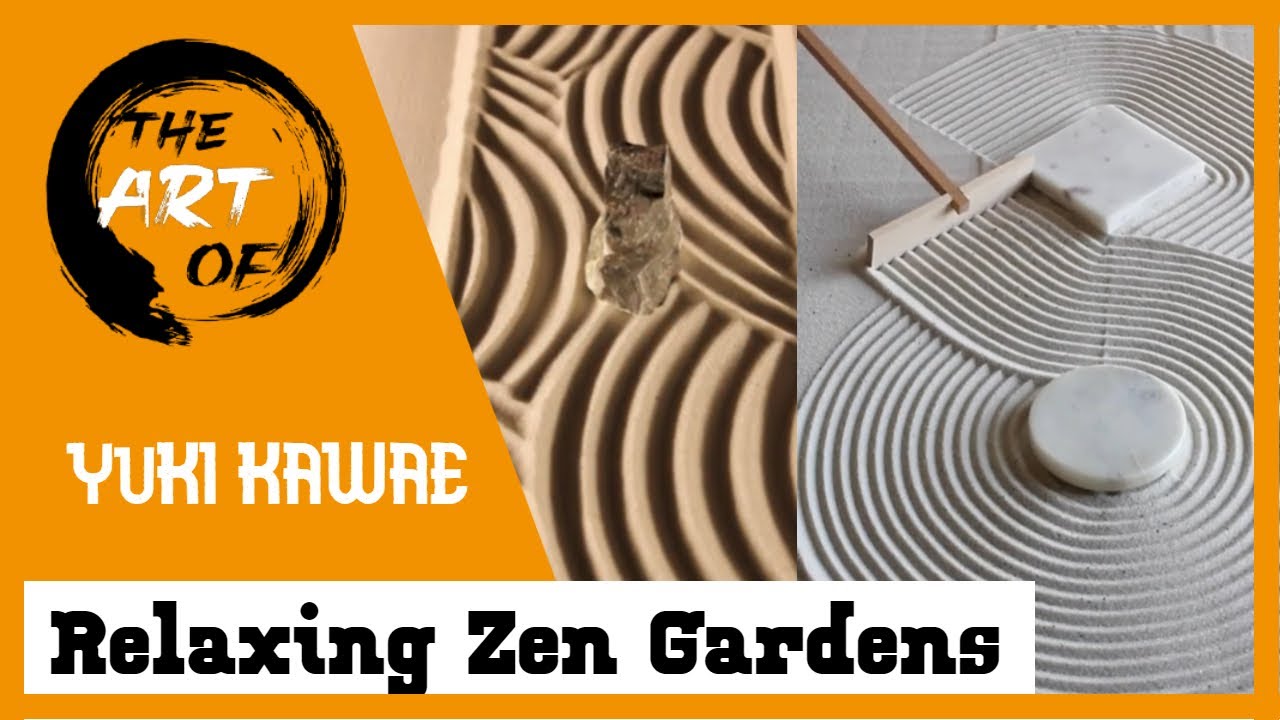
Sacred Geometry in Sand: Zen Art and Meditative Precision
Inspire

Sacred Geometry in Sand: Zen Art and Meditative Precision

Watch how a wooden rake transforms sand into perfect geometric patterns through meditative precision and flowing harmony. A 37-second explor…

1 min read
Zen Gardens Design: Yuki Kawae's Viral Aesthetic Philosophy
Inspire

Zen Gardens Design: Yuki Kawae's Viral Aesthetic Philosophy

Yuki Kawae explores the design principles behind viral zen gardens, revealing how minimalist aesthetics and intentional space create meditat…

1 min read
Zen Garden Raking: Karesansui Art for Calm and Meditation
Inspire

Zen Garden Raking: Karesansui Art for Calm and Meditation

Explore how Yuki Kawae's karesansui (rock garden) raking practice creates meditative calm through intricate sand patterns and repetitive, in…

1 min read
Gabriel Drives the Waves: Modern Metal and Natural Mysticism
Inspire

Gabriel Drives the Waves: Modern Metal and Natural Mysticism

A 24-second metal track blending alternative and modern metal aesthetics with nature imagery and voodoo mysticism. Experience raw sonic ener…

1 min read

Keep exploring

Continue your journey

More wisdom and gatherings from across the BrightStar directory.

More Articles

Browse the full library of teachings, interviews, and guides.

Back to all articles →

Teachers & Artists

Explore the lineages, musicians, and guides of the conscious world.

Explore artists →

Find an Event

Kirtan, retreats, sound baths, breathwork, festivals — happening soon.

Browse events →
Read more from BrightStarCreate Free Account
Host your own gatherings?Try the Demo