Best Programs at Vale de Moses for Beginners
Best Programs at Vale de Moses for Beginners
The fear is always the same: you'll be the only person who can't touch their toes, the only one asking stupid questions, the only one who needs a nap at 2pm while everyone else flows through their third vinyasa of the afternoon. You imagine a room full of contortionists who've been meditating since birth, and you—stiff, distracted, fundamentally not bendy enough to deserve a spot on the mat.
Here's what actually happens: you arrive and discover that half the people there started yoga six months ago. The other half have practiced for years but still use blocks, still take child's pose, still eat three desserts at dinner because the food is exceptional and no one is performing wellness like it's an Olympic sport. Vale de Moses runs on a different frequency than you're imagining.
The Programs That Welcome Beginners
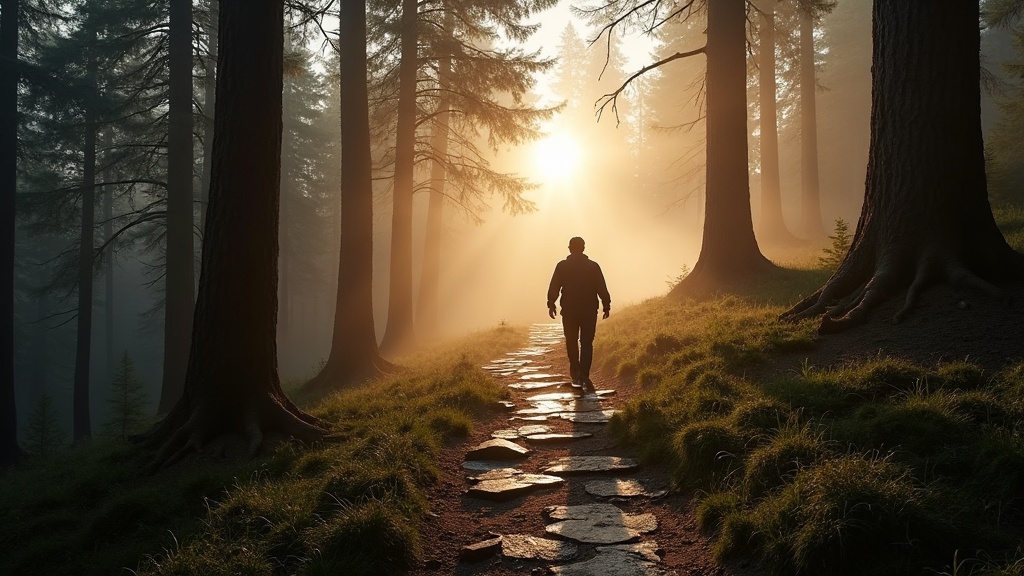
Weekend Yoga Retreats are your safest entry point. Friday evening through Sunday afternoon gives you enough time to settle into the rhythm without the commitment panic. You'll do morning and evening yoga sessions, eat communal meals, and have long午後s to walk the forest trails or sit by the river. The teaching pace assumes mixed levels. If you can get up and down from the floor without help, you're qualified.
Week-Long Hatha Programs work beautifully for beginners specifically because Hatha moves slowly. The style emphasizes holding poses rather than flowing rapidly between them, which means you have time to understand what your body is actually doing. Teachers adjust poses in real-time. You'll learn the mechanics of downward dog instead of rushing through seventeen variations before you've grasped the original.
Yin Yoga Weeks might seem advanced because holding passive poses for five minutes sounds intense, but Yin is secretly the most forgiving practice for new students. You're mostly on the floor. Props are essential, not shameful. The entire philosophy centers on finding your edge and breathing there—not pushing past it to prove something. Your tight hamstrings are an asset in Yin; they give you somewhere to work from.
Non-Yoga Themed Retreats (when Vale de Moses hosts them) often include gentle yoga as a component but center on something else—writing, creativity, forest bathing. These give you yoga exposure in smaller doses while exploring other practices. Perfect if you're yoga-curious but not ready to make it the entire focus.
What "Level" Really Means Here
Vale de Moses lists programs as "all levels" or "intermediate" not because of pose complexity but because of intensity and schedule. An "all levels" week might have two 90-minute sessions daily. An "intermediate" week might add pranayama, have longer sessions, or assume you know sun salutations without demonstration.
"Intermediate" doesn't mean you can bind in side angle pose. It means you've done enough yoga to know you enjoy it, you're comfortable spending two hours on a mat, and you won't feel lost when a teacher names a pose in Sanskrit. If you've taken a weekly class for three months, you're likely intermediate by Vale de Moses standards.
Programs to Skip (For Now)
Teacher Trainings require prior yoga experience and are marked as such. Don't register for a 200-hour YTT thinking it's an intensive learning experience for beginners. It is, but it's also rigorous, emotionally demanding, and assumes baseline knowledge.
Ashtanga Weeks follow a set sequence that practitioners traditionally learn over months or years. Showing up cold to an Ashtanga retreat means struggling to remember what comes next while everyone around you flows through the series from muscle memory. Take an Ashtanga basics course at home first, or choose Hatha.
Silent Retreats that include yoga are wonderful but belong to your second or third retreat. Silence is its own intensive practice. Combining it with learning yoga mechanics creates too many variables.
Choosing Your Duration
Take a weekend if you're testing whether you like retreats at all, if you can't get more time off, or if being offline and off-grid makes you twitchy. Weekends let you leave before existential breakthroughs get uncomfortable.
Choose five days if you're reasonably sure you'll enjoy it but want an exit ramp if it feels wrong. The middle length gives you time to relax into the schedule and actually feel different by the end, but it's not the full transformation arc of a week.
Book a full week when you want the experience to rewire something. The first two days you'll decompress. Days three and four you'll get bored or restless. Days five through seven, something shifts. You need the full arc to access what retreats actually offer, which isn't Instagram sunrise yoga—it's the strange settling that happens when you stop rushing.
When You're Ready for More
You'll know you're ready for intermediate or advanced programs when you leave a beginner retreat feeling slightly under-challenged. Not because it was easy—retreats are never easy—but because you spent more time helping others with straps and blocks than figuring out your own practice. When you're curious about depth rather than breadth, that's the signal. Move up.