Eating at Sharpham House: The Food Experience
Eating at Sharpham House: The Food Experience
The dining experience at Sharpham House mirrors the contemplative ethos of the estate itself: simple, seasonal, and designed to support rather than dominate your inner work. This is not a place where food becomes the main event, nor is it meant to be. The kitchen follows a wholesome vegetarian philosophy rooted in Ayurvedic principles, emphasizing foods that ground and nourish without creating heaviness or overstimulation—a practical approach when you're spending your days in meditation and silence.
The philosophy here isn't about dietary perfectionism or exotic ingredients. It's about eating in a way that sustains mindfulness. Meals feature organic vegetables from local Devon farms (and sometimes Sharpham's own gardens), whole grains, pulses, and gentle spicing. You won't find elaborate preparations or rich sauces. The aesthetic leans toward the austere side of nourishing—think substantial porridge rather than pastries, hearty soups rather than complex curries. Those who've sat long retreats elsewhere will recognize the approach: filling, clean, intentionally mild.
The Daily Rhythm of Meals
Breakfast typically appears around 7:30 or 8:00 AM, depending on the retreat schedule. Expect porridge with seasonal fruit compote, muesli, wholemeal toast, nut butters, and occasionally eggs for those who eat them. Herbal teas line the counter; cow's milk and plant-based alternatives sit alongside. It's a quiet, fueling meal designed to carry you through a morning of sitting and walking meditation.
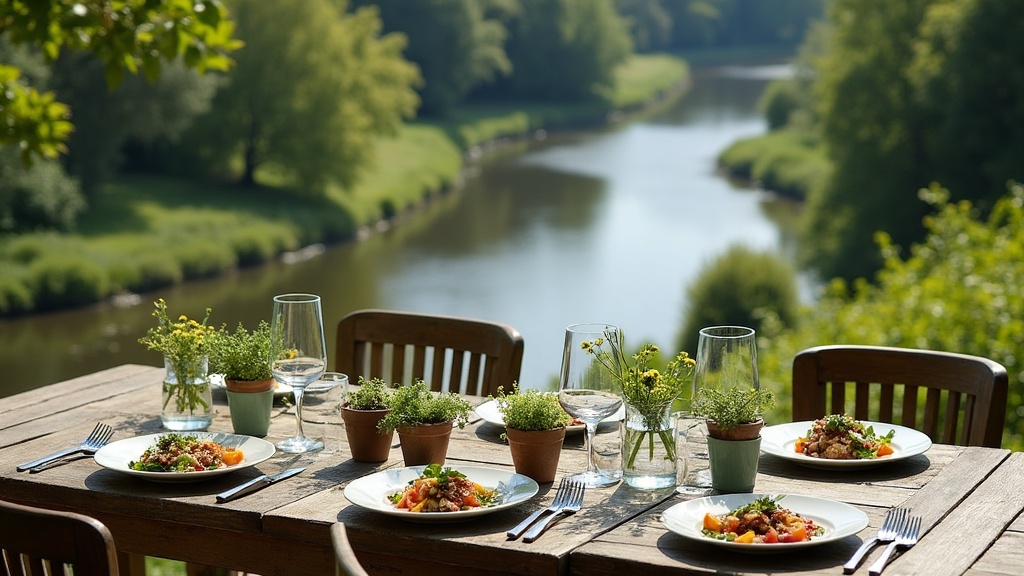
Lunch, served around midday, is the main meal. A warm grain or pulse-based dish forms the centerpiece—perhaps a dhal with brown rice, a vegetable and bean stew, or a root vegetable tagine. Side salads feature raw vegetables and leaves, dressed simply. There's always bread, hummus, and fruit. The portions are generous enough that you won't feel deprived, but the simplicity is intentional: easier to digest, easier to return to practice without the fog of a heavy meal.
Dinner arrives in early evening, lighter than lunch. Soup is common—a smooth butternut squash or a chunky minestrone—accompanied by bread and perhaps a grain salad or simple cooked vegetables. Some retreats offer only a light tea (soup and toast), particularly during intensive silent retreats where the traditional monastic schedule is observed.
The Dining Space
Meals unfold in rooms that retain Sharpham's Georgian elegance without any stuffiness. Depending on group size and retreat format, you might eat in the main dining room with its tall windows overlooking the Dart valley, or in a smaller adjacent space. During silent retreats, meals are eaten in noble silence, creating an atmosphere of collective mindfulness that transforms eating into practice. The scrape of spoons against bowls, the pour of tea, footsteps on old floorboards—these become the soundtrack. On non-silent retreats, conversation flows naturally, though the pace remains unhurried.
Accommodating Different Needs
Sharpham handles dietary requirements with the flexibility you'd hope for in 2024. Vegan options are standard (the baseline menu often is vegan or easily adaptable). Gluten-free needs are accommodated with advance notice—expect gluten-free bread, porridge alternatives, and modified main dishes. Allergy concerns should be communicated during booking; the kitchen staff are responsive and practical, though this isn't a facility with unlimited substitution options. Bring supplemental snacks if you have complex requirements or strong preferences.
Between Meals
A tea and coffee station remains available throughout the day in a designated area, stocked with herbal teas, hot water, and usually some plant-based milk. However—and this matters—caffeine is generally discouraged or available only in limited hours, particularly during intensive retreats. The intention is to support steadiness of mind rather than artificial stimulation. Some retreats request complete caffeine abstinence. If you're seriously caffeine-dependent, prepare accordingly or consider whether this environment suits your current needs.
Snacks are minimal. Fruit might be available between meals, but this isn't a help-yourself-to-the-pantry situation. The structure encourages working with whatever arises—including hunger, cravings, and preferences—as part of practice.
Special Occasions
The food rarely deviates from its steady simplicity, even on final evenings when some retreat centers mark celebration. The focus remains on practice rather than culinary events. Occasionally, teaching programs might include mindful cooking sessions or discussions about ethical eating, but dedicated food-focused programs are not Sharpham's emphasis. You come here to sit, walk, and look inward—the food quietly supports that journey without asking for attention.