Eating at Parmarth Niketan: The Food Experience
Eating at Parmarth Niketan: The Food Experience
The dining experience at Parmarth Niketan reflects the ashram's foundational philosophy: food is medicine, fuel for spiritual practice, and an offering of seva (service). Meals here are strictly sattvic—the Ayurvedic concept of pure, wholesome foods that promote clarity, balance, and spiritual awareness. This means wholly vegetarian cuisine, free from onions, garlic, eggs, and intoxicants, which Ayurveda considers tamasic (dulling to consciousness). For those accustomed to bold, heavily spiced Indian fare, this might initially feel austere. But there's a deliberate intention behind the simplicity: food that nourishes without overstimulating, that supports rather than distracts from yoga practice and meditation.
The Daily Meals
Breakfast at Parmarth Niketan typically arrives between 8:00 and 9:00 AM, following morning yoga and meditation sessions. Expect simple North Indian staples: fluffy parathas or puris with potato sabzi, seasonal fruit (bananas, papaya, or local offerings), and masala chai. Occasionally there's upma or poha, semolina or rice-based dishes that stick to the ribs without weighing you down. Porridge sometimes makes an appearance for Western guests seeking familiarity.
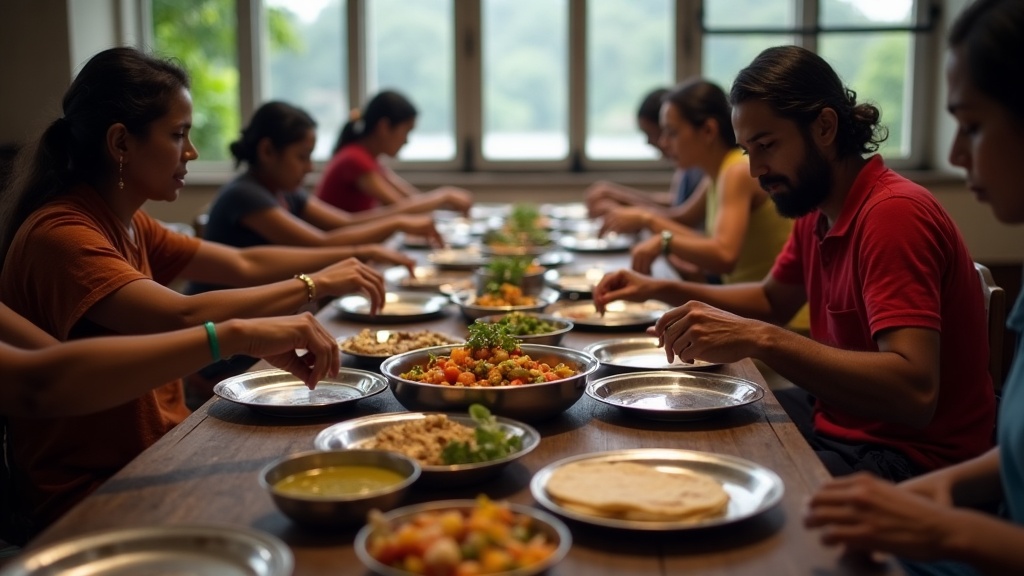
Lunch, served around 12:30 PM, is the main meal of the day. The thali-style presentation delivers rice, dal (lentils), two or three vegetable curries that change with seasonal availability, chapati, and a small serving of salad—typically cucumber, tomato, and carrot. Yogurt or buttermilk rounds out the plate. The food is freshly prepared, wholesome, and noticeably mild by Indian restaurant standards. Those hoping for fiery vindaloo-level heat should adjust expectations accordingly.
Dinner mirrors lunch in structure but lighter in quantity, typically served between 7:00 and 8:00 PM. The same thali format appears—dal, vegetables, roti, rice—though portions tend toward smaller servings meant to promote easier digestion before evening meditation and sleep.
The Dining Atmosphere
Meals take place in the ashram's large communal dining hall, a space that seats hundreds at long tables. The atmosphere balances the sacred and the social—guests sit together, often sharing tables with strangers who become familiar faces across a week-long stay. Traditionally, meals are eaten in relative silence or with quiet conversation, though this isn't strictly enforced. During major festivals or the International Yoga Festival, the dining hall buzzes with hundreds of practitioners from across the globe, creating a uniquely cosmopolitan yet devotional energy.
The hall itself is simple—clean, well-lit, functional rather than decorative. Stainless steel thalis are distributed assembly-line style, and volunteers circulate with large pots to serve additional helpings. It's worth noting: seconds are welcomed. Despite the sattvic simplicity, no one leaves hungry.
Dietary Accommodations
Parmarth Niketan handles basic dietary modifications with reasonable grace. The food is already vegetarian and can easily accommodate vegan requests—simply decline the yogurt and ghee. Gluten-free needs require more communication with kitchen staff, though rice and dal naturally fit this requirement. Those with serious allergies should speak directly with kitchen management upon arrival; with over 1,000 rooms and mass meal preparation, the kitchen cannot guarantee completely allergen-free environments, but staff typically work to accommodate within the constraints of large-scale cooking.
Between Meals and Beverages
Snacking isn't part of ashram culture, and food isn't available between designated mealtimes. Bring your own nuts, energy bars, or fruit if you require frequent eating for medical or metabolic reasons. A small canteen near the entrance sells packaged biscuits, chips, and fruit during limited hours, though these are basic provisions rather than gourmet options.
The caffeine policy aligns with sattvic principles: coffee is generally discouraged, though not forbidden. Chai appears at breakfast, but don't expect espresso machines or artisanal pour-overs. Those dependent on caffeine for functioning should bring instant coffee packets or plan to visit nearby Rishikesh cafes during free periods.
Special Programs
During the annual International Yoga Festival, the ashram occasionally hosts Ayurvedic cooking demonstrations and discussions on sattvic nutrition, though these aren't regular features. The food itself is the program—a daily lesson in simplicity, in eating to sustain practice rather than to indulge. It's honest food, famously austere by some standards, quietly nourishing by others.