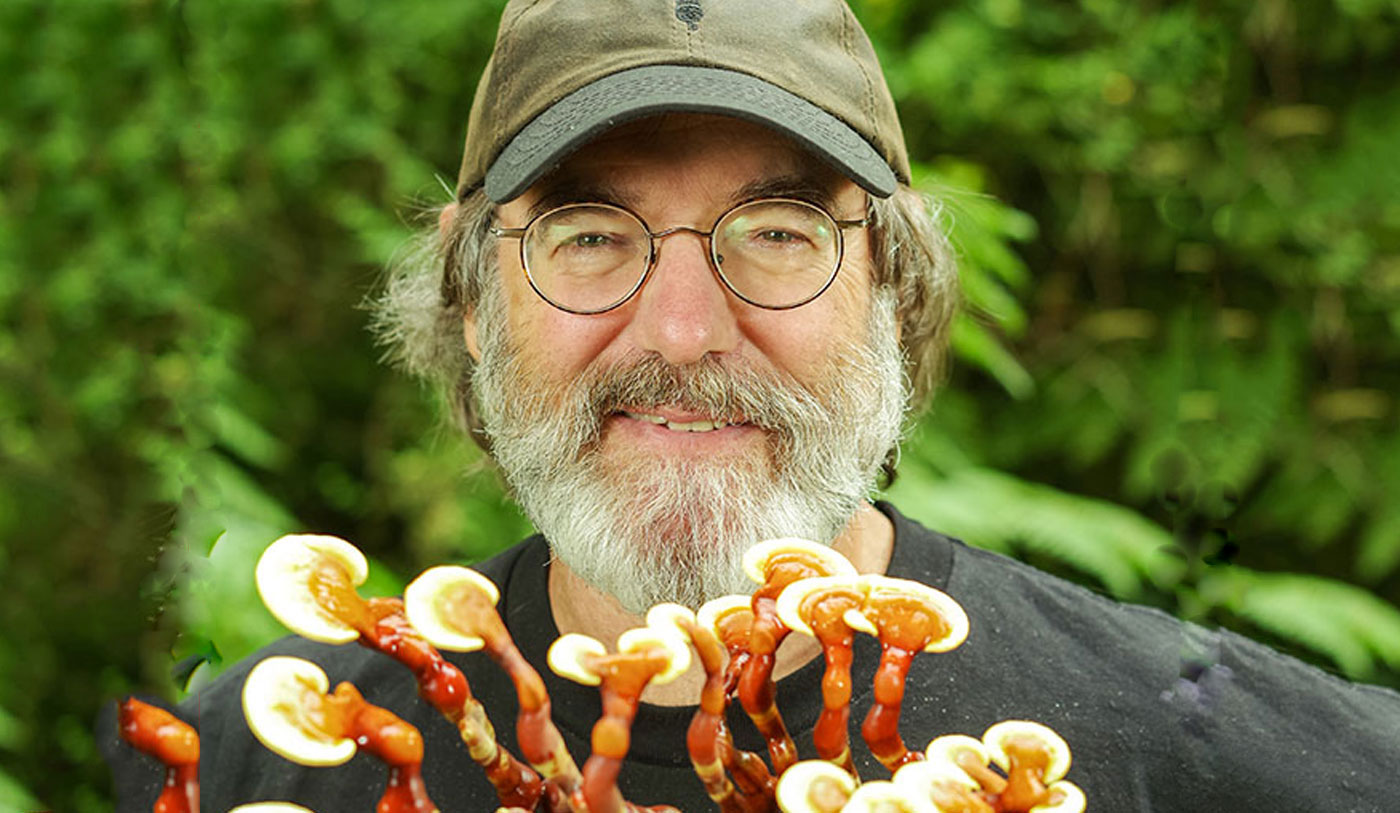

The Making of a Mycologist
Paul Stamets was born on July 17, 1955, in Salem, Ohio, into a family that valued the natural world. His childhood fascination with fungi would eventually transform into a life's work that has reshaped how we understand the ecological and medicinal potential of mushrooms. While many children might overlook the fungal kingdoms thriving beneath forest floors, Stamets found himself drawn to these mysterious organisms, a curiosity that deepened when he began exploring the forests of the Pacific Northwest.
His academic path reflected this passion. Studying biology and environmental science, Stamets built a foundation that would support decades of groundbreaking research. But more than formal education, it was his time spent in the rich, damp forests where mushrooms flourished that truly shaped his understanding. These early experiences instilled in him what would become a defining perspective: a profound respect for the interconnectedness of life and the delicate balance of ecological systems.
The Power of Mycelium
Today, Paul Stamets stands as one of the world's most influential voices in mycology—the study of fungi. His core contribution lies not just in cataloging mushroom species, but in revealing the extraordinary ways fungi can address some of humanity's most pressing challenges. While many see mushrooms as mere food or forest oddities, Stamets has spent his career demonstrating that these organisms hold keys to healing both human bodies and damaged ecosystems.
His work centers on several revolutionary applications of fungi. In medicine, he has explored how mushrooms can support immune function and overall health. In agriculture, he has developed methods for using fungi to promote soil health and sustainable farming practices. Perhaps most notably, Stamets has pioneered research into bioremediation—using fungi to clean up environmental contamination—and natural pest control, demonstrating that mushrooms can literally help detoxify the planet.
What sets Stamets apart is his ability to bridge traditional wisdom and modern science. He has drawn inspiration from indigenous cultures that have long recognized the healing properties of mushrooms, integrating this ancient knowledge with rigorous scientific investigation. This synthesis has yielded practical applications that are both innovative and grounded in ecological reality.
A Body of Work That Speaks
Stamets has translated his research into influential publications that have brought mycology to wider audiences. His book "Mycelium Running" presents a comprehensive vision of how fungal networks—the vast underground webs of mycelium—can serve as nature's internet, facilitating communication between plants while offering solutions for environmental restoration. The work explores everything from using mushrooms to filter pollutants from water to employing them in disaster relief scenarios.
"MycoMedicinals" focuses specifically on the therapeutic potential of fungi, offering evidence-based information about mushrooms that support human health. These aren't merely academic texts; they're practical guides that have inspired farmers, gardeners, environmental scientists, and health practitioners to incorporate fungal solutions into their work.
Beyond books, Stamets has reached audiences through lectures, workshops, and documentary appearances, making complex mycological concepts accessible to non-specialists. His presentations combine scientific rigor with genuine wonder, inviting people to see fungi not as something alien or intimidating, but as essential partners in creating healthier ecosystems and communities.
The Current Chapter
Stamets continues his work with the same intensity that marked his early career. His ongoing research explores new frontiers in fungal applications, from developing mushroom-based alternatives to synthetic pesticides to investigating how fungi might help address climate change through carbon sequestration. He collaborates with scientists across disciplines, recognizing that the solutions fungi offer are multifaceted and require diverse expertise to fully realize.
His influence extends beyond academic circles into popular culture, where he has become something of an ambassador for the fungal kingdom. Yet he maintains his focus on practical applications, constantly seeking ways to translate research into tools that communities can actually use. Whether working with farmers implementing sustainable practices or environmental groups tackling pollution, Stamets remains committed to making mycology relevant to real-world problems.
Why Stamets Matters
In an era of environmental crisis, Paul Stamets offers something increasingly rare: practical hope grounded in ecological understanding. His work matters because it demonstrates that solutions to complex problems—contaminated soil, declining pollinator populations, antibiotic resistance—may already exist in nature, waiting to be understood and applied wisely.
He reaches a remarkably broad audience: scientists seeking innovative research directions, environmentalists looking for restoration strategies, health advocates exploring natural medicine, and curious individuals simply wanting to understand the living world more deeply. This diverse reach reflects the universal relevance of his message: that fungi, long overlooked and often misunderstood, are essential allies in creating a more sustainable future.
Stamets' cultural significance lies in his ability to shift perspectives. He asks us to look down, to notice what grows in the shadows, to recognize intelligence and potential in forms of life we might otherwise dismiss. In doing so, he models a kind of ecological humility—an acknowledgment that humans don't need to engineer solutions from scratch when nature has already spent millions of years developing elegant systems.
Through decades of dedicated work, Paul Stamets has become more than a mycologist. He has become a translator between the fungal kingdom and human understanding, revealing connections that reshape how we think about medicine, ecology, and our place in the web of life.