Eating at The Bhakti Center: The Food Experience
Eating at The Bhakti Center: The Food Experience
The Bhakti Center is not a retreat center or ashram with resident programs—it's an urban kirtan temple in Manhattan's East Village that serves food in a specific, traditional context. If you're attending an evening kirtan session (held three nights weekly), you'll be offered prasadam—sanctified vegetarian food prepared as an offering and then shared with the community. This isn't a restaurant or a meal program; it's a devotional practice that happens to nourish the body.
The Food Philosophy
The food at The Bhakti Center follows the sattvic principles of Gaudiya Vaishnava tradition, rooted in bhakti yoga's spiritual approach to eating. Everything served is lacto-vegetarian: no meat, fish, eggs, onions, or garlic. This isn't about health trends or dietary restrictions—it's theology. Food is first offered to Krishna, then distributed as prasadam, a Sanskrit term meaning "mercy" or "grace." The act of eating becomes devotional when the food has been consecrated through offering and intention.
The kitchen operates on Ayurvedic sensibilities without being dogmatically Ayurvedic—meals tend toward fresh, simply prepared dishes that balance the six tastes (sweet, sour, salty, bitter, pungent, astringent) within traditional Indian vegetarian cooking. Ingredients are chosen with care, preparation is meditative, and the result is honest, homestyle food meant to support practice rather than indulge appetite.
What to Expect
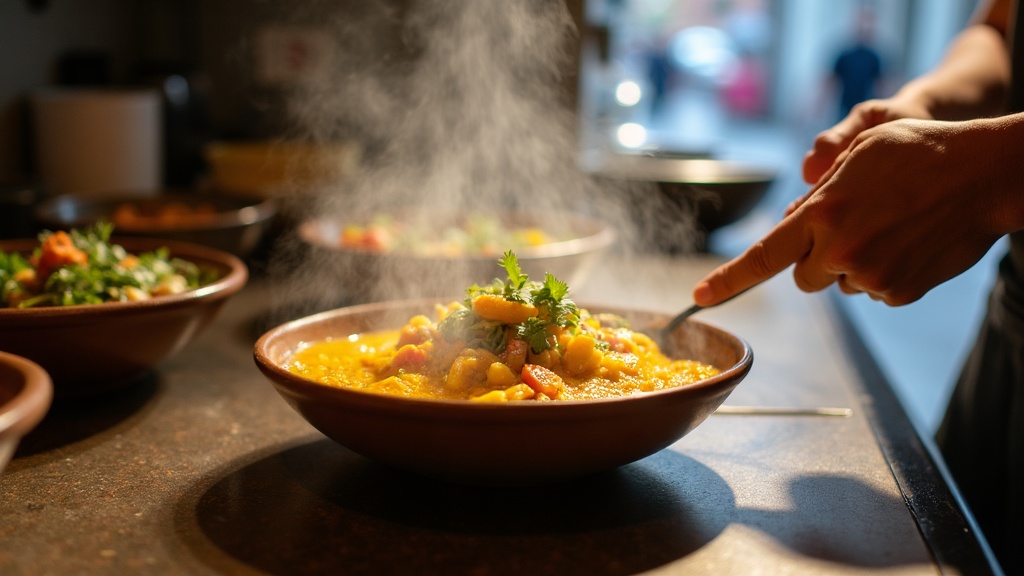
Because The Bhakti Center is not a residential facility, there are no regular breakfast, lunch, or dinner services. Prasadam is served after evening kirtan sessions, typically around 8:30 or 9:00 p.m., once the chanting concludes. The meal might include dal (spiced lentil soup), sabji (a vegetable curry with seasonal produce), rice, chapatis (whole wheat flatbread), and occasionally khichuri (a comforting rice-and-lentil porridge) or special preparations during festivals.
Portions are modest—this is sustenance, not a feast—but the food is genuinely good. It won't win Michelin stars, but it's made with devotion by volunteers who understand that cooking is seva (selfless service). The flavors are bright, properly spiced, and distinctly homemade. Don't expect Instagram-worthy plating; expect a stainless steel thali plate with warmth in every compartment.
The Dining Atmosphere
Meals are served in the same basement space where kirtan happens—a simple room with carpeted floors where practitioners sit cross-legged or on folding chairs. The atmosphere shifts from ecstatic chanting to quiet communal eating. Conversation happens, but softly. Some people eat in silence; others chat with neighbors. The fluorescent lighting stays practical, and the feeling is canteen-casual rather than ceremonial. You'll eat alongside students unwinding from Midtown office jobs, longtime practitioners, curious East Village wanderers, and occasionally families with children.
Food is served on disposable plates with plastic utensils—purely functional—and there's a communal sensibility to cleanup. Everyone brings their plate to the trash, rinses hands at the small sink, and the room gradually empties back onto First Avenue.
Dietary Accommodations
The baseline menu is already vegetarian and often vegan-friendly, though dairy (especially ghee and yogurt) appears regularly in traditional preparations. If you're strictly vegan, you can ask what's been prepared that evening—volunteers are accommodating and transparent about ingredients. Gluten-free needs are trickier since chapatis are wheat-based and cross-contamination in a small volunteer kitchen is likely. Those with serious allergies should approach cautiously and communicate directly; this isn't a commercial kitchen with allergen protocols.
Snacks, Coffee, and Between-Meal Options
There are no snacks, coffee service, or between-meal options. The Bhakti Center doesn't maintain café hours or stock a kitchen for drop-in eating. You're in the East Village—grab coffee at Mud or a dosa at Panna II before or after your visit. As for caffeine policy: there isn't one because there's no beverage program. Water is available. Chai might appear occasionally after kirtan, but don't count on it.
Special Meals and Food-Focused Programs
During major festivals—Janmashtami (Krishna's birthday), Gaura Purnima, or Ratha-yatra—prasadam becomes more elaborate, with sweets, special preparations, and larger community gatherings. These are the occasions when the food experience expands beyond sustenance into celebration, though even then, the focus remains devotional rather than gastronomic.