
The Architecture of One
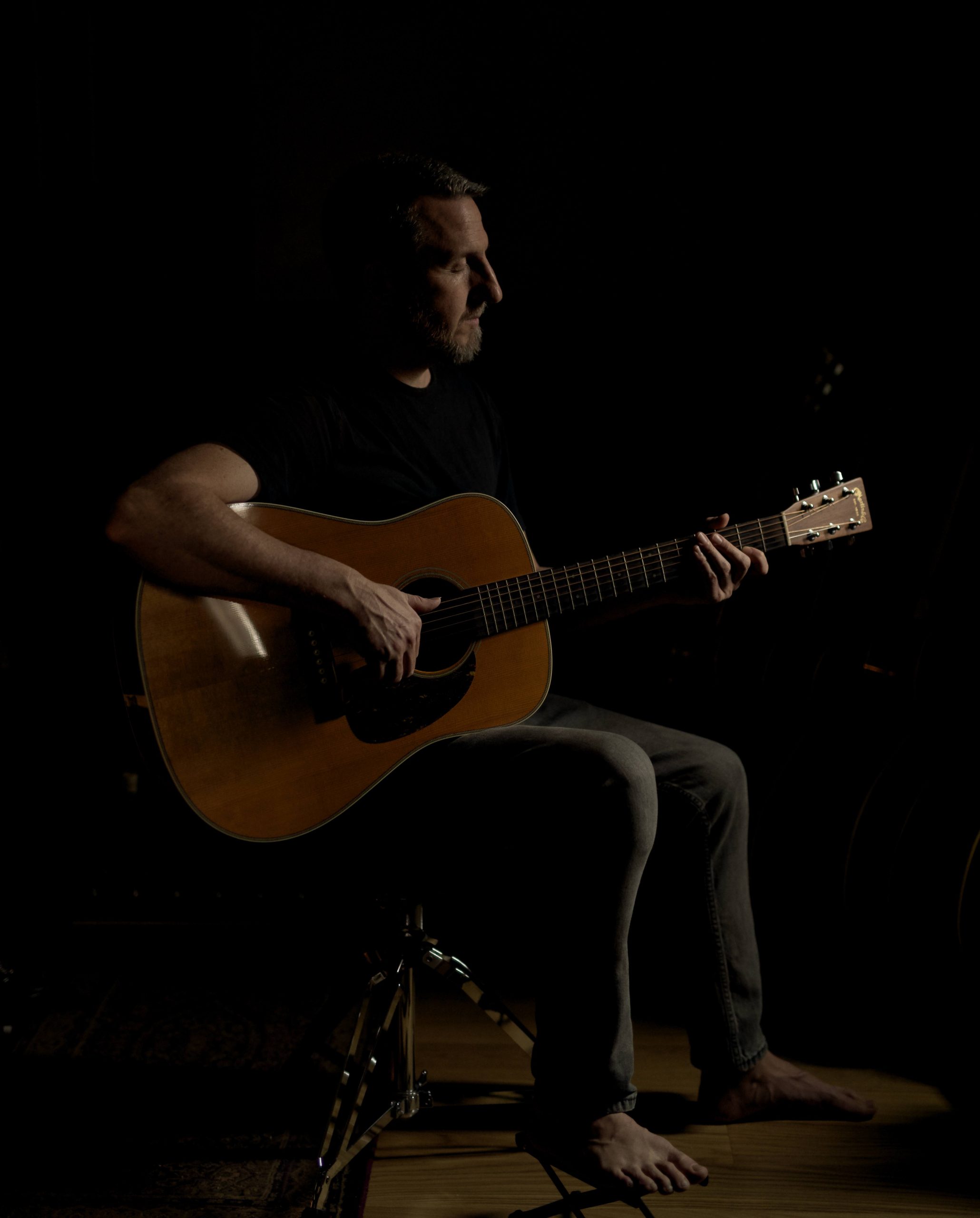
Todd Boston builds orchestras alone. Armed with a guitar, a wood flute, hand percussion, and a bank of loop pedals, he constructs what sounds like the work of multiple musicians—layering melodic lines, polyrhythmic patterns, and harmonic textures in real time. His concerts unfold less like traditional performances and more like watching someone assemble a cathedral of sound, one carefully placed stone at a time. In an era when electronic production has made such complexity commonplace in the studio, Boston insists on doing it live, in front of an audience, with acoustic instruments and no safety net.
What sets Boston apart in the crowded field of loop artists isn't just technical facility—though his command of fingerstyle guitar technique is formidable—but his refusal to simplify. Where many performers use looping to create ambient washes or electronic grooves, Boston pursues something more challenging: compositions that honor the rhythmic sophistication of world music traditions while maintaining the melodic clarity of classical training. The result resists easy categorization, sitting somewhere between the virtuosic investigations of contemporary fingerstyle players and the devotional music practices that have shaped spiritual communities across cultures.
The Fingerstyle Foundation
Boston's approach is rooted in fingerstyle guitar, a discipline that demands years of developing right-hand independence—the ability to play bass lines, chord voicings, and melody simultaneously on a single instrument. This isn't the strummed accompaniment of folk music or the single-note runs of electric blues; it's the kind of polyphonic thinking that classical guitarists spend decades mastering. Boston absorbed this vocabulary thoroughly enough that his guitar work functions as a complete musical statement on its own, even before the looping begins.
But technical mastery alone doesn't explain his sound. Boston extends his instrumental palette to include wood flute, hand percussion, and various world instruments, drawing on traditions that emphasize texture, breath, and the resonant properties of natural materials. This creates what he calls a "diverse palette"—not in the superficial sense of world music tourism, but as a genuine expansion of his compositional vocabulary. The wood flute brings a different relationship to melody and silence; the hand percussion adds rhythmic layers that a guitar cannot produce; the world instruments contribute timbral colors unavailable in the Western classical tradition.
Live Looping as Compositional Discipline
The live looping technology that Boston employs might seem like a modern shortcut, but in his hands it functions as a compositional constraint as rigorous as fugue or sonata form. Each loop must be precisely timed, harmonically compatible with what came before, and rhythmically locked to patterns that may already be cycling. A mistake in the early layers propagates through the entire piece. There's no pause button, no post-production correction. The architecture must be sound from the foundation up.
This approach produces what Boston describes as "the effect of a full ensemble from a single performer onstage." Audiences don't just hear the finished composition—they witness its construction, watching as Boston moves between instruments, triggers loops with foot switches, and manages multiple musical voices through what looks like a carefully choreographed dance. The transparency of the process becomes part of the artistic statement: nothing is hidden, no musicians lurk offstage, the complexity emerges entirely from disciplined preparation meeting real-time execution.
Chart Success and the Devotional Turn
Boston's recorded work has found recognition on Billboard's world and new age charts—categories that, while commercially modest, represent genuine cultural niches. These are listeners seeking alternatives to mainstream pop structures, drawn to music that suggests contemplation rather than consumption. The "devotional" designation in his genre classification points to something beyond religious affiliation: it's music designed to create space for interior experience, to accompany meditation, ritual, or simply sustained attention.
This isn't background music in the dismissive sense. Boston's compositions demand too much rhythmic engagement, too much melodic development to fade entirely into ambient wallpaper. But they do offer what devotional music has always provided: a framework for consciousness to settle, to observe, to rest without complete distraction. The polyrhythmic layers give the mind something to follow; the acoustic timbres maintain a connection to physical vibration rather than synthetic generation.
The Solo Performer's Paradox
Boston's current work continues to explore the central paradox of his practice: how to create music of genuine ensemble complexity while remaining fundamentally a solo artist. This isn't a limitation but a chosen constraint, one that forces constant innovation in technique, technology, and compositional approach. Each concert becomes a high-wire act of precision timing and musical memory, where years of preparation meet the unpredictability of live performance.
His significance lies not in any single innovation but in the integration of multiple disciplines—classical guitar technique, world music traditions, electronic looping systems, and compositional rigor—into a coherent artistic practice. For audiences seeking music that demonstrates visible mastery while serving contemplative purposes, Boston offers a rare combination: virtuosity in service of something beyond display, technology employed to create rather than replace human presence, complexity that invites rather than intimidates.
In a musical culture increasingly dominated by digital production and collaborative teams, Boston reminds us what one dedicated practitioner can achieve: not an orchestra, exactly, but the sound of a single consciousness thinking orchestrally, building sound worlds alone.