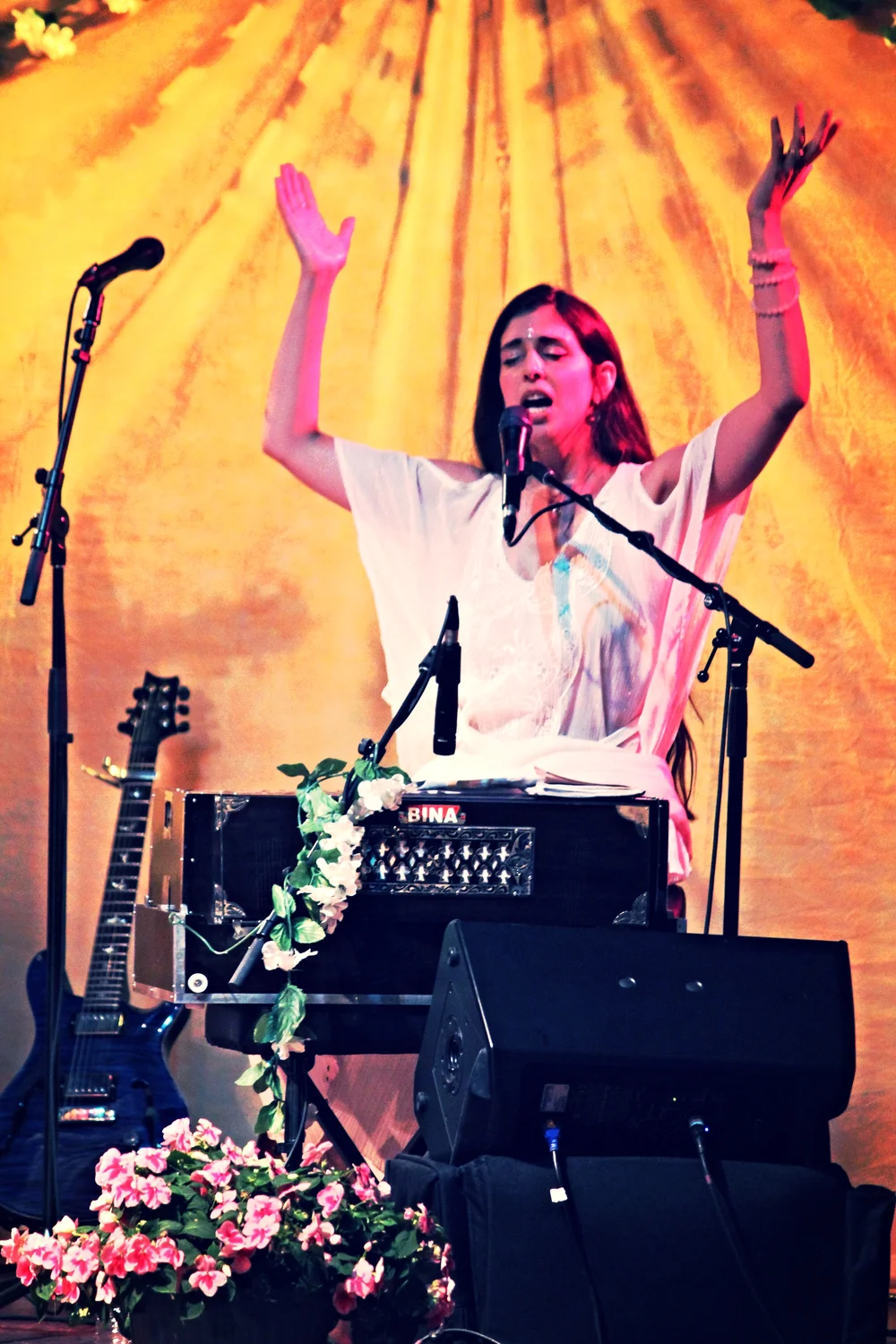

Where to Start with Paloma Devi: A Beginner's Guide
The challenge with Paloma Devi is that she's built her reputation through live transmission rather than recorded artifacts. Without a discography or published books to point to, discovering her work means seeking out her workshops, livestreams, and community gatherings where kirtan happens in real time.
The Best Entry Point: A Live Kirtan Session
Your first encounter with Paloma Devi should be experiential, not theoretical. Find one of her in-person kirtan sessions if you're within range of where she teaches. If not, look for recorded livestreams or virtual kirtan events she hosts. Kirtan is call-and-response chanting—you'll hear her sing a line of Sanskrit mantra, then the group echoes it back. The repetition builds like waves. Don't worry about understanding the words on first contact. Let the sound carry you.
What you'll notice immediately is her voice quality: warm, unpretentious, occasionally raw. She doesn't perform at you; she creates a sonic space you can enter. The chants start slowly, build in intensity, then dissolve into silence. That structure—invocation, crescendo, integration—is the basic architecture of every session.
After Your First Taste: Three Next Steps
First, attend a workshop she leads on devotional chanting basics. These typically run 2-3 hours and include instruction on breath, pronunciation, and the spiritual framework of Bhakti tradition. You'll learn what the mantras actually mean and why repetition matters in this practice. This context transforms future listening from pleasant sounds into participatory devotion.
Second, explore traditional kirtan artists who influenced her lineage. While Paloma brings contemporary accessibility, understanding the roots deepens your appreciation. Listen to classic recordings to hear where this tradition flows from.
Third, start a home practice. The workshop will give you a few core mantras. Spend 10-15 minutes daily with one chant. Sing it alone, badly if necessary. Kirtan isn't concert performance—it's spiritual hygiene.
What to Expect (And What It's Not)
Your first kirtan will feel awkward. You'll fumble the Sanskrit, come in at the wrong time, wonder if you sound ridiculous. Everyone does. That discomfort is part of the threshold—the practice begins when you keep chanting anyway.
Paloma's sessions typically run 60-90 minutes. Bring water. Sit on a cushion or chair. Expect harmonium, possibly guitar, maybe hand percussion. The room will be mixed: experienced chanters, curious seekers, people clearly working through something. Eyes closed or open, both are fine.
Common Beginner Misunderstandings
Many newcomers treat kirtan like a concert—they listen passively, waiting to be entertained. Wrong orientation. You're not the audience; you're the instrument. Your voice, however uncertain, is necessary.
Others approach it as exotic tourism, collecting spiritual experiences. Paloma teaches within the Bhakti tradition, which is devotional—directed toward the divine however you conceive it. The practice asks for sincerity, not perfection.
Some expect immediate transcendence. More often, you get restless legs, a wandering mind, and occasional moments when the chant catches you off guard and cracks something open. That's enough.
When This Work Lands Hardest
Kirtan tends to reach people during transitions: grief, breakups, career upheaval, the slow-burning crisis of meaninglessness. When intellectual solutions fail and the heart needs direct address, chanting offers a portal. The repetition soothes the anxious mind; the devotional frame gives your longing somewhere to go.
It also deepens existing practices. If you meditate or do yoga, kirtan adds the bhakti element—relationship with the sacred rather than solitary discipline.
Your One-Week Starter Plan
Day 1: Attend or watch one of Paloma's kirtan sessions. Just experience it.
Day 2: Rest. Let it settle.
Day 3-7: Each morning, chant one simple mantra for 10 minutes. "Om Namah Shivaya" is accessible and traditional. Use a recording to follow along initially, then try it solo.
Day 7 evening: Return to a live session or recording. Notice what's different the second time.
Then decide if you're in or out. Kirtan reveals itself through repetition, not intensity. Give it a week of sincere fumbling. That's enough to know if this path calls you.