
The Healing Journey From China
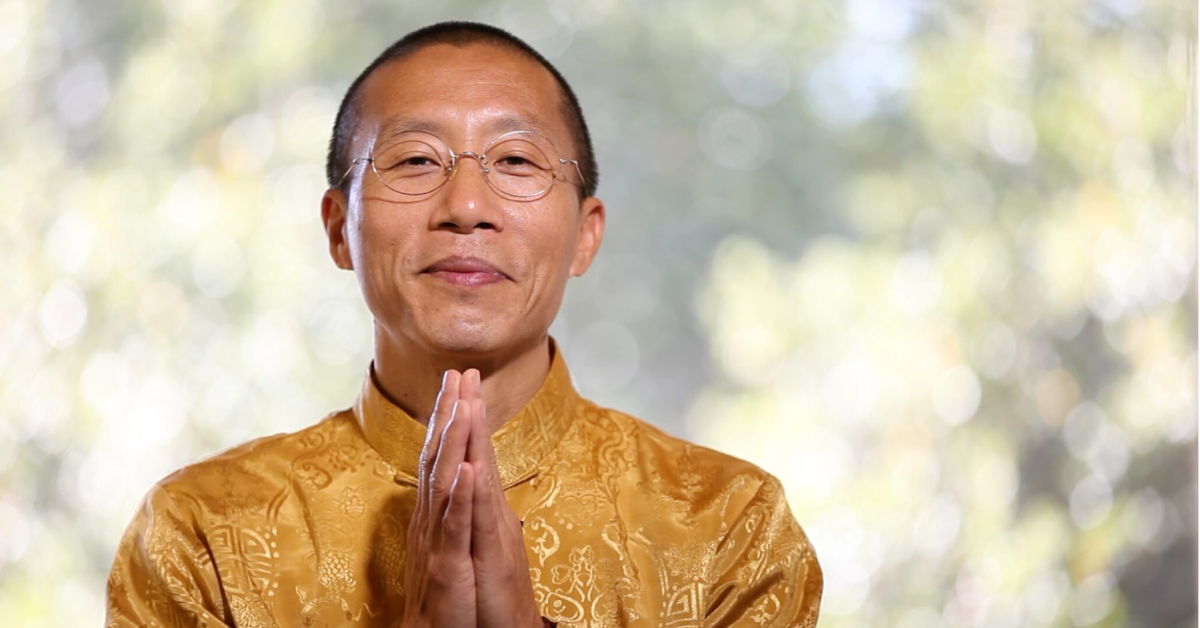
Mingtong Gu's story begins in China, where he was immersed from childhood in a culture that viewed health through the lens of energy, balance, and the wisdom of centuries-old practices. Growing up surrounded by traditional Chinese philosophies, he developed an early understanding of Qigong—the ancient discipline of cultivating life energy, or "qi," through coordinated movement, breath, and meditation. This wasn't merely academic knowledge for young Mingtong; it was woven into the fabric of daily life, connecting him to nature's rhythms and to an understanding of the body as an energetic system rather than just a physical vessel.
Yet his path to becoming a teacher wasn't simply inherited tradition. According to his own account, Mingtong turned to Qigong more deeply in response to personal challenges that demanded healing. This transformative period of seeking—of moving from intellectual understanding to embodied practice—became the foundation for everything that would follow. The ancient techniques that had surrounded him since childhood revealed themselves as powerful tools for restoration, not just physically but at the levels of mind and spirit.
Building Bridges: The Chi Healing Institute
Mingtong Gu's core contribution lies in his ability to translate traditional Qigong wisdom into forms accessible to contemporary practitioners worldwide. This mission crystallized with his founding of the Chi Healing Institute, an organization dedicated to bringing authentic Qigong teaching beyond cultural boundaries. Rather than positioning himself as someone who modernizes or westernizes the practice, Mingtong works as a bridge—someone who can articulate ancient principles in ways that resonate with people unfamiliar with Chinese medical philosophy while maintaining the integrity of lineage teachings.
His approach integrates the fundamental Qigong framework—energy awareness, conscious breathing, and intentional movement—with insights from modern health and wellness perspectives. This isn't fusion for its own sake but rather a careful conversation between traditions, helping students understand why certain practices work through multiple lenses. For someone coming to Qigong from a Western medical background, Mingtong can speak to physiology and stress response; for those drawn to spiritual practice, he illuminates the deeper dimensions of consciousness and energy cultivation.
Teaching a Global Practice
Mingtong has developed an extensive body of instructional materials designed to serve practitioners at every level. His books and audio recordings function as both introductions for newcomers and deepening resources for advanced students, a dual purpose that reflects his teaching philosophy. Qigong, in his presentation, isn't something requiring years of preparation before beginning—the practice offers immediate benefits while also revealing infinite depth over time.
Through the Chi Healing Institute, he has made Qigong remarkably accessible. His instructional materials break down complex energy work into understandable components while resisting the temptation to oversimplify. This balance is delicate: make the practice too esoteric and people feel excluded; make it too simplified and it loses transformative power. Mingtong navigates this tension by emphasizing direct experience—encouraging students to feel the movement of energy in their own bodies rather than taking any claim on faith.
Honoring Lineage, Ensuring Authenticity
What distinguishes Mingtong's work from the proliferation of wellness practices in contemporary culture is his emphasis on lineage. He positions himself explicitly within a chain of transmission, having studied with notable Qigong masters who themselves received teachings from previous generations. This isn't about credentials or authority in a conventional sense—it's about preserving the lived wisdom that can only be transmitted person to person, teacher to student.
In his teaching, Mingtong regularly returns to this theme of interconnectedness: the body, mind, and spirit aren't separate domains but aspects of a unified whole. This holistic view comes directly from his mentors and from the broader traditions of Chinese medicine that inform authentic Qigong. By grounding his work in lineage, he ensures that his teachings remain connected to their source, avoiding the dilution that happens when practices are extracted from their philosophical contexts.
Reaching Beyond Boundaries
The cultural significance of Mingtong Gu's work lies in whom he reaches and what he offers them. In an era marked by stress, disconnection from embodied experience, and the limitations of purely mechanical approaches to health, Qigong provides something different: a practice that treats the person as an energetic being, that works simultaneously on multiple levels, and that empowers individuals to participate actively in their own healing.
His students span the globe, drawn from diverse backgrounds yet united by common needs—for practices that address chronic stress, for tools to work with pain and illness, for techniques that reconnect mind and body. Mingtong has helped establish Qigong not as exotic Eastern mysticism but as a practical, applicable discipline with profound implications for wellness and personal growth.
The Continuing Path
Mingtong Gu continues to teach and expand the reach of Qigong through the Chi Healing Institute. His work represents something increasingly valuable: a grounded, lineage-based approach to wellness that offers genuine depth without requiring practitioners to abandon their own cultural contexts. In making Qigong accessible while maintaining its authenticity, he has created a pathway for thousands to experience the transformative potential of this ancient practice—and in doing so, has become a vital link in its ongoing transmission across cultures and generations.