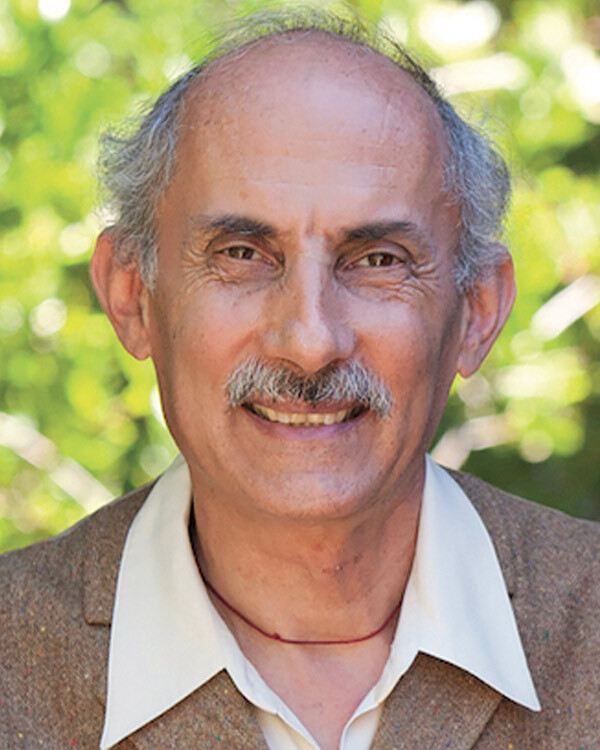

The Journey from Monk to Bridge-Builder
Jack Kornfield, born in 1945 and raised in a Jewish household in the United States, represents one of the most significant figures in the transmission of Buddhist meditation practices to the West. His path wasn't one of passive observation but of total immersion—a scholar who became a practitioner, a Westerner who became a monk, and eventually, a translator of ancient wisdom into contemporary psychological language that millions could access.
After completing his studies at Dartmouth College, Kornfield made the journey that would define his life's work. In the ferment of the 1960s, when young Americans were questioning conventional paths and seeking alternative forms of understanding, he traveled to Asia. This wasn't spiritual tourism. Kornfield ordained as a monk in the Theravada tradition, studying in Thailand, Burma, and India under some of the era's most respected teachers, including the Thai forest master Ajahn Chah and Burma's Mahasi Sayadaw. These years of monastic discipline gave him direct access to meditation techniques that had been refined over centuries, practices focused on mindfulness, insight, and the cultivation of compassion.
Bringing the Dharma Home
The question that faces anyone who undergoes profound transformation abroad is how—or whether—to bring those insights home. For Kornfield, the answer became clear: the West needed these practices, but they needed translation, not mere transplantation. Upon returning to the United States, he recognized that Americans required a bridge between ancient Eastern contemplative traditions and the psychological realities of modern Western life.
In 1975, Kornfield co-founded the Insight Meditation Society in Massachusetts alongside Sharon Salzberg and Joseph Goldstein. This wasn't simply another meditation center—it represented a deliberate effort to create an American home for Vipassana practice, the insight meditation tradition of Theravada Buddhism. The three founders had all trained extensively in Asia and understood both the power of these practices and the need to present them in ways that didn't require wholesale adoption of Asian cultural forms.
Later, Kornfield established Spirit Rock Meditation Center in California, which has grown into one of the most influential meditation centers in North America. Spirit Rock became a training ground not just for casual practitioners but for a generation of Western meditation teachers who would themselves spread these practices further.
The Written Word as Vehicle
While meditation centers provided physical spaces for practice, Kornfield's written work extended his reach exponentially. His books represent careful attempts to honor traditional Buddhist teachings while addressing the specific struggles of Western practitioners—people dealing with therapy, relationships, careers, and the particular forms of suffering that emerge in modern capitalist societies.
"A Path with Heart" stands as perhaps his most influential work, a book that acknowledges both the beauty and the difficulties of spiritual practice. Unlike texts that present meditation as an easy path to bliss, Kornfield writes with honesty about the challenges practitioners face, the resistance that arises, and the psychological material that surfaces when one sits in silence.
"The Wise Heart" takes this integration further, explicitly blending Buddhist wisdom with Western psychology. This synthesis has become Kornfield's signature contribution: the recognition that ancient meditation practices and modern psychological understanding aren't competitors but complementary approaches to human flourishing. He draws on his training as a psychologist to create frameworks that help Western students understand meditation not as exotic Eastern mysticism but as practical tools for working with their own minds and hearts.
Beyond Stress Reduction
Kornfield's influence extends beyond his own teaching into the broader mindfulness movement. While he wasn't the sole architect of mindfulness-based stress reduction programs, his work helped establish the credibility and accessibility of meditation in clinical and therapeutic settings. Hospitals, schools, and corporations that now offer mindfulness programs exist partly because teachers like Kornfield demonstrated that these practices could be secularized without losing their effectiveness.
This democratization of meditation represents both Kornfield's greatest achievement and his most controversial legacy. Traditionalists sometimes argue that separating meditation techniques from their Buddhist doctrinal context dilutes their transformative power. Kornfield's counterargument, embodied in his teaching, is that compassion and mindfulness are universal human capacities that don't require religious conversion to access.
The Teaching Continues
Decades into his work, Kornfield remains an active teacher, continuing to lead retreats and offer guidance to students at various stages of practice. His teachings consistently emphasize what he calls "emotional healing"—the way meditation can help practitioners work with trauma, grief, anger, and the full spectrum of human emotion rather than simply transcending or bypassing it.
The scope of who Kornfield reaches tells its own story about his cultural significance. From psychotherapists incorporating mindfulness into clinical practice to prison inmates learning meditation through volunteer programs inspired by his work, the techniques he helped introduce have touched remarkably diverse populations. His relatively modest Spotify following of 341 listeners suggests someone whose primary medium remains the written word and in-person teaching rather than digital celebrity.
A Legacy of Accessibility
Jack Kornfield matters because he understood early that transformation requires meeting people where they are. His achievement wasn't discovering meditation—that credit belongs to practitioners thousands of years before him—but rather building sturdy, reliable bridges that allow Westerners to access these practices without pretending to be something they're not. In making Buddhist meditation comprehensible and practicable for Americans, he helped create the contemporary mindfulness landscape, with all its promises and complications. Whether that landscape fulfills meditation's deepest potential or represents its dilution remains an open question, but Kornfield's role in creating it is undeniable.