The History of Satchidananda Ashram – Yogaville
The History of Satchidananda Ashram – Yogaville
Origins and Founding
Yogaville emerged in 1980 from the vision of Sri Swami Satchidananda, who sought to create a permanent home for his teachings of Integral Yoga in the rolling hills of Virginia's piedmont. The ashram took its name from the Sanskrit phrase "Satchidananda," meaning "existence, consciousness, bliss"—a reflection of the ultimate reality described in Hindu philosophy and the founder's own spiritual name.
By 1980, Satchidananda had already achieved unexpected fame in American counterculture. He had opened the 1969 Woodstock festival with a brief talk on peace, becoming an icon of the era's spiritual seeking. But Yogaville represented something deeper than celebrity: a serious attempt to transplant traditional yogic community life onto American soil, adapted for Western students while preserving essential practices.
Founder and Lineage
Sri Swami Satchidananda belonged to the Saraswati order of sannyasins, monastics in the Hindu tradition. His approach, which he termed Integral Yoga, synthesized multiple paths: Hatha Yoga for the body, devotional practices for the heart, selfless service for purification of ego, and meditation for direct experience of consciousness. This integrative method reflected the teachings of his own teachers and the broader movement of yoga's transmission to the West during the mid-twentieth century.
The system Satchidananda taught emphasized practical spirituality accessible to householders, not just renunciates. Vegetarian diet, daily meditation, ethical living, and physical asana practice formed the foundation of life at Yogaville, creating a template that would influence thousands of students over the decades.
The LOTUS and Major Milestones
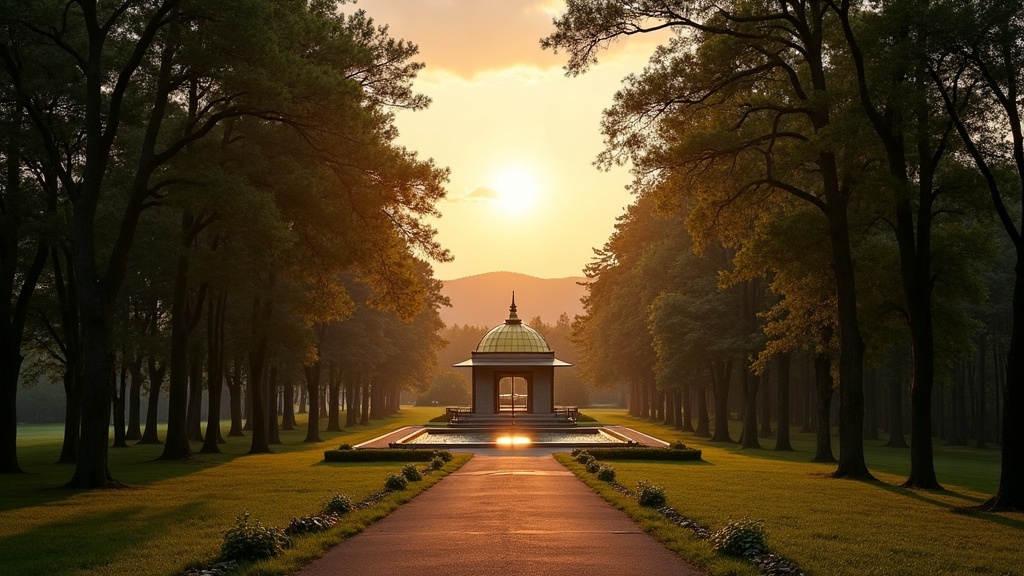
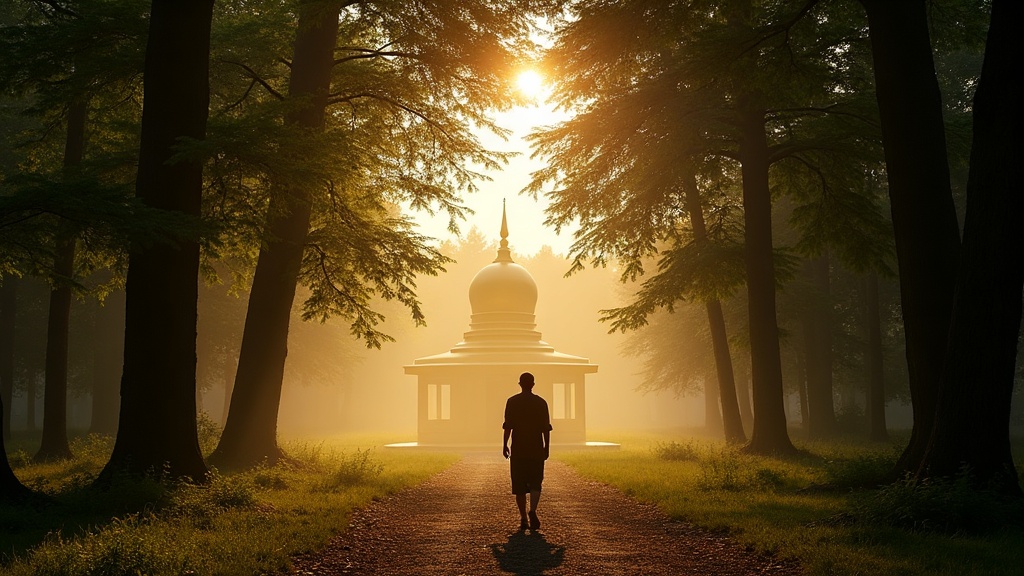
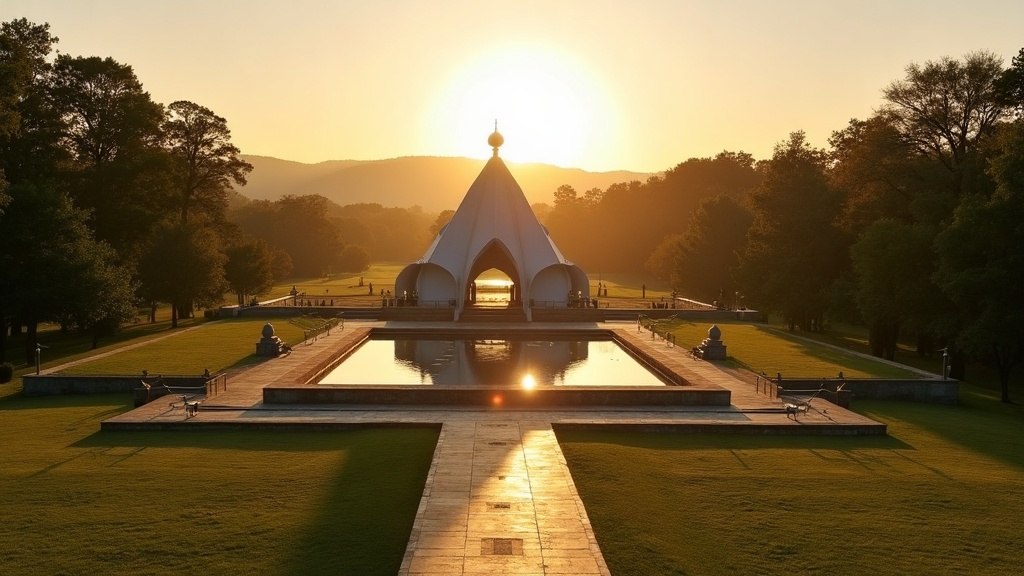
The defining architectural achievement of Yogaville came six years after its founding. In 1986, the ashram dedicated the LOTUS—Light Of Truth Universal Shrine—a white-domed temple rising from a shallow pond on the seven-hundred-acre property. Light streams through colored glass panels in rose, amber, and blue, illuminating a floor inlaid with symbols from twelve different faith traditions.
The LOTUS embodied Satchidananda's inclusive vision: that all spiritual paths lead to the same truth. This interfaith emphasis distinguished Yogaville from more sectarian Hindu institutions and attracted seekers uncomfortable with rigid religious boundaries. The shrine became the spiritual heart of the community, visible from the entrance road and serving as the site for morning meditations that continue to anchor each day's rhythm.
The ashram developed its educational infrastructure steadily, establishing formal Integral Yoga teacher training programs. These 200-hour and 500-hour certifications became primary vehicles for spreading Satchidananda's methodology beyond Yogaville itself. Weekend retreats on pranayama, Ayurveda, and the Yoga Sutras supplemented the longer trainings, creating multiple entry points for engagement.
Leadership Transition and Evolution
Sri Swami Satchidananda died in 2002, marking a crucial transition point for Yogaville. The challenge facing any spiritual community after a charismatic founder's death is maintaining coherence and vitality. Yogaville's response centered on institutionalizing Satchidananda's teachings while preserving the living quality of practice.
Students who had trained directly with Satchidananda remained at the ashram, teaching classes and tending the grounds. This continuity of personnel helped maintain authentic transmission of the Integral Yoga method even as formal leadership structures evolved. The ashram avoided the splintering that has fractured other yoga organizations after their founders' deaths.
Contemporary Yogaville
Today, Yogaville operates as both an active ashram with residential monastics and staff, and as a retreat center welcoming guests for programs ranging from a weekend to several months. The daily schedule maintains the rhythms Satchidananda established: morning meditation in the LOTUS temple, hatha yoga classes in studios overlooking pasture and woods, vegetarian meals served in silence or with quiet conversation.
The grounds retain a working relationship with the land. Cows graze near the organic garden. The Buckingham County quiet is broken only by birdsong and the bell marking meal times. Guests stay in simple rooms in the main building or cottages scattered through the pines—accommodations that emphasize function over luxury, supporting the inward focus of retreat.
The ashram represents one answer to how Eastern contemplative traditions root themselves in Western soil: through patience, consistency, and a willingness to serve both serious practitioners and curious newcomers. Four decades after its founding, Yogaville continues offering what Satchidananda envisioned—a space where the theoretical promise of yoga's transformative power meets the practical demands of daily practice, sustained year after year in a particular place.