Eating at Sivananda Yoga Ranch: The Food Experience
Eating at Sivananda Yoga Ranch: The Food Experience
Food at Sivananda Yoga Ranch is not about gourmet indulgence or culinary innovation. It's about nourishment in its most purposeful form—simple, sattvic vegetarian meals designed to support your yoga practice rather than compete with it. If you're coming here expecting farm-to-table sophistication or Instagram-worthy presentation, you'll be disappointed. But if you understand that the food serves a spiritual practice rooted in classical yoga tradition, the dining experience makes complete sense.
The Philosophy Behind Every Meal
The kitchen at Sivananda Yoga Ranch follows strict sattvic principles derived from Ayurvedic wisdom and yogic tradition. All meals are lacto-vegetarian, meaning they include dairy but no eggs, meat, fish, or poultry. The philosophy holds that sattvic foods—fresh, simple, naturally grown—promote clarity of mind, inner peace, and spiritual growth. Foods considered rajasic (overstimulating) or tamasic (dulling) are avoided, which means no onions, garlic, caffeine, or excessively spicy preparations.
This isn't about dietary trends or health fads. It's about eating in a way that Sivananda tradition believes supports meditation, pranayama, and asana practice. The meals are intentionally mild, easily digestible, and designed not to create sluggishness or mental agitation.
What You'll Actually Eat
Breakfast, served after morning yoga and meditation around 10 a.m., typically includes hot cereal like oatmeal or cream of wheat, fresh fruit, whole grain bread, peanut butter, and herbal tea. It's filling but basic—fuel for the day rather than a celebration.
Lunch, the main meal of the day, might feature brown rice or another whole grain, dal (lentil stew), cooked vegetables, salad, and perhaps a simple Indian preparation like vegetable curry. The food is wholesome and substantial, though never heavily seasoned. You won't find the complex spice profiles of restaurant Indian food here.
Dinner at 6 p.m. is lighter—often soup, salad, bread, and perhaps pasta or a grain dish. Portions are generous, and there's always enough food, but the flavors remain restrained. Some guests find the meals perfectly satisfying; others pack their own hot sauce.
The Dining Hall Experience
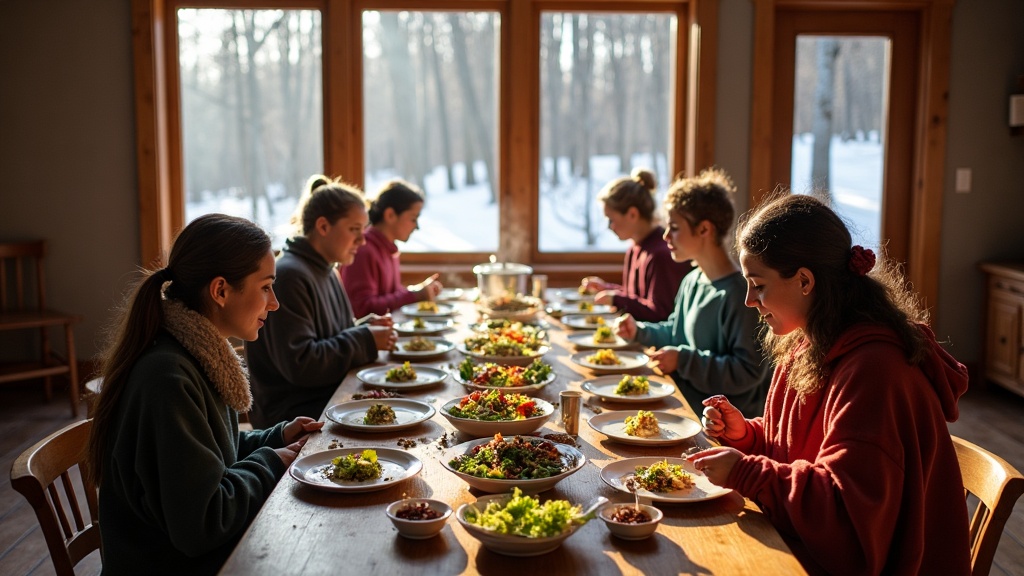
Meals are served in the dining hall, a communal space where guests and staff eat together on a first-come, first-served basis. Tables seat multiple people, and while conversation isn't forbidden, the atmosphere leans toward quiet reflection. Many people eat in silence or speak in low tones, maintaining the contemplative environment that pervades the entire property.
You serve yourself buffet-style, and the expectation is clear: take only what you'll eat, and clean your plate. Wasting food contradicts yogic principles of mindfulness and gratitude. After eating, guests wash their own dishes—a practice in karma yoga and community participation.
Dietary Accommodations
The kitchen can accommodate vegan requests easily, as most dishes are naturally dairy-free or can be modified. Gluten-free options are available with advance notice, though choices may be limited given the kitchen's modest scale. If you have serious food allergies, contact the ranch well before your visit—they'll work with you, but their kitchen isn't designed for complex medical dietary needs. The staff is accommodating within the constraints of their sattvic menu and small operation.
Between-Meal Realities
Don't expect snacks. There are no vending machines, no coffee bar, no bowl of fruit in the lobby. The meal schedule—breakfast at 10 a.m. and dinner at 6 p.m.—creates long gaps that take adjustment. Some guests bring their own nuts, dried fruit, or energy bars to bridge these hours.
The Caffeine Question
Coffee is not served, period. This is non-negotiable in Sivananda tradition, where caffeine is considered a rajasic stimulant that disturbs meditation practice. You'll find herbal teas and hot water, but if you're caffeine-dependent, prepare for withdrawal or bring alternatives to consume in your room.
Special Programs
Occasionally, cooking classes or Ayurvedic nutrition workshops are offered, teaching guests the principles behind sattvic cooking. These sessions provide context that helps visitors appreciate why the food is prepared as it is—even if it never becomes their favorite cuisine.
The food at Sivananda Yoga Ranch is honest, principled, and austere. It nourishes without exciting, sustains without stimulating. Some guests leave craving flavor; others find it surprisingly liberating to eat without distraction. Either way, the food serves the practice—which is precisely the point.