
The Music of Anandra George: Sound, Sacred Texture, and Lineage
Anandra George's kirtan doesn't announce itself with production flourish or instrumental pyrotechnics. Instead, it arrives like morning light through a window—gradual, warm, and structurally patient. Her voice carries the unhurried cadence of someone who learned call-and-response not as performance technique but as household language, a devotional vernacular absorbed in childhood through parental chanting. This biographical detail matters sonically: there's no conversion zeal in her delivery, no Western seeker's breathlessness. Her phrasing has the worn-in comfort of inherited practice.
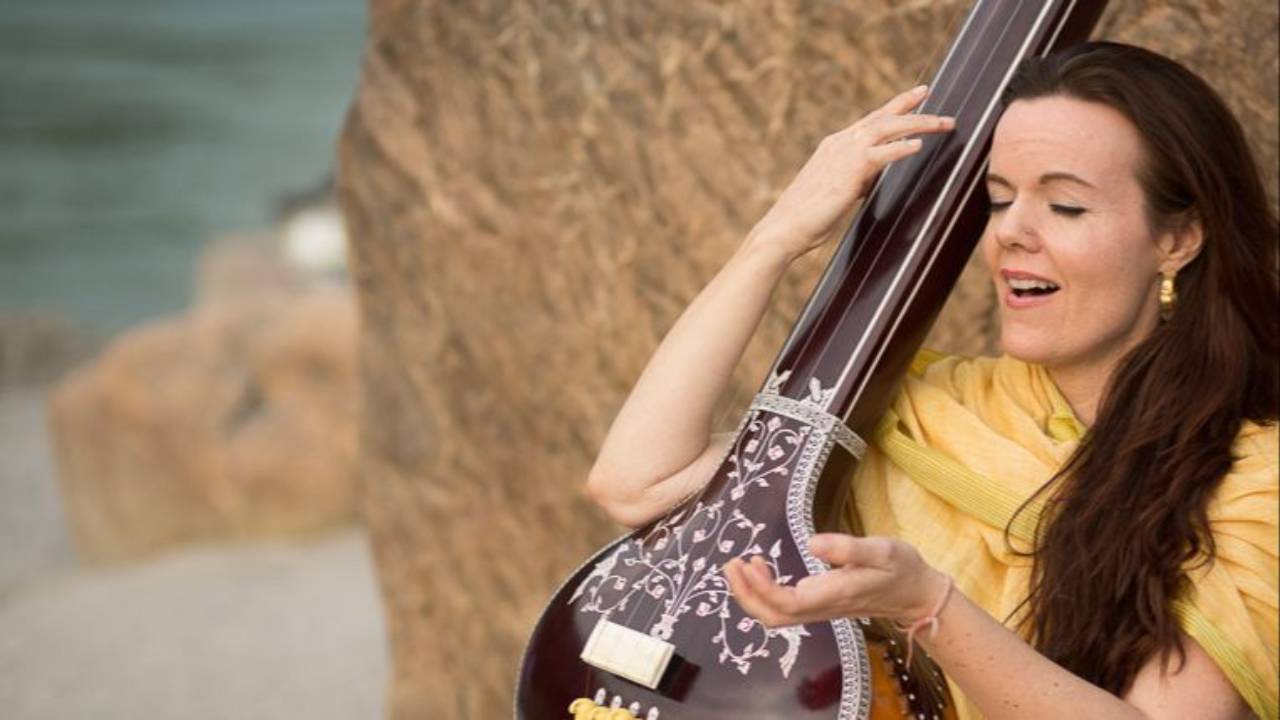
The instrumentation typically centers on harmonium and tabla, the foundational dyad of North Indian devotional music. The harmonium provides that characteristic droning texture—not quite Western organ, not quite accordion—that anchors kirtan's melodic movement within a stationary tonal center. Her tabla work (whether played by her or collaborators) tends toward the conversational rather than the virtuosic, punctuating rather than dominating, allowing space for voices to layer and build. Occasionally, supporting strings—tanpura or guitar—add timbral depth without cluttering the sonic field. The overall texture remains transparent, almost deliberately sparse, prioritizing the mantra itself over musical ornamentation.
Lineage and Tradition
George works firmly within the bhakti kirtan tradition, specifically the call-and-response format that has migrated from ashrams and temples into yoga studios and conscious music venues worldwide. This lineage traces back through centuries of Indian devotional practice, where chanting sacred names and Sanskrit mantras serves as both meditation and communion. Her childhood immersion in this tradition—listening to her parents' devotional singing—places her in a direct transmission lineage rather than the autodidactic or guru-adopted path many Western kirtan artists follow.
This distinction surfaces in her approach to raga (melodic framework) and tala (rhythmic cycle). There's an ease with classical Indian musical grammar that doesn't require announcement or explanation. Her melodic choices suggest genuine familiarity with the modal structures of Hindustani devotional music rather than borrowed exoticism. The chants unfold according to their own internal logic, building intensity through repetition and subtle variation rather than dramatic dynamic shifts.
Signature Contribution
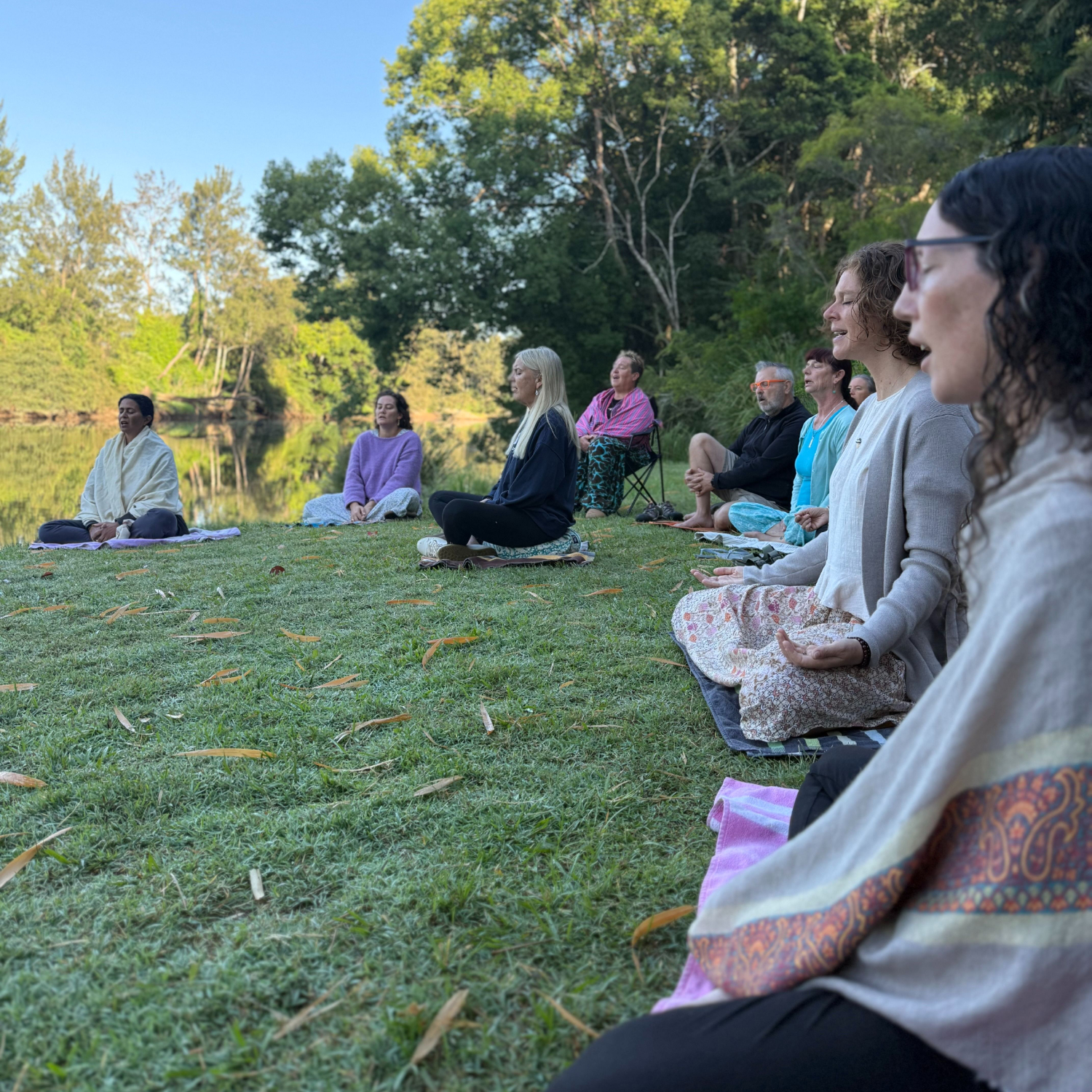
George's particular contribution to contemporary kirtan lies in her pedagogical integration—the way she treats performance and teaching as mutually reinforcing practices. Her workshops and teacher trainings aren't ancillary to her musical work; they're central to it. This shapes the music itself, which functions less as showcase and more as scaffolding for collective participation. Her arrangements anticipate communal voices joining in, with melodic lines accessible enough for beginners while maintaining devotional depth for practitioners.
Where some kirtan artists have pushed toward fusion—incorporating Western instrumentation, electronic elements, or genre-blending production—George maintains what might be called devotional conservatism. This isn't musical timidity but rather a commitment to the form's essential function: facilitating bhakti (devotion) through repetitive chanting. Her signature is precisely this refusal to innovate beyond the tradition's core requirements, trusting that the practice itself contains sufficient transformative potential.
The First Encounter
A new listener approaching George's work should calibrate expectations away from concert performance toward participatory ritual. This is music designed to be sung with rather than listened to. The repetition that might feel monotonous in a passive listening context becomes meditative and cumulative when engaged actively. First-time participants often express surprise at how quickly twenty minutes of chanting passes, how the body's resistance to stillness gradually dissolves into the rhythmic cycle.
The tempo rarely accelerates into ecstatic frenzy, which distinguishes her approach from more energetically demonstrative kirtan styles. Instead, the pace remains measured, allowing the mantra's sonic properties—the actual vibration of Sanskrit syllables—to penetrate. This may challenge listeners accustomed to emotional catharsis or musical climax. The "peak" here is subtler: a quality of collective resonance, a room full of voices arriving at tonal unity.
Landscape Position
Within the broader conscious music ecosystem, George occupies traditional rather than crossover territory. She's not Jai Uttal, blending kirtan with world music and jazz sensibilities. She's not Krishna Das, whose gravelly voice and guitar-driven arrangements appeal to rock-adjacent sensibilities. George represents kirtan as continuous practice rather than cultural translation—music that doesn't significantly compromise its traditional form to meet Western aesthetic expectations.
This positioning serves specific communities: yoga practitioners seeking authentic devotional practice, spiritual seekers interested in traditional transmission, and importantly, second-generation practitioners for whom kirtan is heritage rather than discovery. In an era when "sacred music" often means fusion and accessibility, George's work reminds us that some traditions maintain their power precisely through formal continuity, through sounds passed parent to child, voice to voice, across generations and geographies.